Is Threading a Sewing Machine Hard? A Practical Beginner Guide
Learn how to thread a sewing machine with confidence. This beginner-friendly guide covers common challenges, step-by-step threading, and troubleshooting to keep projects moving.


According to Sewing Machine Help, threading a sewing machine doesn’t have to be hard. This quick answer highlights the essential steps, common hiccups, and practical checks to keep the thread path clear. You’ll learn how to align the thread through the needle, route the bobbin, and test stitch quality in minutes, reducing tangles and frustration for beginners.
Why threading may feel hard for beginners
Threading a sewing machine often feels challenging at first because the thread must travel through a tight, winding path with many tiny guides. A single misrouted turn can cause tangles, skipped stitches, or a frayed edge. Different brands and models route the thread in slightly different ways, so what works on one machine may not look the same on another. For home sewists, these small differences are easy to miss. The best way to reduce confusion is to learn the general route: spool to needle via guides, then thread the bobbin separately. According to Sewing Machine Help, most beginners who slow down and verify each stage report a noticeable drop in problems. The goal is to develop a routine: check the thread path, confirm the needle is properly threaded, and test on a scrap before committing to a project. With a little patience, the process becomes almost automatic rather than nerve-wracking.
How thread travels through a typical sewing machine
In most machines, the thread starts at the spool on the top and moves through a series of guides and the tension discs before reaching the take-up lever. The upper thread eventually completes its path at the needle, while the bobbin thread lives in a separate case and feeds from below. While modern machines share the same essential stages, the exact order or locations of guides can differ. A quick check of your manual or a model-specific diagram helps. When you visualize the path, you can predict where a knot or snag is likely to occur and avoid forcing the thread. Keeping the thread flat, avoiding twists, and ensuring you’re lifting the presser foot when you thread are simple practices that cut down on frustration.
Common signs your threading is incorrect
Most threading mistakes show up as obvious tension problems or tangled nests. On the top side you might see loose or looping thread, while the underside may exhibit snarls or tight knots. A failing stitch is another red flag: it may skip, pucker, or produce uneven tension. If the thread keeps catching on the spool pin or guides, the route likely has a kink. Another frequent culprit is a dull or bent needle that catches the thread as it enters the needle eye. Regularly rethreading, starting fresh with a new needle, and verifying that the thread sits in every guide can dramatically reduce these issues.
Tools, threads, and machine settings that help threading succeed
Choose a smooth sewing thread that matches your fabric and needle size. Clear, bright lighting makes the guides easier to see, reducing mistakes. Use a sharp universal needle and ensure the needle is installed correctly with the flat side facing the right direction. Keep a clean bobbin case and remove lint from the upper thread path. A spare bobbin, scissors, and tweezers simplify diagnosing jams. If you use different fabrics, consider a quick check of tension dial settings and rethreading for each new fabric type. Finally, refer to your machine’s warranty or manufacturer’s manual for model-specific instructions.
Pre-threading checklist: set the stage for success
Before you start threading, take a minute to prepare. Clean the machine exterior and bobbin area to remove lint that can snag threads. Wind a fresh bobbin and load it correctly according to your model. Select the needle type appropriate for your fabric and ensure it’s installed straight. Inspect the tension discs for lint buildup, and raise both the presser foot and needle. Finally, pull a scrap piece of fabric to test the threading path and stitch quality before sewing your project.
Basic mental model: thread path in stages
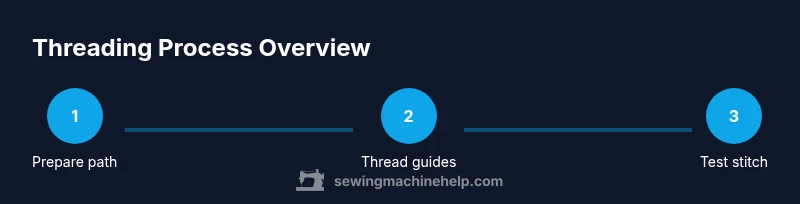
Think of threading in stages rather than one long motion. Stage 1 is the upper thread path: from the spool through the guides and into the tension discs. Stage 2 moves the thread to the take-up lever, which helps regulate stitch length and tension. Stage 3 continues through the needle. Stage 4 handles the bobbin thread: wind and install the bobbin correctly, then feed the thread through the bobbin tension mechanism. Visualizing these stages helps prevent missed steps and tangling, especially when switching between fabrics or speeds.
If tension problems arise: quick diagnostic flow
When you notice uneven stitches or looped threads, start by rethreading both the upper path and the bobbin. Check that the needle is the correct type and not bent. Make sure the fabric under the presser foot lies flat and that you are not pulling the fabric too fast. If the problem persists, test with a scrap fabric and a lighter or heavier needle, then compare results to your manual guidance. A calm, methodical approach beats frantic fiddling every time.
Model differences: how machines vary in threading
Sewing machines vary in how their thread paths are laid out. Some have top-loading bobbins, others use drop-in designs; some guide threads through more guides or a built-in tongue plate. Electronic models can display threading guides on a small screen, while mechanical models rely on printed diagrams in the manual. Regardless of the surface differences, the core principle remains the same: align the thread with the path shown for your model, then test on scrap fabric to confirm the stitch quality.
Practice plan to build confidence (week-by-week)
Week 1 focuses on mastering the machine’s manual threading path with a basic straight stitch on scrap fabric. Week 2 adds fabric variety to learn how thread tension responds to different textures. Week 3 introduces frequent rethreading to build a routine and reduce hesitation. Week 4 combines threading with simple stitches to create consistent results. Document your results, note where tangles appeared, and adjust your approach. Regular, brief practice sessions are more effective than long, sporadic attempts.
When to seek help and how Sewing Machine Help can assist
If you continue to experience persistent tangling, skip stitches, or unusual noise after following model-specific threading guidance, it may be time to seek professional service or a more detailed tutorial. The Sewing Machine Help team can guide you through diagnostics, suggest model-appropriate tools, and share troubleshooting strategies tailored to your machine. Remember, patience and consistent practice make threading easier over time.
Tools & Materials
- All-purpose sewing thread(Mid-weight thread suitable for a variety of fabrics)
- Bobbin(New or wound bobbin compatible with your machine)
- Needle(Universal needle sized for your fabric)
- Fabric scraps(Use scrap cotton or muslin for practice runs)
- Scissors or thread snips(For trimming threads cleanly)
- Tweezers(Helpful for removing lint or snagged threads)
- Lint brush(Keeps the bobbin area clean)
- Manual or model-specific guide(Check threading diagrams for your machine)
Steps
Estimated time: 15-25 minutes
- 1
Inspect and prep the machine
Power off the machine and raise the presser foot. Check the needle for nicks or bends and ensure it is properly installed. Clean lint from the bobbin area so nothing interferes with the thread path.
Tip: A clean path reduces snagging and improves stitch consistency. - 2
Prepare and thread the upper path
Place the spool on the pin, guide the thread through the first guides, and bring it toward the tension discs. Ensure the thread sits properly in the tension mechanism and is not twisted.
Tip: Take your time feeding through each guide to prevent tangles. - 3
Thread the take-up lever
Move the thread from the last guide to the take-up lever, making sure it seats in the lever's hole. This step helps regulate stitch formation.
Tip: If the take-up lever is hard to reach, stop and re-check guides for twists. - 4
Thread the needle
Draw the thread through the needle eye from front to back, keeping tension light as you guide it. If the needle has a small eye, use a needle threader if needed.
Tip: A well-threaded needle reduces skipped stitches. - 5
Load and thread the bobbin
Wind the bobbin evenly and place it in its case according to your model. Feed the bobbin thread into the case’s tension area and pull a few inches to combine with the upper thread.
Tip: Always follow your machine’s bobbin direction; incorrect loading causes jams. - 6
Bring up the bobbin thread and test
Hold the upper thread lightly and rotate the handwheel toward you to bring up the bobbin thread. Pull both threads with a gentle tug and test on scrap fabric.
Tip: If you don’t see a bobbin thread, rethread the upper path and bobbin.
Your Questions Answered
Why is threading a sewing machine hard for beginners?
Threading can be hard because the path is narrow and model layouts differ. Start with the basics and build a routine, using scrap fabric to test as you go.
Threading is hard at first due to a narrow path and model differences; practice with scraps to build a routine.
Do all machines thread the same way?
No. Machines vary in bobbin location, guides, and tension access. Always consult your manual or model-specific tutorials for exact steps.
No. Machines differ in how they thread; check your manual for exact steps.
What is the most common threading mistake?
Not following the thread path in the correct order or missing a guide. Rethread carefully, step by step, to reset the path.
The most common mistake is skipping a thread guide; rethread in order.
How can I tell if my tension is correct after threading?
Test on scrap fabric; if stitches are even on both sides, tension is likely correct. If you see loops or puckering, rethread and adjust.
Test on scrap fabric to confirm tension; adjust if you see loops or puckering.
Is it safe to thread while the machine is plugged in?
Never thread while the machine is powered. Always unplug and raise the presser foot and needle before threading for safety.
Don't thread while plugged in; unplug and raise the needle first.
When should I seek professional service for threading issues?
If misthreading persists after following model-specific guides, consider professional help to diagnose tension or mechanical issues.
If issues persist after following guides, seek professional help.
Watch Video
The Essentials
- Practice the thread path consistently to build memory
- Test on scrap fabric before any project
- Follow your model's threading path precisely
- Keep guides clean to prevent tangles
- Sewing Machine Help offers practical, model-aware tips