Thread a Sewing Machine: Step-by-Step Guide
Learn to thread a sewing machine correctly, including upper thread routing, bobbin winding, and tension checks. This practical, beginner-friendly guide from Sewing Machine Help walks you through safe setup, common variations, and hands-on practice to achieve consistent stitches.


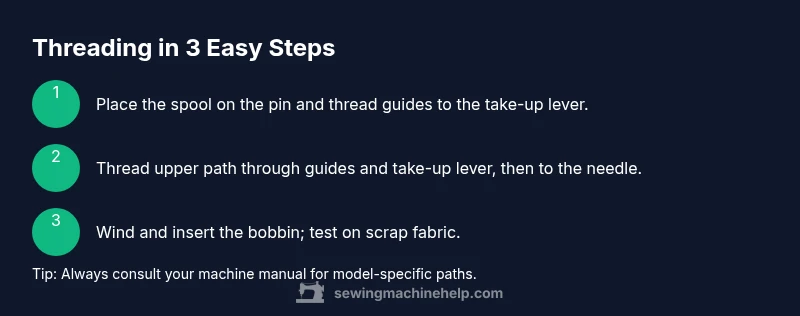
Threading a sewing machine correctly involves guiding the upper thread through all the guides and take-up lever, winding and placing the bobbin, and testing on scrap fabric. Prepare by collecting a spool, bobbin, spool pin, needle, scissors, and your machine's manual. Then follow a clear sequence from spool to needle, with the machine unplugged for safety.
Why Threading Correctly Matters
Threading a sewing machine correctly is the foundation of good stitches. When the upper thread and bobbin are misrouted, you get skipped stitches, thread nests, or fabric jams. For home sewists and beginners, taking a few extra minutes to thread precisely saves time later and extends needle life. According to Sewing Machine Help, a clear thread path minimizes tension problems and helps your machine run smoothly. The correct path varies by model, but the core elements—spool, guides, take-up lever, needle, and bobbin—remain constant. In this section, we’ll explore why accurate threading matters, how to recognize when something is off, and the model-agnostic principles you can apply to any machine. The goal is consistent stitches, less frustration, and a safer sewing experience.
Threading Paths: Model Variations You Should Know
Most machines share a similar philosophy for threading, but the physical path can vary. Front-loading bobbins require a slightly different route than drop-in bobbins. When in doubt, consult your model’s manual and use the path diagrams printed on the machine. Modern machines often include built-in guides and color-coded channels to reduce mistakes. By understanding the general flow—spool to guides, to take-up, to needle, and finally to the bobbin—you gain the confidence to thread any machine with minimal fuss.
Practical Prep: Clear Workspace and Safe Setup
Before you begin, set a clear workspace with good lighting. Place the machine on a sturdy table and unplug it to prevent any accidental starts. Have a scrap piece of fabric handy for testing. Keep thread snips, a small flashlight if needed, and a magnifier if you have eye strain. If you’re using a specialty needle or fabric, confirm compatibility to avoid nylons, waxed threads, or metallic threads that can cause tangles. A calm, methodical approach is the best way to build skill and prevent mistakes.
Step-by-Step Threading Overview
The threading process can be summarized in logical steps: mount the thread spool, guide the thread through each guide to the take-up lever, thread through the needle, wind and insert the bobbin, then pull the bobbin thread up to engage the upper thread. While the exact path depends on your machine, the core principles stay the same. If you’re unsure, pause to check diagrams in your owner’s manual or on the manufacturer’s site. Slow, deliberate threading minimizes bird-nesting and tension issues that lead to skipped stitches.
Troubleshooting Common Threading Issues
Threading problems appear as bird-nests on the underside of fabric, loops on top, or uneven stitches. These issues are usually caused by misrouted upper thread, incorrectly inserted bobbin, or a misaligned take-up lever. Start by re-threading the upper path, ensuring the thread sits in the tension discs, correctly engages the take-up lever, and doesn’t slip out of guides. Then remove and re-wind the bobbin if tension seems off. For zigzag stitches or stretch fabrics, ensure the needle is appropriate for the fabric and that the thread type matches the needle size.
Tension and Fabric Compatibility: Why It Matters
Thread tension is a balancing act between the upper thread and the bobbin. If tension is too tight on the upper thread, you’ll see loops on the bottom; if it’s too loose, you’ll see loose top stitches. Different fabrics require different tensions, and you’ll often adjust the upper thread tension dial based on fabric weight, thread type, and needle size. Always test on a scrap swatch before sewing your actual project to avoid permanent mistakes. This approach helps you learn how tension interacts with feed dogs and presser foot.
Adjusting Tension: A Safe, Incremental Approach
Make small, incremental changes—typically a quarter-turn of the dial at a time—and test with a short stitch on scrap fabric. If you’re using a basic machine, begin with standard settings and adjust based on the result. Metallic threads, heavy fabrics, and delicate fabrics each demand different tension values. Keep a small notebook of settings that work for your most-used fabrics, so you don’t have to rediscover them from scratch every time.
Workspace Setup for Easy Threading
A clean, organized workspace speeds threading. Keep spare bobbins wound, thread spools capped, and scissors sharp. Store the manual and any model-specific guides within easy reach. If you share a sewing space, label tools and keep a small bin for lint and thread scraps. A routine setup reduces friction and encourages consistent threading practice, especially when you’re learning.
Practice Scenarios to Build Confidence
Create a simple practice plan with three fabric types: lightweight cotton, medium-weight woven, and medium-weight knit. For each type, practice threading exactly as you would for a project, then sew 4–6 inches on scrap. Observe stitch quality, tension, and the underside for nests. Document any adjustments you made and the outcome. Repeating these steps builds muscle memory and confidence in threading under real project conditions.
Final Check: Ready to Stitch
Before you begin real sewing, recheck the thread path, tension, and bobbin placement. Ensure the presser foot is up when you thread, insert the bobbin correctly, and test a few stitches on scrap fabric. Make note of the stitch quality and any tweaks you made. With a reliable threading routine, you’ll see fewer jams and better overall stitch performance.
Tools & Materials
- Sewing machine(Ensure it is off/unplugged during threading to avoid accidental starts)
- Spool of all-purpose thread(Choose thread appropriate for fabric and needle size)
- Bobbin(Pre-wound or empty bobbin ready to wind)
- Bobbin case (as required by model)(Some models use a front-loading bobbin; others use a drop-in)
- Needle(Size chosen for fabric (e.g., 12-14 for woven, larger for heavy fabrics))
- Scissors or thread snips(Sharp and small for clean cuts)
- Small screwdriver (optional)(Useful for models with tension disc adjustments)
- Seam ripper (optional)(Helpful for correcting threading mistakes without damaging fabric)
- Owner’s manual(Model-specific threading diagrams and notes)
Steps
Estimated time: 15-25 minutes
- 1
Power off and unplug the machine
Safety first. Turn off the machine and unplug it. Raise the needle to the highest position and lift the presser foot to clear the path. Verify all parts are visible and ready for threading.
Tip: If the machine has a safety cover, remove it to access guides. - 2
Place the spool and prepare the upper thread path
Place the spool on the spool pin and guide the thread through the thread guides from the spool toward the take-up lever. Ensure the thread sits in the channels without twisting.
Tip: Always leave a short tail to prevent catching. - 3
Thread the upper path through the take-up lever
Pull the thread through each guide and finally through the take-up lever from right to left (or as your manual specifies). Make sure the thread goes under any spring or through any slot designed for it.
Tip: If you feel resistance, back up a step and re-guide the thread. - 4
Wind and insert the bobbin
Wind the bobbin evenly with the same thread you’re using, then insert it into the bobbin case according to your machine’s orientation. Leave the bobbin thread loose enough to pull with a finger.
Tip: Consult your manual for front-loading vs drop-in bobbin orientation. - 5
Draw up the bobbin thread and thread the needle
Hold the upper thread gently, rotate the handwheel toward you to bring the bobbin thread up through the needle plate, then pull both threads toward the back. Thread the needle if it isn’t already threaded.
Tip: This creates two-thread balance for better nesting control. - 6
Test stitch on scrap fabric
With the presser foot raised, lower it and run a few stitches on scrap fabric. Check for consistent stitches on both sides and adjust tension if needed.
Tip: If you see looping on the bottom, recheck the upper path and verify bobbin tension. - 7
Finalize and store
Trim tails and ensure both threads are moving smoothly. Close any covers, return to your project, and proceed with your chosen stitch.
Tip: Keep a small log of settings that work well for your fabrics.
Your Questions Answered
What is the first thing to do before threading a machine?
Always unplug the machine, raise the presser foot and needle to the highest position, and clear the path. Check your manual for any model-specific steps.
First, unplug the machine and raise the needle and presser foot to access the threading path. Then check your manual for any model-specific steps.
Do I need to thread the bobbin before the upper thread?
Yes. Start with the upper thread and then thread the bobbin path as described in your manual. Some machines require you to wind the bobbin first and then insert it.
Yes. Thread the upper path first, then the bobbin according to your model’s instructions.
What if the thread nests under the fabric after sewing?
Nesting usually means tension or path issues. Re-thread the upper path, ensure the bobbin is seated correctly, and test on scrap fabric.
If you see nests, re-check the threading path and bobbin seating, then test on scrap fabric.
Can I thread without removing the bobbin?
Some machines allow you to thread with the bobbin in place, but many require removing or repositioning it. Check the manual for your model.
Some machines can thread with the bobbin in place, but many require removal—check your manual.
Why does my thread keep breaking while threading?
Thread breaks are usually due to a dull needle, wrong needle size for the fabric, or a sharp edge in the threading route. Replace needle and re-thread carefully.
Thread breaks are usually from a dull needle or wrong setup. Replace the needle and re-thread slowly.
What should I do if the machine has model-specific threading paths?
Always refer to your machine’s manual or manufacturer site for the exact path. Many manufacturers provide diagrams and video guides for your model.
If your model needs a specific path, check the manual or official site for diagrams or videos.
Watch Video
The Essentials
- Thread upper and bobbin paths correctly for best results
- Test on scrap fabric to verify tension
- Consult your machine’s manual for model-specific paths
- Keep tools organized and ready for quick threading