Sewing Machine Manufacturers: A Practical Guide for 2026
Explore sewing machine manufacturers and how to assess durability, warranties, and service networks for home sewers in 2026 and beyond with practical tips.


Definition: Sewing machine manufacturers are companies that design, produce, and support sewing machines for home, hobby, and professional use. They range from entry-level consumer brands to high-end industrial houses, with varying features, warranties, and service networks. For home sewers seeking reliable equipment, understanding the landscape helps compare brands, models, and after-sales support. According to Sewing Machine Help, evaluating manufacturers by durability and parts availability matters most.
The Landscape of Sewing Machine Manufacturers
Sewing machine manufacturers form a diverse ecosystem that serves different needs—from casual hobbyists to professional studios. At the broadest level, you’ll encounter consumer brands that emphasize ease of use and affordability, mid-range lines that blend reliability with feature variety, and industrial manufacturers that prioritize speed, durability, and service networks. The landscape is shaped by regional manufacturing bases, dealer networks, and after-sales support. For anyone evaluating equipment, it helps to map out your priorities: frequency of use, types of projects, and the availability of spare parts. According to Sewing Machine Help, sewing machine manufacturers span consumer-friendly brands to industrial powerhouses, and understanding the spectrum can prevent costly misfires when upgrading.
Key Segments: Home, Hobbyist, and Industrial
The market is often segmented into three archetypes. Home machines focus on user-friendly interfaces, built-in stitches, and compact footprints for small studios or kitchens. Hobbyist models emphasize versatility—obvious in adjustable presser feet and more creative stitch options—without overwhelming the user with complexity. Industrial manufacturers, by contrast, deliver high-speed, heavy-duty machines designed for textiles, home furnishings, or apparel production. Price ranges reflect these needs, with entry-level machines suitable for beginners and premium equipment designed for continuous operation. When comparing manufacturers, it’s crucial to consider not just the sticker price but the total cost of ownership, including maintenance, parts availability, and repair turnaround times.
Durability, Warranty, and Service Networks
Durability is influenced by motor quality, metal frames, and gear trains. A robust service network matters more than glossy spec sheets if you plan to sew daily or run repetitive tasks. Warranties indicate a manufacturer’s confidence in a product, and longer coverage often correlates with better parts availability and support. Service networks vary by region; some manufacturers offer nationwide or global coverage, while others rely on authorized centers. For home sewers, it’s wise to choose a brand with readily available spare parts and a straightforward repair process. Sewing Machine Help highlights that the practical value of a brand depends on its long-term support as much as the machine’s initial capabilities.
Buyer Archetypes: Budget, Mid-Range, and Premium
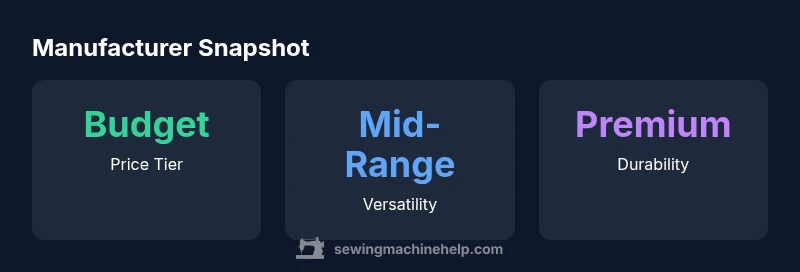
Budget brands prioritize affordability and basic reliability, often using simpler components that meet essential tasks. Mid-range manufacturers strike a balance between cost and capability, offering features like better needle threading assistance, a broader range of presser feet, and more durable components. Premium or industrial manufacturers emphasize speed, precision, and durability, including metal frames, high-torque motors, and advanced maintenance programs. While the price gap can be significant, long-term cost-of-ownership often narrows it when you factor in downtime, parts availability, and professional service.
Real-World Scenarios: Choosing by Projects and Use Case
If you sew occasionally, a budget or mid-range machine from a well-supported brand is typically sufficient. For quilting, embroidery, or leather projects, you’ll want a model with robust stitch control and compatible accessories; industrial partners may offer upgrades suited to heavier fabrics. For small workshops or learning spaces, consider equipment that’s easy to service and backed by instructional resources. A methodical approach—identify your project mix, test the machine if possible, and verify aftermarket support—will reduce the risk of buying the wrong machine for your needs.
Trends Shaping the Industry in 2026
Manufacturers are increasingly adopting modular designs that facilitate upgrades rather than repurchasing. Direct-to-consumer sales models, extended service programs, and guided purchasing paths are becoming common, especially for home users. Sustainability considerations drive choices around materials and energy efficiency, while AI-assisted maintenance tools help predict part wear and optimize performance. The role of online communities and instructional content continues to grow, enabling sewers to learn replacements, tune-ups, and troubleshooting techniques outside traditional training channels.
Practical Evaluation Checklist
- Define your projects: quilting, garment making, crafts, or leather work.
- Check parts availability and local service options.
- Compare warranties and expected maintenance intervals.
- Evaluate motor strength, speed control, and noise when testing.
- Review accessory ecosystems (feet, bobbins, needles) and upgrade paths.
- Consider resale value and brand reputation in your region.
Overview of manufacturer tiers and pricing focus
| Manufacturer Type | Typical Price Range | Strength Focus |
|---|---|---|
| Budget/Entry-level | Under $200-$400 | Affordability, simplicity |
| Mid-range | $400-$1500 | Versatility, reliability |
| Premium/Industrial | $1500-$5000 | Durability, precision |
Your Questions Answered
What defines a manufacturer as a brand versus a private label?
A brand-designed line typically carries an identity, warranty, and diversified product family, while a private label often rebrands an existing design with limited differentiation. Brand-backed support usually includes more robust dealer networks and genuine parts availability.
Brand lines usually come with stronger support and a wider parts network, making them easier to service.
Are cheaper machines from certain manufacturers reliable long-term?
Cheaper machines can be reliable for casual use, but long-term durability and parts availability may lag. Look for models with solid metal components, reputable warranties, and clear access to parts and service.
Cheaper machines can be reliable for light use if they come from a maker with solid parts and service.
Which features should I prioritize when comparing manufacturers?
Prioritize motor durability, stitch options relevant to your projects, ease of threading, and availability of replacement parts. A good manufacturer will offer clear upgrade paths and ample accessories.
Focus on motor quality, parts availability, and the accessory ecosystem.
How important is warranty when evaluating manufacturers?
Warranty length signals confidence in durability and post-purchase support. Consider what's covered, the ease of obtaining service, and whether parts are included. Longer warranties often correlate with a broader service network.
Warranty length matters for long-term peace of mind and service access.
Do industrial manufacturers offer machines suitable for home use?
Some industrial manufacturers offer domestic lines designed for hobbyists and small studios. These machines emphasize durability and speed but may require more maintenance and professional setup.
Yes, many industrial brands offer home-use models with scaled-down features and support.
What is the impact of manufacturer reputation on resale value?
Reputation often translates to better resale value, especially if the brand maintains good parts availability and a strong service network. Buyers seek trusted brands with predictable maintenance costs.
A trusted brand usually means higher resale value and easier servicing.
“"Choosing the right sewing machine manufacturer is about more than features; it's about durability, repairability, and accessible support over time."”
The Essentials
- Understand the manufacturer spectrum to pick the right fit.
- Durability and service networks are as critical as features.
- Budget, mid-range, and premium targets require distinct evaluations.
- Warranties and spare-parts access drive total ownership value.
- Future-focused trends favor modular designs and direct-to-consumer models.