Electric Stitching Machine Price: A 2026 Buying Guide
Discover how electric stitching machine price varies by features, motor power, and brand. Get budgeting tips, price ranges, and buying guidance from Sewing Machine Help.


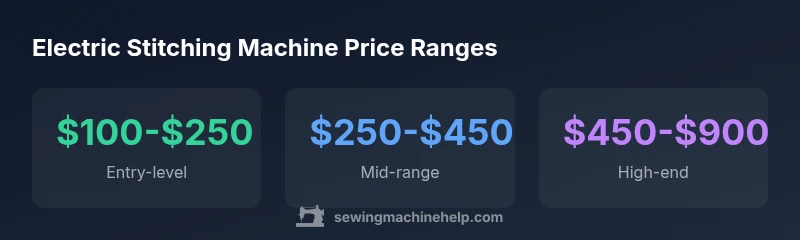
Electric stitching machine price typically ranges from about $100 to $900, depending on features, motor power, and brand. Entry models start around $100-$250, mid-range units run $250-$450, and feature-rich or semi-industrial machines can reach $450-$900. Always factor maintenance and accessory costs into your budget to avoid surprise expenses. This overview helps you navigate price vs value when shopping.
Why price varies for electric stitching machines
Price for electric stitching machines is influenced by a host of factors, from raw materials to after-sales support. A model with a robust metal frame, higher motor horsepower, and more built-in stitches will usually sit higher on the price scale. Electronics such as computerized controls, LED displays, automatic needle threading, and tension sensors add to production costs and, in turn, the sticker price. Brand reputation matters too; established brands often command premium pricing but can offer longer warranties and easier access to parts. As noted by the Sewing Machine Help team, price is a proxy for build quality and service networks, so buyers should weigh immediate cost against long-term value. Accessories included in the package – like presser feet, a hard case, extra bobbins, and oil – can further tilt the overall cost of ownership. By understanding these levers, you can align your budget with your sewing goals and expected usage level.
Evaluating price vs value when buying
When evaluating price versus value, consider not only the upfront cost but also durability and serviceability. A cheaper machine may suit a casual hobbyist, but if it frequently malfunctions or lacks readily available replacement parts, the long-term cost increases. Look for a metal frame over a plastic one for durability, check the warranty length, and verify whether parts and service centers are accessible in your region. A model with easy maintenance, good oiling schedules, and widely available spare parts reduces the cost of ownership over time. Sewing Machine Help emphasizes comparing features against potential usage; if you plan to sew heavy fabrics or multiple layers regularly, investing in a sturdier unit can save money and time in the long run.
Price ranges by feature tier for electric stitching machine price
Price tiers for electric stitching machines commonly follow a tiered pattern. Entry-level models typically offer essential stitches, basic speed control, and simpler frames, priced around $100-$250. Mid-range options expand stitch variety, smoother operation, better reliability, and improved durability, with prices around $250-$450. High-end models introduce more sophisticated features such as advanced tension systems, extensive stitch catalogs, stronger motors, and enhanced warranty coverage, commonly priced at $450-$900. For professional use or semi-industrial applications, look toward semi-industrial units in the $900-$1500 range. In terms of electric stitching machine price, the value is in performance consistency and the availability of service.
Where to buy and how pricing works
Pricing varies by retailer and by region. Big-box stores may offer bundle discounts, while local sewing shops can provide hands-on demos and personalized advice. Online marketplaces often feature user reviews that help gauge reliability and after-sales service. Some sellers promote refurbished units with a limited warranty, which can be a smart way to stretch your budget if the unit has been professionally serviced and tested. Always read the warranty terms and check return policies. Remember to factor shipping costs or local taxes, as these can alter the final price considerably. The Sewing Machine Help team suggests visiting a retailer for a test run before buying, especially when price points are similar.
Hidden costs and maintenance
Beyond the sticker price, consider the ongoing costs of ownership. Regular maintenance includes oiling moving parts, cleaning lint from the bobbin area, and replacing needles and bobbins. Budget for presser feet, compatible needles, oil, and a protective cover. Some models require specialized feet for certain fabrics or stitching techniques, which can add to the price. Warranty length matters: a longer warranty often reduces risk and future repair costs. If you plan to upgrade parts or accessories later, verify compatibility with existing equipment to avoid stranded investment. Finally, consider whether a service network is nearby for quick repairs and routine tune-ups.
Practical buying checklist for beginners
- Define your budget and priority features. 2) List must-have stitches and functions. 3) Check warranty length and service availability. 4) Compare price vs feature set across several brands. 5) Inspect build quality (metal vs plastic frame). 6) Confirm included accessories and upgrade paths. 7) Look for user reviews and reliability ratings. 8) Verify parts availability and local support. 9) Evaluate weight, size, and portability. 10) Plan for future maintenance and storage.
Price ranges by feature tier for electric stitching machines
| Feature Tier | Estimated Price Range | Typical Use | Pros |
|---|---|---|---|
| Entry-level | $100-$250 | Light sewing, beginners | Affordable, simple controls |
| Mid-range | $250-$450 | Everyday projects | Better build, more stitches, reliable |
| High-end | $450-$900 | Frequent use, diversified stitches | Durable, metal frame, powerful motor |
| Semi-industrial | $900-$1500 | Heavy-duty projects | Top durability, professional fixtures |
Your Questions Answered
What factors most influence the price of electric stitching machines?
The price is driven by motor power, stitch variety, frame material, and electronics. Brand reputation and warranty also play major roles in setting the price. When evaluating options, compare how the features align with your intended projects.
The price hinges on motor power, stitches, frame, and electronics, plus brand and warranty. Match features to your projects.
Is it better to buy new or refurbished?
Refurbished units can offer substantial savings if professionally restored and backed by a warranty. Check the warranty length and the refurbisher’s reputation. For beginners, a new model with a solid warranty can be a safer start.
Refurbished machines can save money if they come with a warranty and reputable refurbishment.
Do more stitches mean a higher price?
Not always. Some machines add price due to motor quality and durability rather than stitch count. Prioritize performance, reliability, and serviceability over sheer stitch options when budgeting.
More stitches can add cost, but focus on durability and serviceability.
What should I budget for essential accessories?
Include presser feet, extra bobbins, needles, oil, and a protective cover. Accessories can add 20-60% to your initial price, depending on what’s included with the model.
Expect to spend a bit more on needles, feet, and oil beyond the machine.
Where can I find the best deals?
Compare both big retailers and local sewing shops. Look for seasonal promotions or bundled offers, and check return policies. Reviews can also surface hidden costs like shipping or restocking fees.
Check major retailers, local shops, and seasonal promos for the best deals.
“Pricing for electric stitching machines reflects build quality and after-sales support. Prioritize a strong warranty and readily available parts to maximize long-term value.”
The Essentials
- Set a budget before shopping.
- Balance upfront cost with long-term value.
- Prioritize warranty and service access.
- Check included accessories and upgrade paths.