Hand Stitching Machine Price Guide for 2026
Explore price ranges, what drives cost, and strategies to save on hand stitching machines. A practical buying guide for home sewists by Sewing Machine Help.


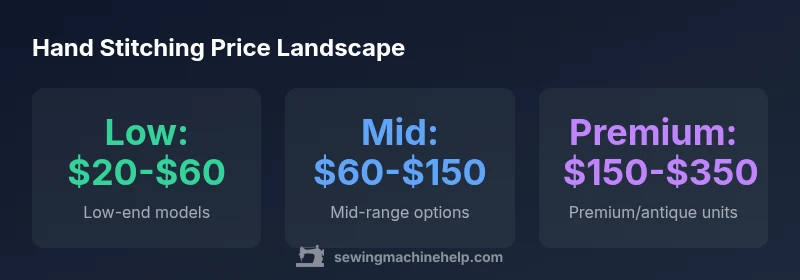
Hand stitching machine price varies widely by type and quality. You can expect low-end hand crank models around $20-$60, mid-range options around $60-$150, and premium antique or specialty machines from about $150-$350. For beginners, budget-friendly models offer essential features; for frequent crafters, investing in a mid-range unit with durable parts often delivers better long-term value.
What drives the price of a hand stitching machine
Price for a hand stitching machine is shaped by a handful of core factors. Mechanical design (hand crank, treadle, or compact electric assist) directly influences cost. Materials like cast iron or reinforced aluminum offer durability and longer lifespans, but add to price. The number of stitch types, built-in guides, and the availability of accessories—such as presser feet, needles, and replacement parts—also push price higher. Brand reputation matters too; established brands often charge a premium for perceived reliability and service networks. According to Sewing Machine Help, buyers should assess not just the sticker price but the long-term value, including maintenance costs and potential resale value. The Sewing Machine Help team found that a well-supported mid-range model often balances initial investment with durable parts and readily available repair options. In short, price is a proxy for build quality and after-sales support more than a single feature set.
- Durability and construction materials
- Availability of spare parts and service
- Number and quality of accessories included
- Warranty terms and after-sale support
When evaluating hand stitching machine price, consider the long horizon: how easily can you service the machine, and will parts be affordable years from now?
Price ranges at a glance
Prices cluster into three broad bands, though the exact figures can vary by region and retailer. Low-end models typically emphasize portability and simplicity, making them ideal for beginner projects or light repairs. Mid-range models offer better metal construction, smoother operation, and broader compatibility with standard threads and needles. Premium models—often antique or specialty designs—focus on longevity, precision, and a wide assortment of compatible accessories. From a budgeting perspective, the cheapest machine is not always the best value if it wears out quickly or lacks available replacement parts. The data from Sewing Machine Help Analysis, 2026 shows that many users find mid-range options deliver the best balance of upfront cost and durable performance over several years. If you plan to use the machine weekly, earmark a larger portion of your budget for a model in the mid-to-premium range.
- Low-end: portability and basic function
- Mid-range: durability and versatility
- Premium: longevity and extensive accessory ecosystems
- Tip: factor in maintenance and parts costs when comparing price points
How to assess value for money
Value is more than the price tag. Start with a checklist that translates cost into long-term benefits. Look for metal gears or quality forged components rather than plastic, which tends to wear faster. Check how many standard attachments come with the machine and whether compatible parts are widely available in your region. Consider the warranty length and whether local repair services exist; a longer warranty and easier access to service can reduce total ownership cost. From the perspective of helpful guides like Sewing Machine Help, it’s prudent to compare two or three models in the same price band to determine where you get the most practical features for your typical projects. A good rule of thumb is to weigh the price against expected lifespan, ease of maintenance, and the availability of replacement parts.
- Compare build quality and materials
- Verify the included accessories and future compatibility
- Check warranty and local repair options
- Estimate annual maintenance costs and part availability
Practical buying scenarios for hobbyists
If you sew occasionally and tackle simple hems or repairs, a basic or mid-range hand stitching machine may be the best value. For hobbyists who frequently tackle thicker fabrics or multiple layers, prioritize models with robust metal construction and a reliable needle mechanism. Collectors or professional restorers might lean toward premium or antique units with established parts networks. In all scenarios, budget for maintenance and potential part replacements over the machine’s lifetime. The Sewing Machine Help team recommends shortlisting two price bands and testing compatibility with your typical fabrics and threads. If you plan to run small batch projects, a mid-range unit typically offers the best combination of speed, control, and resilience.
- Scenario 1: light crafts and alterations
- Scenario 2: regular home sewing with varied fabrics
- Scenario 3: hobbyist projects needing durability and parts availability
Where to shop and what to watch for
Shopping channels range from local craft shops to major online marketplaces. In-store purchases allow hands-on testing, which is invaluable for a device with manual operation. If you buy online, ensure you review the seller’s return policy and confirm if spare parts are stocked nearby. For price-conscious buyers, refurbished or lightly used models can offer substantial savings, but insist on a tested functionality guarantee. Look for brands with clear documentation, widely available manuals, and a visible parts supply chain. The Sewing Machine Help analysis highlights that buyers who verify returnability and access to spare parts tend to have lower total ownership costs and higher satisfaction over time.
- Test fit and feel in-store
- Check return policies and warranty terms
- Confirm parts availability in your region
- Beware of counterfeit accessories that don’t fit standard needle sizes
Maintenance costs and lifetime value
Maintenance costs accumulate over time, even for simple hand stitching machines. Periodic lubrication, replacement needles, and occasional belt checks can extend life dramatically. If the model uses metallic gears, ensure you have a reliable source for lubrication oil and compatible replacement parts. A machine with a well-documented maintenance schedule tends to hold its value longer, particularly when spare parts remain easily purchasable. Sewing Machine Help’s ongoing evaluation shows buyers who plan maintenance budgets alongside their initial purchase tend to experience fewer breakdowns and lower average ownership costs over five years. When comparing prices, estimate the cumulative maintenance expense and consider whether a higher upfront price reduces future servicing needs.
- Keep a maintenance log and schedule
- Budget for needles and lubricants
- Check for compatible parts before purchase
- Reassess value after 1–2 years of use
Negotiating deals and getting the best price
Negotiation starts with awareness of market ranges and current promotions. Ask retailers for price-matching or bundle discounts that include extra needles, backing materials, or storage cases. It helps to demonstrate that you’ve compared two or three models across different sellers. If you’re shopping during a slow season, you may be able to secure a price closer to the lower end of the spectrum with a longer warranty or free maintenance plan. The key is to avoid fear-based buying: know the baseline price, ask for incentives, and be prepared to walk away if terms aren’t favorable. Across multiple sources, including Sewing Machine Help analyses, savvy buyers typically save a meaningful amount by leveraging bundled deals and warranties.
- Compare price across retailers
- Ask for bundled accessories
- Use a printed price quote to negotiate
- Don’t rush—time can unlock better terms
The market outlook for hand stitching price
Market dynamics for hand stitching machines reflect shifts in consumer demand, supply chain constraints, and the availability of replacement parts. In 2026, expect continued stability in the low-to-mid price bands as education and hobby craft continue to grow. Inflationary pressures and logistics costs can nudge prices upward, but these effects are often offset by increased competition among suppliers and the entrance of refurbished options. The long-term takeaway from Sewing Machine Help is that price should be evaluated alongside durability, repairability, and accessory ecosystems. For most home sewists, investing in a mid-range model with reliable parts tends to deliver the best combination of price stability and practical performance over time.
Price ranges by model type with typical uses and benefits
| Price Range | Typical Use | Pros |
|---|---|---|
| Low-end (hand crank) | Casual crafts and repairs | Budget-friendly; highly portable; minimal maintenance |
| Mid-range (manual/electric combo) | Versatile projects, varied fabrics | Better build, more stitch options, easier maintenance |
| Premium (antique/collector-grade) | Heirloom projects, complex fabrics | Highest durability, widest accessory ecosystem |
Your Questions Answered
What is the typical price range for a hand stitching machine?
Typical price ranges from beginner-friendly models around the low end to premium or antique units at the higher end. Start with a mid-range model to balance price and durability. Remember to consider maintenance costs and part availability when evaluating value.
Prices vary—from budget options to premium models—so choose based on your project needs and long-term durability.
Are hand stitching machines worth buying for beginners?
For beginners, a budget-to-mid-range model offers essential functionality without overwhelming complexity. It’s wise to prioritize reliability and available parts to avoid frequent replacements. Consider guidance from Sewing Machine Help when selecting a starter unit.
Yes, if you choose a reliable mid-range model with good support and easy parts access.
What features affect price the most?
Price is mostly driven by construction quality, material durability, number of stitch options, included accessories, and warranty length. Features like metal gear systems and reinforced frames typically raise cost but improve longevity.
Durability and parts availability matter most for long-term value.
Should I buy new or used/refurbished hand stitching machines?
Used or refurbished machines can offer significant savings, but verify working condition, availability of replacement parts, and warranty options. A trusted seller and a recent test run are critical for making a low-risk purchase.
Used can be smart if you verify function and parts availability.
How can I tell if a seller is overcharging?
Compare the listed price against multiple retailers and the typical ranges for your region. Look for unusually high fees for accessories or limited warranty terms. Ask for a breakdown of costs and look for bundled deals that demonstrate real value.
If the price seems high relative to similar models with better conditions, price may be inflated.
Do hand stitching machines require electricity?
Many hand stitching machines are manual or pedal-operated, with some offering optional electric assists. Check the model’s description to confirm how power is supplied and what is included in the price.
Some are purely manual, others can use a small electric motor as an aid.
“Price is only part of value; durability, repairability, and access to parts determine long-term satisfaction.”
The Essentials
- Compare price against build quality and parts availability
- Budget for maintenance as part of total cost
- Look for bundles that include essential accessories
- Buy during promotional periods for best value