Best Way to Learn Sewing Machine Use: A Beginner Guide
A comprehensive, structured guide for new sewists: setup, threading, stitches, safety, practice projects, and a proven plan to build confidence and skill with a sewing machine in 2026.


According to Sewing Machine Help, the best way to learn how to use a sewing machine is to pair a clear plan with consistent hands-on practice. Start with the manual and beginner tutorials, then practice on scraps before tackling garments. Prioritize threading, basic stitches, and machine controls, and build momentum with short daily sessions and simple projects.
Getting Started: Your Learning Path
If you want the best way to learn how to use a sewing machine, begin with a clear plan and steady, regular practice. According to Sewing Machine Help, successful learning blends hands-on work with guided instruction and reflection. Your first week should establish a realistic learning goal (for example, threading and sewing a straight line on scrap fabric), pick a simple project, and schedule short daily sessions. This approach also helps you stay motivated and reduces frustration. As you progress, add small challenges—like trying a new stitch or adjusting tension—and track improvements. The key is consistency, not perfection from day one.
Setting Up Your Sewing Space
A well-organized workspace reduces errors and makes practice enjoyable. Choose a sturdy table with enough space for fabric, scissors, pins, and spare bobbins. Ensure good lighting, a comfortable chair, and easy access to essential tools. Keep your manual nearby and designate a safe area around the needle to prevent accidents. A tidy space also helps you develop a routine: you can walk in, set up, and start sewing within minutes. If you’re sharing space, establish a dedicated area for fabric scraps and unfinished projects to avoid disruptions.
Threading Basics and Nomenclature
Threading a machine correctly is foundational. Learn the path from spool to needle, understand the bobbin system, and recognize common parts like the presser foot, tension discs, andFeed dogs. The exact threading path varies by model, so always consult your manual for model-specific steps. Practice with a scrap fabric to verify that the thread moves smoothly through the path, feeds evenly, and sinks properly into the needle. Proper threading dramatically reduces skipped stitches and bird-nesting under the fabric.
Understanding Stitches and Tension
Stitches are the language of sewing. Start with a straight stitch for seams, then explore zigzag and basic decorative stitches as you gain confidence. Tension is the balance between upper thread and bobbin thread; wrong tension causes loops on the top or bottom of your fabric. Mastering tension involves testing a few stitches on scrap fabric, adjusting the dial or plate as needed, and noting which fabrics respond best to which settings. Clear, consistent stitches build trust in your machine and your own abilities.
Practice Projects for Confidence
Begin with small, forgiving projects like a fabric coaster, a simple pillow cover, or a tote bag. These tasks reinforce measurement, seam allowances, straight stitching, and turning corners. Keep projects short and repeatable to celebrate quick wins. As you improve, graduate to a lined tote, cosmetic bag, or basic garment components such as a skirt panel or a simple top. Each project expands your muscle memory and deepens your understanding of how fabric, stitch type, and tension interact.
Safety, Maintenance, and Common Pitfalls
Safety first: unplug the machine when changing needles, threading, or cleaning the bobbin area. Regular maintenance—cleaning lint, oiling the needle bar if your machine requires it, and replacing needles on a schedule—keeps machines running smoothly. Common pitfalls include using the wrong needle type for the fabric, neglecting to backstitch at the start and end of seams, and attempting to sew heavy fabrics without appropriate presser feet. Addressing these early prevents bad habits and jams. Remember to keep your fingers at a safe distance from the needle and never force fabric through the machine.
How Presser Feet and Basic Adjustments Help
Presser feet affect fabric feed, stitch quality, and finish. Start with the universal foot for most straight stitches, then add a walking foot for knit fabrics or multiple layers, and a zipper foot for insertions. Learn to adjust stitch length and width to suit fabric type and project goals. With practice, you’ll feel confident switching feet and tweaking settings to improve results. These adjustments are how beginners translate plan into precise, professional-looking finishes.
Bobbins, Feed Dogs, and Troubleshooting Basics
Bobbin handling is essential for even stitches. Use the correct bobbin type for your machine and ensure it is wound evenly and inserted correctly. Feed dogs act as your fabric’s engine, pulling material as you sew—understanding their rhythm helps prevent skipped stitches and fabric bunching. When issues arise, check thread path, re-thread the machine, and test on scrap fabric. Keep a small toolkit handy for quick fixes, and don’t hesitate to consult the service manual for model-specific troubleshooting tips.
Building a Routine: From Practice to Finished Items
Develop a learning routine that balances structured practice with relaxed experimentation. Schedule short practice sessions daily, and designate a weekly project goal to ensure progress. Track your milestones—threading, stitch variety, tension, and project outcomes. As skills grow, intersperse more complex tasks like zippers, hems, and basic garment assembly. A steady, progressive plan, guided by reliable resources, will help you convert practice into real-world sewing confidence. The Sewing Machine Help team believes this structured approach yields durable, transferable skills.
Tools & Materials
- Sewing machine (with manual)(Model with basic stitch options and adjustable tension)
- Power cord and foot pedal(Ensure compatibility with your machine)
- Assorted needles (sharp and ballpoint)(Sizes 70/10 to 90/14 cover most fabrics)
- Bobbin thread and empty bobbins(Use cotton or polyester bobbins as recommended by manual)
- Spool of all-purpose thread(Neutral color like beige/gray works for practice)
- Fabric scissors(Sharp, dedicated scissors for fabric)
- Pins and a pin cushion(Keep fabric edges aligned)
- Measuring tape(10 ft/3 m is convenient)
- Seam ruler or tailor's chalk(Helpful for precise markings)
- Scrap fabrics (various weights)(Used for practice swatches and tests)
- Seam ripper(For quick corrections)
- Small brush or lint brush(Keeps bobbin area clean)
Steps
Estimated time: 60-90 minutes
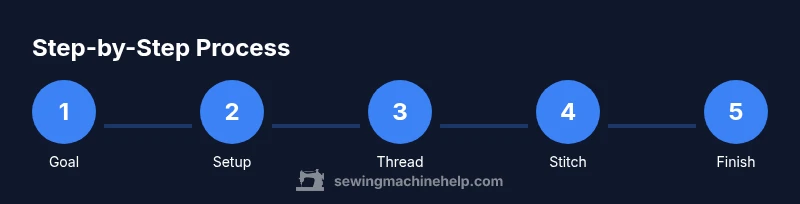
- 1
Identify your learning goal
Define a concrete first project (e.g., a simple tote or pillow cover) and outline the skills you want to master, such as straight seams and backstitching. This upfront clarity keeps you motivated and provides a measurable target.
Tip: Write the goal on a sticky note near your machine to reinforce focus. - 2
Set up the machine
Plug in the machine, thread the needle, and wind/load a bobbin. Turn on the machine to test basic movements on scrap fabric to confirm everything runs smoothly before starting a project.
Tip: Check that the presser foot is lowered and the needle is properly seated. - 3
Thread the needle and wind the bobbin
Follow your manual’s path from spool to needle, ensuring the bobbin is wound evenly and inserted in the correct direction. Test stitching on scrap material to confirm even tension.
Tip: Always re-thread if you notice loose or irregular stitches. - 4
Test a basic stitch
Choose a straight stitch and sew a few inches on scrap fabric to observe feed and stitch formation. Adjust tension as needed and note how fabric weight affects stitch quality.
Tip: Use a straight stitch before attempting any zigzag or decorative stitches. - 5
Begin your first project
Set seam allowances, pin fabric pieces, and sew the project with careful alignment. Backstitch at the start and end to secure threads.
Tip: Take frequent breaks to check alignment and avoid fabric distortion. - 6
Reflect and adjust
Review your stitches and finished edges. If something looks off, identify whether root cause is fabric type, needle, tension, or machine settings, then adjust accordingly on a new scrap.
Tip: Document what worked and what didn’t to guide future projects.
Your Questions Answered
What is the best first project for a beginner?
A simple tote bag or pillow cover is ideal for building fundamentals like straight seams, measurement accuracy, and edge finishing without overwhelming you. Choose a project that uses a single fabric and basic stitches.
A simple tote bag or pillow cover is a great first project because it teaches straight seams and basic finishing without complexity.
Do I need to read the manual before starting?
Yes. The manual outlines model-specific threading paths, needle types, and presser-foot compatibility. Skimming is not enough; refer to sections about setup and safety before first stitching.
Yes, read the manual to understand your model and stay safe.
How long does it take to learn to use a sewing machine?
Learning is incremental. With consistent practice, most beginners feel comfortable with basic setup and stitches within a few weeks, then gradually tackle more complex tasks.
With regular practice, you can feel confident with basics in a few weeks, then progress to more complex tasks.
Why is my machine skipping stitches?
Skipped stitches usually indicate incorrect threading, needle issues, or fabric density. Re-thread from the spool to the needle, replace the needle if bent, and test on scrap fabric.
Mostly threading or needle issues—re-thread and test on scrap fabric.
Should I upgrade to a newer machine or practice first?
Prioritize practice to build technique; a basic, reliable machine suffices for learning. Upgrading is reasonable later if you plan frequent heavy-use projects or need specialized features.
Practice first; upgrade later if you need advanced features for frequent use.
Watch Video
The Essentials
- Master the basics before complex projects
- Practice on scraps to build confidence
- Threading, tension, and stitch choice are core skills
- Use a consistent routine to improve quickly
- Safety and maintenance prevent downtime