How Much Is a Sewing Machine for Beginners: A Practical Guide
Discover realistic price ranges for beginner sewing machines, what features matter, and budgeting tips to choose a reliable entry-level model without overspending.


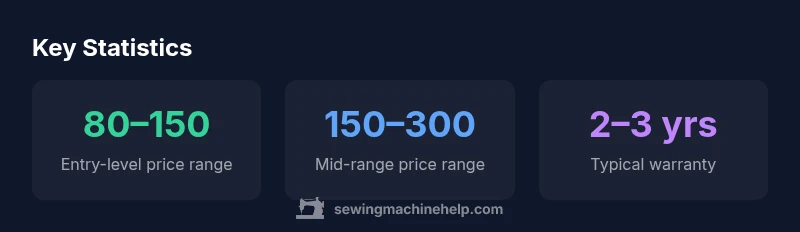
Entry-level sewing machines for beginners typically cost between $80 and $300. Basic mechanical models usually run about $80–$150, while machines with more stitches and features fall in the $150–$300 range. Price differences reflect build quality, warranty length, and included accessories. For price-conscious newcomers, consider starting with a solid mechanical model and upgrade later as you gain experience. This snapshot helps in budgeting your first sewing setup.
Why price varies for beginners
Prices for beginner sewing machines are influenced by several practical factors. The most obvious is mechanical versus computerized design: mechanical models are typically cheaper to buy, while computerized units add features like more stitch options, automatic threading, and better consistency. Warranty length and brand reliability also push price up, since longer coverage tends to signal confidence in durability. Finally, what’s included in the box—extra feet, case, bobs, and even a small sewing kit—can tilt the decision by a noticeable margin. According to Sewing Machine Help Analysis, understanding these drivers helps readers budget accurately and avoid buyer’s remorse when a model that seems inexpensive at first glance later reveals missing essentials.
When you look at price, remember that you’re not just paying for the machine. You’re paying for build quality, serviceability, and the long-term cost of ownership. A bargain model with a short warranty might require early maintenance or replacement parts, whereas a mid-range machine often ships with tutorials and a more robust set of feet and attachments. In short, the sticker price is only one dimension of value.
What you get at the entry level
For absolute beginners, entry-level machines are designed to remove complexity. You’ll typically find straight and zigzag stitches, a few decorative options, thread tension adjustments, and a simple bobbin system. The frame material matters: metal frames tend to hold up longer than lightweight plastics, reducing vibration and improving stitch consistency. Weight matters too—the lighter machines travel well, but heavier options feel sturdier on fabric with layers. Hands-on experience shows that most people can master fundamental stitching in a weekend, provided the machine is intuitive and easy to thread. A starter model in the $80–$150 range usually covers basic hemming, repairs, and simple garments, making it a solid first buy. If you’re moving from a clothing repair hobby to actual garment construction, you’ll appreciate the smoother operation and fewer jams that higher-cost models can offer. Remember to check the user manual for troubleshooting tips and the availability of local service centers.
In practice, begin with a reliable brand’s basic manual and practice on cheap fabric. Use straight seams to learn control, then gradually explore zigzag stitches as confidence grows. For brand new sewists, the barrier to entry should be low—and the learning curve, gentle. A good introductory unit will balance a modest price with dependable performance, so you can build skills without fear of clogging up your workspace with uncertain equipment.
How to compare features across budgets
When evaluating models across price bands, create a simple rubric to avoid feature overload. Core features for beginners include: at least a few stitch options (straight, zigzag), easy thread tension adjustment, a clear reverse stitch lever, reliable feed dogs, and a smooth, user-friendly threading path. Prioritize models with a comfortable presser foot pressure and a responsive speed control—especially for beginners who want consistent results without fighting the fabric. Look for visible quality signals: metal chassis, quality needles included and ready to use, and a manual that’s clear and well-illustrated. If possible, test the machine in a store to gauge noise level, vibration, and ease of use. Budget-wise, start with a mechanical unit if your projects are simple; opt for a computerized beginner model only if you expect to tackle more varied stitches soon and want guided assistance. A practical rule is to compare at least three options within $80–$300 and assess long-term value, not just immediate price.
To maximize value, examine warranty length and customer service options. A longer warranty often correlates to better durability, which matters for new sewists who plan regular practice sessions.
Hidden costs beyond the machine
Many buyers overlook the ongoing costs that can accumulate after the purchase. Essentials include needles (size depends on fabric), bobbins (different types for certain machines), and threads in several weights. You’ll likely want spare feet (zipper foot, walking foot) to expand your project range, plus a small oil bottle if your model requires light lubrication. If you’re buying a mid-range unit, you may wish to purchase an extension table or a hard case for protection. Consider also the cost of ongoing maintenance, such as servicing every 1–2 years, which can add to the long-term price of ownership. Budget for a basic tool kit (scissors, seam ripper, pins) and spare bobbins, as these items are used frequently. These incidental expenses often exceed the initial price difference between entry-level and mid-range models over a year of use, especially for new sewists who are testing different fabrics and stitches.
Buying strategy: budget-first vs feature-rich
A budget-first strategy helps new sewists build, practice, and learn without committing to a high upfront cost. Choose a reliable entry-level model in the $80–$150 range to establish a baseline of skills and fabric handling. If you anticipate frequent projects with varied stitches, a mid-range model in the $150–$300 range can provide greater flexibility and a gentler learning curve. Always compare after-sale service, warranty, and user community support. For many beginners, the best approach is to start small, master core skills, and upgrade only when you can clearly articulate a use-case that justifies the extra cost. Savings from the initial purchase can be reinvested in fabrics and notions, accelerating your learning without overwhelming financial risk.
Practical buying checklist
- Define your budget: decide your maximum, including tax and future accessories.
- List must-have features: straight/zigzag stitches, tension, speed control, and reversible sewing.
- Check warranty length and service options.
- Inspect in-person: test noise, vibration, and ease of threading.
- Compare bundled accessories: feet, bobbins, manuals, and starter kits.
- Verify availability of local repair services and spare parts.
- Read user reviews focusing on beginners’ experiences and learning curves.
- Confirm return policy and trial period before committing.
- Plan for future upgrades and how the machine will adapt to new projects.
- Budget for essential ongoing costs (needles, threads, maintenance).
This checklist helps keep decisions grounded in practical needs rather than marketing claims.
Maintenance considerations for beginners
Maintenance reduces downtime and extends life. Regular cleaning after sessions helps remove lint and dust that can clog mechanisms. Wipe the exterior, brush away lint around the bobbin area, and re-thread as needed to avoid tension issues. Oil only if the manual specifies it and use the recommended oil type. Store in a dry place to prevent rust and ensure the power cord remains intact. A simple maintenance routine—clean, oil (where required), and test stitch quality—will keep a beginner’s machine reliable for months and into the early learning years. If you notice persistent skipped stitches or unusual noises, consult a repair guide from Sewing Machine Help or take the machine to an authorized service center.
Value over price: real-world purchasing tips
Price is important, but value matters more for ongoing learning. Look beyond sticker price to features that promote confidence and reuse: durability, warranty protection, and a robust parts supply. Take advantage of promotions or seasonal sales, but avoid buying models with discontinued parts. When possible, test drive multiple models side by side and compare tensioning, noise, and ease of threading. Seek advice from seasoned hobbyists in online communities and local sewing clubs. The goal is to secure a model that supports your current skill level while remaining adaptable as you expand your projects. With this balanced approach, your first machine becomes a reliable partner rather than a source of frustration.
Comparison of beginner machine price tiers
| Machine Type | Typical Price Range | Pros & Cons |
|---|---|---|
| Entry-level mechanical | $80–$150 | Pros: affordable; Cons: fewer stitches and manual controls |
| Mid-range basic computerized | $150–$300 | Pros: more stitches; Cons: higher price |
| Budget computerized | $300–$500 | Pros: wide options; Cons: may exceed beginner needs |
Your Questions Answered
What is the cheapest sewing machine suitable for beginners?
Entry-level mechanical machines typically start around $80–$150 and cover basic stitching for simple projects.
Entry-level machines usually start around eighty to one hundred fifty dollars.
Should I buy new or used to save money?
New machines include warranties and up-to-date safety features; used units can be cheaper but require careful inspection and testing.
New gives you a warranty; used can be cheaper but riskier.
What features matter most for beginners?
Look for basic stitches (straight, zigzag), easy tension, speed control, and a simple threading path.
Essential features include basic stitches, good tension control, and easy threading.
Do beginner machines include a maintenance kit?
Some models include basics; check the box contents and budget for needles, thread, and oil as needed.
Most include basics; you may need needles, thread, and oil.
Is a computerized machine worth it for beginners?
If you plan to sew more complex projects, a beginner-friendly computerized model can help; otherwise a mechanical machine may suffice.
Computers help with features, but they cost more upfront.
“For beginners, the best value often comes from a reliable entry-level model with essential features and a strong warranty.”
The Essentials
- Set a realistic budget between $80–$300.
- Prioritize essential features for beginners.
- Factor in maintenance and accessory costs upfront.
- Avoid overspending on features you won't use.