Manual for New Home Sewing Machine: A Beginner's Guide
A practical, step-by-step manual for new home sewing machine setup, threading, stitches, maintenance, and troubleshooting. Designed for home sewists and beginners, with safety focus, quick-start steps, and hands-on tips for confident sewing.


Goal: Learn how to set up, thread, and begin using a new home sewing machine safely and confidently. This guide covers unboxing, basic assembly, threading, winding a bobbin, selecting stitches, maintenance, and simple troubleshooting. By following these steps, beginners can complete a beginner project in about an hour start-to-finish.
What this manual covers
This comprehensive guide provides home sewists with a clear, actionable path from unboxing to your first completed project. It emphasizes safety, proper setup, threading, bobbin winding, stitch selection, fabric handling, and routine maintenance. You’ll find practical explanations, visual cues, and non-technical language that makes learning tactile and accessible. The Sewing Machine Help team designed this manual to align with common beginner needs, with added emphasis on safe operation and consistent results. According to Sewing Machine Help, starting with the basics reduces jams, skipped stitches, and frustration, helping you build confidence quickly.
- Topics covered include initial setup, threading diagrams, bobbin winding, stitch choices, foot selection, and upkeep.
- You’ll also see troubleshooting tips for common beginner issues like tension, thread breaks, and fabric feeding problems.
- The guide includes a suggested starter project and a simple maintenance routine you can perform between sessions.
Safety and setup basics
Safety is the foundation of successful sewing. Before you plug in the machine, read the manual sections on power precautions, needle safety, and work area setup. Ensure your workspace is well-lit, stable, and free of clutter. Keep fingers away from the needle when the machine is powered and never leave the machine running unattended. The Sewing Machine Help team emphasizes that disconnecting power before changing needles or presser feet minimizes risk of accidental starts. Use a grounded outlet and keep liquids away from the machine to avoid electrical hazards.
In this section you’ll learn:
- How to position the machine on a sturdy table with a comfortable working height
- Where to plug in and how to check that the foot pedal is responsive
- Basic safety checks like inspecting the needle for damage and ensuring the presser foot is properly attached
Anatomy and parts you’ll use most
Understanding the key parts helps you navigate setup and troubleshooting. The needle bar, presser foot, needle plate, feed dogs, bobbin case, spool pin, thread guides, tension discs, and the take-up lever are the primary components beginners interact with. Knowing what each part does helps you diagnose issues quickly and makes it easier to follow threaded diagrams. The Sewing Machine Help team notes that familiarity with these parts reduces guesswork and speeds up your learning curve.
This section explains:
- The function of the take-up lever and tension discs
- How the bobbin mechanism interacts with the upper thread
- Where to find and read the stitch selector and speed controls
Unboxing, inspection, and initial setup
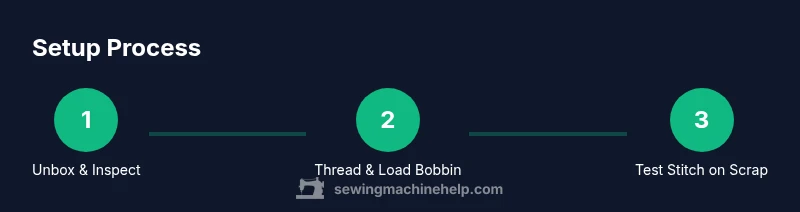
Start with a calm, methodical unboxing. Check that all pieces listed in the manual are present and inspect for any transit damage. Remove protective packing, wipe away dust, and locate the power cord, foot pedal, and accessories. Assemble the machine on a stable surface and adjust the machine’s height to a comfortable level. If your model requires oiling or cleaning before use, follow the manufacturer’s recommendations precisely. Sewers new to hobby will benefit from a careful first inspection to prevent issues later on.
Steps you’ll take:
- Verify included accessories (feet, screwdriver, needles, spool pin, etc.)
- Power on and test basic movement with no fabric
- Read the manual’s quick-start section for model-specific steps
- Note any model-specific care instructions
Threading the upper thread and winding the bobbin
Threading is a common stumbling block for beginners. Start by winding the bobbin with the recommended thread and placing it in the bobbin case. Then thread the upper path following the color-coded guides or numbers on your machine. Pull up the bobbin thread to join with the top thread. Always trim threads with scissors to avoid fraying and jams. The Sewing Machine Help analysis highlights that correct threading dramatically reduces tension problems and skipped stitches.
What to do:
- Wind the bobbin evenly and cut off the thread tail
- Insert the bobbin with the thread feeding in the correct direction
- Thread the upper path, then gently pull the take-up lever to draw the bobbin thread up
Winding, loading, and threading for stitches
Different fabrics require different stitch settings. Start with a straight stitch on a scrap of fabric to test tension and feed. Then try a zigzag stitch at a conservative width to examine stitch balance. Attach the appropriate presser foot for your project and set the stitch length to a beginner-friendly default. The goal is to establish a clean, even stitch line without puckering.
Guidance:
- Use a scrap piece to test tension and balance
- Keep the fabric flat and guide it gently—don’t push or pull
- Adjust stitch length and width in small increments, testing as you go
Presser feet, needles, and fabric handling
Your machine’s presser feet influence the finish and ease of sewing. Start with the standard foot for straight stitching and switch to a zigzag or blind hem foot as needed. Use the proper needle type for your fabric (e.g., sharp for woven fabrics, ballpoint for knits). Practicing on scrap fabrics helps you feel the machine’s responses, from fabric feed to stitch appearance. The brand’s guidance emphasizes gradual exploration of feet and needles to build competence safely.
This section covers:
- When and how to change presser feet
- Needle selection for common fabrics
- Tips for feeding fabric evenly through the needle
Practice stitch: your first run on scrap fabric
Now you’re ready to stitch. Place your fabric under the presser foot, align the edge, and guide the fabric with both hands—don’t push. Run a straight stitch across your scrap, then switch to a basic zigzag to test stretch and seam strength. Inspect the stitches for evenness, if tension seems off, pause to re-thread and re-test. This hands-on practice builds muscle memory and confidence.
Action steps:
- Start with a single straight stitch on scrap fabric
- Observe stitch alignment and thread balance
- Practice backstitching to secure the start and end of seams
Maintenance, care, and troubleshooting
Ongoing care keeps a sewing machine performing well. Regularly clean lint from the feed dogs, use a soft brush for hard-to-reach areas, and keep the machine covered when not in use. Follow the manufacturer’s guidance on oiling—some models require periodic lubrication, others are self-lubricating. If you encounter issues like thread breaks, jams, or uneven stitches, start with re-threading both upper thread and bobbin, check needle orientation, and verify fabric compatibility. The Sewing Machine Help team highlights that routine maintenance reduces common performance problems.
Maintenance checklist:
- Clean dust and lint around the bobbin area and under the needle plate
- Inspect and replace needles regularly
- Oil only as directed by the manufacturer; use the recommended oil and quantity
Getting started on a beginner project
A small, simple project helps you apply what you’ve learned. Start with a basic straight-stitch pillow cover or a tote bag. Measure, cut, and pin carefully, keeping seams consistent. Use scrap fabric to practice seam allowances, hems, and turning corners. As you gain confidence, you can explore decorative stitches and more advanced fabrics. The goal is steady progress and enjoyment while learning.
Steps in this section:
- Choose a straightforward project that uses standard fabric
- Plan your seams and measurements before cutting
- Sew slowly, focusing on precision and control
Tools & Materials
- Sewing machine(Plugged in and connected to a grounded outlet; on a stable table)
- Owner's manual(Printed or digital copy for model-specific guidance)
- Spool of all-purpose thread(One or two colors for visibility while learning)
- Bobbin(s)(Pre-wound compatible with your machine; extra on hand)
- Fabric scissors(Sharp for clean cuts; dedicated to fabrics only)
- Needles (various sizes 70/10–90/14)(Different sizes for woven vs. knit fabrics)
- Needle threader (optional)(Optional helper for smooth threading)
- Measuring tape or sewing gauge(Useful for quick measurements and seam allowances)
- Small brush or lint brush(For cleaning lint around the bobbin area)
- Practice fabric scraps(Old sheets or muslin are good starters)
Steps
Estimated time: 60-90 minutes
- 1
Unbox and inspect
Carefully remove all packaging, check the machine and accessories against the manual’s parts list, and note any visible damage. This prevents surprises during setup and ensures you have everything you need before you begin.
Tip: Keep a parts tray nearby to prevent small pieces from getting lost. - 2
Safety and workspace prep
Arrange your workspace, ensuring good lighting and a stable surface. Verify the power switch and foot pedal operate safely with the machine unplugged, then clear fabric and tools away from the immediate sewing area.
Tip: Always unplug before changing needles or presser feet to avoid accidents. - 3
Connect power and familiarize controls
Plug in the machine and locate the main controls (speed control, stitch selector, and take-up lever). Read any model-specific cautions in the manual before powering on.
Tip: Take a moment to identify the settings you’ll use for straight stitches first. - 4
Wind bobbin and load thread
Wind the bobbin evenly, place it in the bobbin case as instructed, and thread the upper path following the guides. Ensure the threads pull smoothly without resistance.
Tip: Keep the bobbin thread taut and avoid over-winding. - 5
Thread the needle and raise take-up
Thread the upper path, then raise the take-up lever to feed thread through. Pull up the bobbin thread so it nests with the upper thread.
Tip: If the needle is bent, replace it before sewing. - 6
Install presser foot and test stitch
Attach the appropriate presser foot, select a straight stitch, and sew a few inches on scrap. Check for smooth feeding and even stitches.
Tip: Hold the fabric flat and guide with light, even pressure. - 7
Practice on scrap fabric
Run multiple stitches on scrap to observe tension balance and fabric handling. Adjust tension or stitch length if needed and re-test.
Tip: Document any adjustments for future reference. - 8
Basic maintenance after practice
Brush out lint from the bobbin area, wipe the exterior, and oil only if the manual requires it. Store the machine with the cover on to protect from dust.
Tip: Avoid over-oiling; use only the recommended lubricant. - 9
Beginner project kickoff
Choose a simple project, such as a pillow cover or tote bag. Cut accurately, pin thoroughly, and sew with deliberate, steady moves for best results.
Tip: Start with a fabric you’re comfortable with to build confidence. - 10
Plan ongoing care
Create a simple maintenance routine (clean, oil if required, store properly). Regular practice helps you improve and avoids common issues.
Tip: Schedule a quick weekly check to preserve machine performance.
Your Questions Answered
What should I do before using my new sewing machine for the first time?
Unbox carefully, inspect parts, and read the model’s safety instructions. Set up on a stable surface, plug in, and test basic movement with the machine unplugged before any wiring or threading.
Unbox, inspect, and read the safety notes. Set up on a stable surface and test basic movement with the power off.
How do I thread the machine correctly?
Follow the visual guides in your manual to thread the upper path and wind the bobbin properly. Always pull the take-up lever to bring the thread into place and test on scrap fabric.
Follow the guides to thread the upper path and bobbin, then test on scrap fabric.
Is oiling required for all new machines?
Some machines require routine oiling, others are self-lubricating. Check your manual for the exact intervals and the proper lubricant to use.
Oil only if your manual says so, otherwise it’s not needed.
What is the best starter project for a beginner?
A simple pillow cover or tote bag helps you practice straight stitches, seam allowances, and turning corners without complexity.
Try a simple pillow cover to practice basics.
How often should I service or service my machine?
Follow the manufacturer’s guidance; typically a quick cleaning after sessions and periodic checks for lint buildup are helpful.
Clean the machine after sewing sessions and perform periodic checks per the manual.
Where can I find reliable support if I have questions?
Consult the manufacturer’s documentation and reputable sewing resources. If needed, contact authorized service centers for your model.
Check the manual, then reach out to authorized support if you’re unsure.
Watch Video
The Essentials
- Begin with safety and proper setup.
- Threading and bobbin loading are critical to stitch quality.
- Practice on scrap fabric to build confidence.
- Use the right needle and foot for each fabric.
- Maintain a simple care routine to extend machine life.