Sewing Machine for Hemming Curtains: A Practical Guide
Learn how to choose and use a sewing machine for hemming curtains with practical steps, tips, and troubleshooting for durable, neat drapery hems.


You can hem curtains efficiently with a standard home sewing machine by choosing appropriate needle and thread, setting a longer stitch length, and using a clear hem or blind-hem technique. This guide covers fabric prep, machine settings, and a simple hemming approach for neat drapery hems. Understand fabric weight, seam allowances, and finishing options to tailor the result.
Why a sewing machine for hemming curtains matters
According to Sewing Machine Help, a reliable home setup makes drapery hems consistent and professional. Using a sewing machine for hemming curtains speeds up the process, ensures even stitches, and reduces the risk of fraying compared with hand-sewing. A standard machine can handle a wide range of curtain fabrics, from lightweight sheers to medium-weight drapery, provided you choose the right needle and thread and adjust your technique to the fabric. Properly pressed hems look sharper and hang better, and you can adjust stitch length to control drape and stiffness. This article also helps you assess your current equipment, select the best method for your curtains, and walk you through practical steps to achieve clean, durable hems that enhance room aesthetics. The Sewing Machine Help team found that a thoughtful setup dramatically improves results for home sewists.
How to choose the right machine for hemming curtains
When shopping for or upgrading a machine to hem curtains, prioritize features that directly affect hems. Look for adjustable stitch length, a straight stitch, and adequate throat space to accommodate wide curtain panels. A built-in walking foot can help manage slippery drapery, while a free-arm allows easy access to the hem edge when sewing around curves or hems on narrow panels. A reliable feed mechanism and consistent tension help keep stitches even along long hems. For most home sewists, a basic machine with adjustable stitch length, good needle control, and stable fabric handling is sufficient. Remember that you don’t need the most expensive model to achieve professional results; familiarity and technique matter more than price.
Essential features for curtain hems
Curtain hems benefit from a few targeted features. A straight stitch with adjustable length is foundational. A narrowing or blind-hem option can produce nearly invisible hems on lighter fabrics, while a small rolled hem foot helps create neat narrow hems on sheer fabrics. A sturdier needle plate and compatible feet make it easier to guide fabric evenly. The ability to sew at a slower speed and with consistent needle penetration reduces puckering, especially on heavier drapes or lined panels. Tailor foot choice to fabric weight: lighter fabrics benefit from a fine needle and light pressure, while heavier fabrics benefit from reinforced needles and slower speeds. Always test on scrap fabric to dial in settings before hemming the panel.
Basic hemming methods explained
There are several common curtain hemming methods you can choose from depending on fabric weight and desired finish. A straight hem involves folding the edge under and stitching close to the fold for a classic look and is versatile for most fabrics. A narrow or small hem uses multiple folds for a crisp edge, ideal for lightweight fabrics that drape softly. A blind hem hides stitches in the fold, making it great for visible drapery where a clean exterior appearance matters. For sheer or very lightweight fabrics, a rolled hem can create a delicate edge. For heavier curtains, a wide hem or extra basting line can prevent sagging and maintain neat lines. Each method has trade-offs in speed, visibility, and drape, so choose what best suits your fabric and style.
Fabric selection and prep for curtain hems
Fabric choice directly impacts hemming strategy. Lighter fabrics like voile or chiffon may require a narrower fold and careful pressing to prevent puckering, while medium-weight curtains can handle a standard fold with a regular stitch length. Heavier drapery may need a deeper fold, an interfacing or lining, and sometimes a walking foot to help feed the fabric evenly. Always prewash curtains if they are going to be laundered frequently to avoid post-hem shrinkage. Use tailor’s chalk or pins to mark the hem length and ensure symmetry across panels. A solid plan with measured hems reduces the need for adjustments during sewing.
Thread, needle, and stitch settings for curtains
Choose thread that matches the fabric type and weight. For most curtains, a mid- to high-quality polyester or cotton-poly blend provides strength and reduced fraying. Use a needle appropriate for fabric weight; a standard universal needle works for many fabrics, while heavier drapery benefits from a heavier needle. Set stitch length to longer settings for hems to prevent puckering and to give a crisp, durable edge. If your fabric tends to slip, use pins or clips and baste the hem before final stitching. For sheer fabrics, consider a smaller stitch length and a fine needle to minimize show-through.
Step-by-step overview for a clean hem
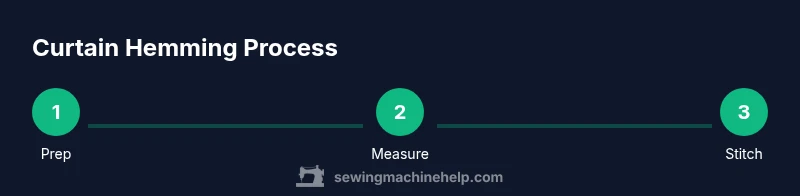
A methodical, prepped workflow yields the most reliable hems. Start by washing and pressing the fabric, then measure and mark the hem. Baste or pin the fold to hold it in place. Choose the appropriate foot and set the machine to a longer stitch length. Sew the hem with smooth, even stitches close to the fold, then press again and finish with a final press. trim threads, and inspect for evenness across the entire width. Practice on a scrap panel before tackling the full curtain to adjust tension and stitch length as needed.
Common challenges and fixes
Puckering often indicates improper stitch length or tension. If your fabric is slipping, add pins or clips or switch to a walking foot. Uneven hems can result from pulling the fabric; feed evenly and avoid pulling, letting the machine do the work. If the crease lifts after washing, re-press and recheck the hem length. Slippage along heavy hems is mitigated by using a longer stitch length and testing on scrap fabric first. When hemming lined curtains, ensure the lining and fabric edges align and consider a separate seam to avoid shifting.
Finishing touches and maintenance after hemming
Finish with a final pressing to set the crease and smooth the edge. Trim any stray threads and clean the bobbin area if lint buildup occurs after a long sewing session. Store needle and foot attachments in their designated slots to avoid misplacing pieces. Regular maintenance, such as oiling the machine as recommended by your model, helps maintain smooth operation. After hemming, test the panel by folding it to simulate drape and check for even length and a clean edge. Keeping fabrics well pressed before hemming and avoiding rushing the stitch can dramatically improve results.
Real-world project example: hemming a curtain panel
Imagine a 84-inch-wide panel made of medium-weight cotton, meant for a living room with standard window height. Start by washing and drying the panel, then press to remove wrinkles. Mark the desired hem length, baste, and pin the fold. Choose a straight stitch with a longer length, and use a walking foot if available. Sew along the fold, press again, and trim the excess. The result is a clean, durable hem that hangs evenly with minimal flutter. This practical example demonstrates how the process scales from scrap fabric to full panels, illustrating that even beginners can achieve professional results with the right prep and technique.
Authority sources
- University Extension Service on sewing basics: https://extension.uaf.edu
- National Sewing Machine Manufacturers Association: https://www.sewing.org
- Government sewing safety guidelines: https://www.osha.gov
Note: Always refer to your machine’s manual for model-specific guidance and safety instructions.
Tools & Materials
- Sewing machine(Ensure it can do straight and zigzag stitches with adjustable stitch length)
- Universal sewing machine needles(Choose size appropriate for fabric weight (e.g., lightweight for sheers, heavier for drapery))
- All-purpose polyester or cotton-poly thread(Color to match fabric; consider slight sheen for dressier drapes)
- Pins or fabric clips(For securing hems before sewing)
- Measuring tape or ruler(Accurate hem length and even margins)
- Iron and ironing board(Press hems before sewing to create crisp folds)
- Scissors and/or rotary cutter(Trim threads and fabric edges cleanly)
- Seam gauge or Fold-Over ruler(Helpful for consistent folds)
- Walking foot (optional)(Useful for slippery or heavy fabrics)
- Narrow hem foot (optional)(Facilitates small, neat hems on lightweight fabrics)
Steps
Estimated time: 2-3 hours (depends on panel length and complexity)
- 1
Prepare fabric and plan hem
Wash and press curtains, then measure the desired hem length on both sides and across the width. Mark the hem with tailor chalk or pins, ensuring even length. Decide on the hem method (straight, narrow, or blind) based on fabric type and drape.
Tip: Measure twice, cut once. Use a scrap edge to test your chosen hem method first. - 2
Baste or pin the fold in place
Fold the edge to the planned hem length and secure with pins or a long basting stitch. This holds the fabric flat and prevents shifting while you sew. For slippery fabrics, consider a light baste along the fold.
Tip: Keep the fold aligned with the fabric edge to prevent misalignment later. - 3
Set machine and attach the right foot
Install the appropriate foot for your chosen hem method (regular foot for straight hem; narrow hem or blind-hem foot for specialty hems). Set stitch length to a longer setting to create a clean fold without puckering.
Tip: Test a short sample on scrap fabric to dial in stitch length and tension. - 4
Sew the hem edge
Machine sew along the fold edge with smooth, steady pressure. Keep the fabric moving evenly to avoid waves. Pause to recheck alignment if necessary, especially on wide panels.
Tip: Avoid pulling; let the machine feed the fabric to prevent stretches. - 5
Press the finished hem
Remove pins, then press the hem from the outside using a pressing cloth if needed. Let the hem cool flat to set the crease before hanging.
Tip: A second light press with a steamer can help relax fibers and improve drape. - 6
Trim threads and inspect
Trim all loose threads, check the entire width for evenness, and hang the panel to test drape. Correct any uneven spots by adjusting the hem or re-pressing.
Tip: Inspect both sides of the hem to ensure consistent appearance on the front and back.
Your Questions Answered
Can I use a regular sewing machine to hem curtains, or do I need specialized equipment?
A regular home sewing machine is typically sufficient for hemming curtains. Focus on correct needle size, thread weight, and stitch length. Optional feet like a walking foot or narrow-hem foot can improve results on slippery or delicate fabrics. Always test on scrap fabric first.
Yes, a regular home sewing machine usually works well for curtain hems. Make sure to choose the right needle and thread, and test on scrap fabric before starting.
What needle size and thread are best for heavyweight drapery fabrics?
For heavy drapery, use a stronger needle and heavier thread that can penetrate the fabric without skipping stitches. A slower sewing speed helps maintain consistent tension and prevent puckering. If your machine struggles, consider a walking foot and a wider hem allowance.
For heavy drapery, choose a stronger needle and heavier thread and sew slowly to avoid puckering.
Which hemming method is best for lined curtains?
For lined curtains, a straight hem with a single fold is common, or a blind hem if the lining movement needs to stay concealed. Make sure the lining edges align with the outer fabric and consider a light baste to prevent shifting before stitching.
For lined curtains, you’ll usually use a straight or blind hem and baste to keep layers aligned.
How can I prevent fabric from slipping while hemming?
Use pins or clips to secure the hem and, for slippery fabrics, baste along the fold first. A walking foot can also help feed fabric evenly, reducing drift during stitching.
Pin or baste the hem and consider a walking foot to keep fabric from slipping.
What should I do if the hem puckers after sewing?
Puckering usually indicates tension or stitch length that’s too short for the fabric. Increase stitch length, adjust the tension, and test on scrap fabric before redoing the hem.
If you see puckering, try a longer stitch length and adjust tension, then test again.
Is it okay to hem curtains without ironing after sewing?
Pressing after sewing helps set the hem and improve drape. If you’re avoiding heat, use a damp pressing cloth and a cool iron to minimize fabric distortion.
Yes, but pressing after sewing produces a crisper finish and better drape.
Watch Video
The Essentials
- Choose hem method by fabric type and desired finish
- Pre-press and baste to prevent shifting
- Test settings on scrap fabric before final sewing
- Maintain even fabric feed to avoid puckering
- Finish with a thorough press for crisp drape