Sewing Machine Settings for Satin: Practical Guide
Learn practical sewing machine settings for satin—needle size, stitch length, tension, and foot choice—to prevent puckering and snagging. This guide covers technique, tools, and finishing tips for silky, slippery satin fabrics.


By starting with a short straight stitch, light tension, and a sharp, fine needle, you can sew satin smoothly. Set stitch length around 2.0–2.5, use a walking foot if possible, and stabilize with tissue or tissue paper. Test a scrap first.
Why Satin Requires Special Settings
Satin is famously slippery and can crown or puckers if the seams are not supported. The Sewing Machine Help team highlights satin’s sheen and delicate weave as reasons to adjust common sewing settings. Slippery fabrics tend to shift under the needle, so you’ll want a stable feeding system, a precision needle, and a thoughtful stitch plan. This section explains why satin behaves differently from cotton or linen and how the right settings help you maintain a crisp seam, reduce shimmer at stitch lines, and keep the finish smooth. You’ll also see how a test run on a scrap provides a baseline before committing to the real project.
This guidance is aimed at home sewists, hobbyists, and beginners seeking practical satin sewing tips, with emphasis on repeatable results and simple routines that reduce fabric waste.
Core Machine Settings for Satin
Satin benefits from deliberate, repeatable settings. Start with a fine needle (70/10 or 60/8) to minimize perforation and thread capture. Use a short stitch length (approximately 2.0–2.5 mm) for seams that lay flat, and balance the thread tension so the stitches don’t pucker or leave a shine. If your machine offers a walking foot or a Teflon foot, engage it to improve feed on slippery satin. For edges, a narrow zigzag can help with finishing without creating a bulky edge. Always compare your stitch on a scrap piece before sewing the main fabric, adjusting tension and length as needed to your machine’s temperament.
This section reinforces that satin requires controlled speed, stable feeding, and deliberate finishing to achieve professional-looking results.
Stabilizing Satin: Techniques and Accessories
Stabilization is a key satin secret. Place a lightweight stabilizer, tissue paper, or even a thin scrap of fabric beneath the satin while sewing to prevent shifting and puckering. If you’re hemming or topstitching, consider using a temporary spray baste to hold layers in place. Many sewists prefer a walking foot with a non-stick or teflon sole when working with satin to minimize drag. After sewing, remove stabilizers carefully to avoid impressions or residue, and press seams with a low-heat iron and a pressing cloth to maintain the fabric’s luster.
Stabilizers are your ally against fabric slip and stitch misalignment, especially on delicate satin.
Practical Testing: Scrap Runs and Adjustments
Before you commit to a project, run samples on satin scraps to dial in stitch type, length, and tension. Test both straight and narrow zigzag stitches on scraps to determine which seam finishes hold best without showing stitch lines. If the top thread shows through, consider adjusting needle, tension, and stitch choice. Keeping the fabric flat and unstrained during testing helps you predict how the final seam will perform. Record the settings that work best for your machine so you can reuse them in future satin projects.
This testing approach saves time and fabric, and it builds confidence in your setup.
Common Pitfalls and Fixes
Puckering and skipped stitches are common on satin when feeding isn’t controlled. If puckering appears, reduce stitch length slightly and recheck tension. If threads loop or snag, ensure the needle is properly installed and not dull, and confirm that the presser foot pressure isn’t crowding the fabric. Slippage can occur on wide, heavy layers; using a walking foot or a fabric stabilizer beneath satin can help. For seams of curved edges, consider trimming seam allowances and finishing with a narrow stitch to maintain smooth curves. Regularly cleaning lint and dust from the feed dogs also improves performance with delicate fabrics.
These fixes are practical and repeatable for satin projects.
Finishing Satin Edges for a Clean Look
Finish edges with an appropriate seam finish such as a narrow hem, overcast stitch, or serged edge, depending on the project. Satin edges can fray or show a bit of gloss at the seam; a careful press and the use of a pressing cloth minimize shine. For invisible hems, hand-stitching a tiny blind stitch can yield a near-invisible seam. If you plan to press often, set your iron to a low temperature suitable for satin and avoid direct contact with overly hot surfaces that could melt the fabric shine.
Finishing thoughtfully preserves the satin’s lustrous surface and ensures durability.
Authority References and Further Learning
For more on fabric care and sewing technique, check university extensions and major publications. University of Georgia Extension provides practical textile care guidance, and Illinois Extension offers sewing technique tips. These sources help you understand how stabilizers, needles, and stitch choices interact with delicate fabrics like satin. By combining this external guidance with Sewing Machine Help’s practical approach, you’ll have a robust satin sewing workflow.
Authoritative References (Learn More)
- https://extension.uga.edu
- https://extension.illinois.edu
- https://www.nsta.org (Major textile publications and educational resources)
Tools & Materials
- Sewing machine needles(Fine needles (70/10 or 60/8) for lightweight satin to minimize perforation)
- Thread(Quality polyester or nylon, color-matched to satin for invisible seams)
- Walking foot or non-stick foot(Helps feed slippery satin evenly and reduces shifting)
- Stabilizer or tissue paper(Lightweight stabilizer or tissue under the satin during sewing to prevent puckering)
- Pressing tools(Pressing cloth and low heat iron to avoid shine; avoid high heat that melts satin)
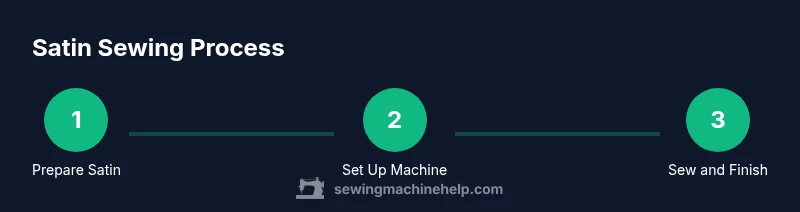
Steps
Estimated time: Total time: 25-40 minutes
- 1
Prepare and press satin
Lay the satin on a clean, flat ironing surface. Use a pressing cloth and very low heat to pre-press the fabric, avoiding stretching. Press from the wrong side to minimize surface shine. This prepares a stable base for seams.
Tip: Test iron temperature on a scrap piece first to prevent scorching or shine. - 2
Thread the machine with a fine needle
Install a fine needle (70/10 or 60/8) and thread smoothly. Use fresh thread to avoid tangling. Ensure the needle is securely seated to prevent skipped stitches.
Tip: Replace the needle after changing fabrics to keep penetration clean. - 3
Set stitch type and length
Choose a straight stitch for most satin seams and set stitch length to 2.0–2.5 mm. If finishing edges, a narrow zigzag can work, but keep it minimal to avoid bulk.
Tip: Always test on a satin scrap before sewing the main piece. - 4
Stabilize with underlayer
Place tissue or a lightweight stabilizer underneath the satin. This reduces slip and helps keep stitches aligned. Remove the stabilizer as soon as you finish that segment.
Tip: Stabilization is especially helpful on curved or bias-cut edges. - 5
Sew with controlled feed
Start with slow feeding and keep the fabric flat. Don’t pull the satin; instead guide it gently. Maintain a steady pace to prevent puckering and misalignment.
Tip: If fabric shifts, pause, adjust, and recheck the edge alignment before continuing. - 6
Finish edges and press
Finish seams with a narrow hem or suitable edge finish. Press seams to one side with a pressing cloth to avoid shine. A gentle press without steam helps keep satin smooth.
Tip: Use a cool or low-heat iron setting to preserve satin’s surface. - 7
Final check on scrap and project
Test the finished seam on a satin scrap and compare with the final fabric. Check for puckering, gloss, and alignment. If needed, adjust tension and re-run the seam on a scrap before proceeding.
Tip: Document the successful settings for future satin projects.
Your Questions Answered
What needle size is best for satin?
For satin, a fine needle such as 70/10 or 60/8 helps prevent snags and minimizes hole visibility. Always test on scrap first.
A fine needle like 70/10 works best for satin. Always test on scrap first to avoid holes or snags.
Should I use a walking foot when sewing satin?
Yes. A walking foot or non-stick foot helps feed satin evenly, reducing shifting and puckering on seams.
Yes—use a walking foot to keep satin feeding smoothly and prevent puckering.
Can I sew satin with a zigzag stitch?
A narrow zigzag can be used for finishing edges, but straight stitches with proper tension usually produce cleaner seams on satin.
A narrow zigzag can finish edges, but straight stitches with good tension often look cleaner on satin.
How do I prevent satin from puckering when finishing seams?
Lower stitch length slightly, stabilize with underlayer, and ensure even feeding. Scrap test helps dial in the best combination.
Lower stitch length a bit and stabilize under the fabric to prevent puckering.
Is steam pressing safe on satin?
Steam can be okay on satin if used with a pressing cloth and the lowest safe heat. Avoid direct high heat to prevent shine.
Steam can be safe with a pressing cloth and low heat; never press satin directly with high heat.
What thread type works best on satin?
Use a smooth, high-quality polyester or nylon thread that matches the satin's weight and sheen to minimize friction and show.
Choose a smooth polyester or nylon thread that matches the satin weight.
Watch Video
The Essentials
- Choose the right needle and stitch length to minimize puckering
- Stabilize satin with tissue or stabilizer under the fabric
- Test on scraps before sewing the final piece
- Use a walking foot for slippery satin to improve feed