What Sewing Machine Setting for Quilting: A Practical Guide
Learn the essential sewing machine setting for quilting, including stitch length, foot choice, and tension. Practical tips for home sewists to test and adjust for steady, even stitches.


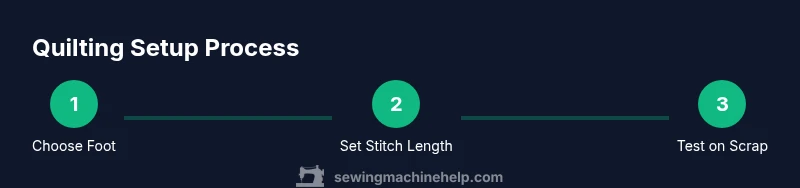
To quilt effectively, the key is selecting the right sewing machine setting for quilting. Start with a walking foot, straight stitch at a mid-length (about 2.0–2.5 mm), and balanced tension. Use a compatible quilting needle and top thread, then test on scraps before stitching your project. Adjust speed and presser foot pressure to ensure smooth fabric feeding and consistent stitches.
Why the right sewing machine setting for quilting matters
For quilters, the correct machine settings influence stitch balance, fabric control, and seam durability. The question of what sewing machine setting for quilting often comes up with beginners, and the answer hinges on several interacting factors: stitch type, stitch length, needle choice, tension, and the presser foot. As Sewing Machine Help notes, the goal is smooth fabric feeding across multiple layers, minimizing shifting and skipped stitches. When you start a quilt, begin with a walking foot, a mid-range stitch length, and a neutral tension, then fine-tune on a small scrap to match your fabric, batting, and batting thickness. This approach reduces puckering, preserves thread integrity, and saves time on rework. Throughout this article, we’ll break down practical settings, show how to adapt to fabrics like cottons, denims, and blends, and offer a tested workflow you can apply to most domestic machines.
Core settings to know before you quilt
Knowing the basics helps you avoid common rookie mistakes. Start with the stitch length: for most quilting, a medium length around 2.0–2.5 mm provides stable stitches without excessive thread showing on the top. Choose a walking foot if your machine supports it; it dramatically improves fabric feeding on multiple layers. The needle should be a quilting-specific size, commonly 90/14, to handle quilt layers and batting. Select a top thread that matches your fabric weight (cotton and polyester blends are popular) and pair it with a compatible bobbin thread. The foot choice matters too: a closed-toe or 1/4-inch foot helps maintain straight seams, while a walking foot reduces tunneling. Finally, test your setup on a scrap sandwich (fabric, batting, fabric) to confirm balance before you stitch your actual quilt.
Practical setup tips and fiber considerations
- Always test on a scrap sandwich that mimics your quilt layers. This reveals tension issues, feeding quirks, and threading problems before you commit to the real piece.
- Use a thread weight that matches the quilting style. For dense stippling, a finer thread may bite into the batting; for straight-line quilting, a mid-weight thread is usually best.
- If stitches appear loose on the top or bottom, adjust tension incrementally and retest. Small changes make big differences.
- Sewing machine oil and basic maintenance should be part of your pre-quilting ritual to keep smooth operation.
How to choose settings for different quilting styles
Quilting styles differ, and your machine settings should reflect that. For straight-line quilting, a consistent stitch length and a sturdy walking foot can yield uniform results across the entire quilt. Free-motion quilting requires you to lower the feed dogs or rely on a darning foot or an open-toe foot, while guiding the fabric with skill rather than relying on the machine’s feed. For dense stippling or meandering designs, a slightly shorter stitch length helps lock the stitches within the batting, producing a firmer texture. Whatever style you choose, begin with a test piece to calibrate stitch length, tension, and foot choice. The Sewing Machine Help team recommends keeping a small notebook of settings for different fabrics and batting to speed future projects.
Practical setup checklist
- Prepare fabric sandwich (top fabric, batting, bottom fabric) and baste lightly if needed.
- Install the correct foot (walking foot for multiple layers; 1/4-inch or open-toe for precise quilting).
- Thread the machine with a compatible top thread and a matching bobbin.
- Set stitch length to around 2.0–2.5 mm and select a straight stitch or minimal zigzag for quilting seams.
- Test on a scrap sandwich; adjust tension as needed until stitches look balanced from both sides.
- After test success, mark your quilting path or use a ruler-guided foot for accuracy, then begin stitching your quilt top.
- Take breaks to prevent heat buildup in the motor and to maintain steady hands.
Common mistakes and how to fix them
Common quilting errors include fabric shoving, thread tangles, and stitches that pull. If the fabric shifts during stitching, re-check the walking foot alignment and ensure both fabric layers are feeding evenly. Tension issues usually stem from thread choice or incorrect bobbin winding—re-thread the machine, re-wind the bobbin, and retest. Skip stitches often occur when the needle is dull or the stitch length is too short for multi-layer fabrics; replace the needle with a fresh one and adjust the stitch length. Keeping the machine calibrated with regular maintenance helps prevent these issues from arising mid-project.
Maintenance and prep for quilting sessions
Maintenance is the quiet hero of quilting success. Clean the bobbin area to prevent lint buildup, oil the machine per manufacturer instructions, and replace needles after every few quilting projects to avoid skipped stitches. Prepare a small toolkit with thread snips, a seam ripper, extra needles, and spare bobbins. Clip threads as you go to avoid tangles, and keep your quilting space organized to support precise movement. Regularly dust and wipe the feed dogs, especially if you switch fabrics frequently; this prevents friction and uneven feeding that can ruin stitch consistency.
Tools & Materials
- Walking foot(Essential for fabric layers; helps feeding)
- Quilting needle (size 90/14)(Performs well with most cottons and batting)
- Top thread (cotton or polyester)(Choose weight to match fabric)
- Bobbin thread (matching weight)(Balanced with top thread)
- Fabric clips or straight pins(Useful for stabilizing layers during baste)
- Rotary cutter and cutting mat(Preparation and trimming)
- Scissors and thread snips(For quick trimming and finishing)
- 1/4-inch or open-toe quilting foot(Helpful for precise seams)
Steps
Estimated time: 30-45 minutes total (setup to finishing) depending on project size
- 1
Prepare fabric sandwich
Lay out the top fabric, batting, and backing as a sandwich. Baste lightly or keep pins in place to prevent shifting. This initial setup ensures even stitches across all layers.
Tip: Use spray baste or pins to secure layers evenly; avoid over-basting which can create stiffness. - 2
Install walking foot and needle
Attach the walking foot and thread the needle with the correct thread path. Ensure the needle is straight and securely tightened to avoid skipping stitches.
Tip: Check that the walking foot is properly engaged with the feed dogs for optimal movement. - 3
Thread the machine and wind bobbin
Load the top thread and wind a bobbin that matches the weight of the top thread. Place the bobbin in the case and thread according to your machine’s manual.
Tip: Always pull bobbin thread through before starting to avoid loose bottom stitches. - 4
Set stitch length and pattern
Choose a mid-length straight stitch around 2.0–2.5 mm. For most quilting, avoid long or decorative stitches unless your design requires them.
Tip: Test a small stitch on scraps to confirm balance between top and bottom threads. - 5
Test on a scrap sandwich
Run a short sample to observe stitch balance and fabric feeding. Pause to inspect for skipped stitches or puckering.
Tip: If puckering occurs, reduce pressure on the presser foot slightly and re-test. - 6
Plan your quilting path
Decide whether you will quilt in straight lines, grids, or free-motion patterns. If free-motion, lower the speed and switch to a darning or free-motion foot.
Tip: Mark your path with temporary fabric chalk or use a ruler-guided foot for precise lines. - 7
Begin quilting
Start slowly, guiding the fabric with hands parallel to the needle. Avoid pushing, which can cause tunneling or uneven stitches.
Tip: Take frequent stops to check tension and fabric alignment. - 8
Finish and trim
Secure threads, trim ends, and gently press the finished quilt. Clean up lint around the bobbin area to prevent buildup in future projects.
Tip: Use a soft pressing cloth to protect the fabric surface.
Your Questions Answered
Do I really need a walking foot for quilting?
A walking foot greatly helps when quilting across multiple fabric layers by feeding all layers evenly. It reduces shifting and puckering, especially on beginners’ projects. If you don’t have one, you can still quilt with care using pins and slower speed, but a walking foot is highly recommended.
A walking foot helps all layers feed together and reduces shifting, making quilting much easier. If you don’t have one, you can still quilt with caution, but it’s advisable to get one.
What stitch length is best for domestic machines when quilting?
For most quilting, a medium stitch length around 2.0–2.5 mm provides balanced stitches across fabric and batting. Shorter stitches can cause bulk in dense areas, while longer stitches may pull on flexible fabrics. Always test on a scrap before committing to a project.
Typically, aim for about 2.0 to 2.5 millimeters. Test on a scrap piece to confirm balance.
Can I quilt with a regular presser foot?
You can quilt with a regular foot for simple projects, but a walking foot or a specialized quilting foot will improve fabric feeding and seam alignment on multi-layer quilts. If you don’t have a walking foot, quilt slowly and baste layers beforehand.
You can do simple quilting with a regular foot, but a walking foot gives better nesting of layers. Quilt slowly if you don’t have one.
How should tension be adjusted for quilting?
Tension should be balanced so the top and bottom threads meet in the middle of the fabric. If you see looping or uneven stitches, re-thread, re-wind the bobbin, and adjust one notch at a time. Always test on scraps after any change.
Balance top and bottom threads; if stitches loop or look off, re-thread and test again.
Which fabrics require different quilting settings?
Cottons usually quilt well with standard settings. Heavier fabrics like denim need stronger needles and sometimes higher presser foot pressure. Knits require different tension and possibly a walking foot to prevent stretching. Always test on a fabric swatch before committing.
Cotton quilts well with standard settings, heavier fabrics need stronger needles and sometimes different pressure. Test swatches first.
How can I maintain tension during long quilting sessions?
Keep your machine clean and oiled, replace needles regularly, and avoid running the machine at full speed for long periods. Breaks help the motor cool and keep tension stable across stitches.
Keep the machine clean, replace needles, and take breaks to cool the motor and keep tension stable.
What is the best way to test quilt settings?
Always test on a small scrap sandwich that mimics your quilt layers. Check stitch balance from both sides, adjust tension as needed, and confirm your chosen foot and needle perform well before quilting the actual project.
Test on scrap sandwich first to calibrate tension and foot choice.
Watch Video
The Essentials
- Choose the right foot and needle for multi-layer quilts
- Test settings on scraps before full quilting
- Maintain consistent stitch length for even stitches
- Regularly service the machine to prevent tension issues