Quilting with Sewing & Embroidery Machines: A Practical Guide
Learn how to quilt with a sewing and embroidery machine. This step-by-step guide covers features, fabric prep, stabilizers, needles, thread, techniques, setup, and troubleshooting for home quilters.


Yes—you can quilt with a sewing and embroidery machine, but the setup matters. With the right feet, stabilizers, and careful fabric handling, you can achieve smooth, quilted stitches instead of skipping stitches or bunching. This guide covers machine-ready configurations, fabric prep, stitch choices, and practical tips so home quilters get solid results on common quilt sizes.
Can You Quilt with a Sewing and Embroidery Machine?
Yes, you can quilt with a sewing and embroidery machine, especially for small to medium projects and creative quilting. The key is adapting your workflow to multi-layer fabric, batting, and backing while managing feed and tension. You’ll want to treat the machine as both a sewing tool and a light-duty quilting setup, using appropriate feet and stable fabrics. According to Sewing Machine Help, the best outcomes come from understanding your machine’s feed system, using the right presser feet, and choosing stabilizers that suit your fabric and batting. With patience and practice, you can achieve even stitches, good tension, and attractive motifs without moving to a long-arm setup. This section lays the groundwork for choosing features, preparing materials, and executing a basic quilt sandwich so you can build confidence and skill.
Essential features to look for in a quilting setup
A successful quilting experience on a home sewing and embroidery machine hinges on several core features. First, a robust feed system—ideally with adjustable presser foot pressure and a reliable walking foot—helps you glide multiple layers without shifting. A good throat space (the area to the right of the needle) matters for wider quilts and larger batting. Look for a machine that supports free-motion quilting capabilities or at least provides a darning/embroidery foot option for controlled stitching. Stitches that matter include straight stitch for piecing and a longer stitch length for quilting, plus a stitch regulator or at least consistent stitch width when using a walking foot. Message boards and user manuals from Sewing Machine Help emphasize that the correct feet and tension controls, paired with appropriate stabilizers, are often the difference between frustrating jams and calm, accurate stitching on quilts.
Stabilizers, batting, and fabric preparation
Stabilizers and batting play a critical role when quilting with a sewing and embroidery machine. Use a light to medium weight batting that your machine can handle without bogging down. Stabilizers—tear-away or cut-away—help stabilize the fabric during quilting, especially with tightly woven tops or slippery fabrics. For free-motion work, a stabilizer under the quilt sandwich reduces drag and keeps stitches even. Prepare the quilt top, batting, and backing by ensuring all layers are smooth and free of puckers. Use spray baste or pins to hold layers together as you begin. For embroidered motifs integrated into a quilt, consider stabilizers specifically designed for embroidery when stitching on decorative panels or uneven textures. This foundation reduces shifting and improves overall stitch consistency.
Thread, needles, and tension for quilting
Choosing the right thread and needle is essential when quilting on a home machine. Polyester or cotton-wrapped polyester threads offer strength and less lint, which helps with tension stability across multi-layer fabrics. For needles, opt for a quilting or sharps needle that tolerates multiple layers; keep a few sizes on hand to switch as needed depending on fabric thickness. Tension should be balanced for the specific stack you’re quilting; if you notice bird nesting beneath the fabric, pause to recheck thread path, bobbin winding, and needle insertion. The goal is smooth, consistent stitches with no skipped threads and no fabric puckering. Remember to test stitches on scraps before tackling the actual quilt sandwich and adjust as necessary to your machine’s response.
Techniques and patterns you can explore
Your home sewing and embroidery machine can handle several beginner-friendly quilting techniques. Straight-line quilting, stitch-in-the-ditch, and echo quilting are great starting points when using a walking foot. Free-motion quilting with a darning foot opens up more design options, including meander, stipple, and simple motifs. For embroidery-capable machines, you can incorporate small decorative designs along quilt seams or appliqué motifs that add texture without requiring a long-arm frame. Start with simple guidelines—mark parallel lines or a grid on the quilt top to guide your stitching, then gradually introduce curves or motifs as you gain confidence. Practice on spare fabric layered with similar batting to develop a feel for speed, motion, and control.
Getting started: a simple quilt sandwich setup
A basic quilt sandwich consists of the quilt top, batting, and backing fabric layered and secured. Start by trimming backing fabric slightly larger than the top, lay it face down, place batting, and then the quilt top face up. Align edges and secure with pins or spray baste. Attach your walking foot or preferred quilting foot, thread properly, and set your stitch length to a comfortable pace. Begin with a simple pattern, like stitching in the ditch along a seam line or a few parallel lines across the quilt. Move slowly and consistently, pausing to reposition fabric if necessary. As you complete the first pass, check for tension, fabric creep, and thread nests beneath the layers. Practice helps you refine speed, pressure, and maneuvering so you can quilt confidently on future projects.
Common mistakes and how to fix them
Even experienced sewists encounter issues when quilting on home machines. Common problems include fabric creeping, loose or tight tension, and thread nests under the fabric. Solutions start with rechecking needle type and size for your fabric thickness, ensuring correct bobbin tension, and confirming the needle is properly installed. If your machine struggles with multiple layers, reduce the stitch length, slow down, or switch to a walking foot with better grip. When quilting near seams, consider adjusting the needle position or using guide feet to maintain straight lines. Finally, keep your machine clean and well-oiled according to the manufacturer’s instructions to reduce resistance and ensure smooth operation over time.
Tools & Materials
- Sewing machine capable of quilting tasks(Ensure it has walking foot support and free-motion capability)
- Walking foot / quilting foot(Essential for multi-layer fabric stability)
- Darning/free-motion foot(Useful for free-motion quilting designs)
- Quilting needles (sharp or universal)(Choose appropriate size for fabric thickness)
- Thread (polyester or cotton-poly blends)(Prefer strong, low-lint thread)
- Bobbins (empty and wound)(Have a few on hand in case of tension changes)
- Batting (light to medium weight)(Select batting that matches your quilt design)
- Quilt top, batting, backing fabric(Prepare layered sandwich with stable edges)
- Stabilizer (tear-away or cut-away)(Helpful for slippery fabrics or embroidery panels)
- Pins or quilting clips(Secure layers before quilting)
- Quilting ruler and marking tools(Assist with straight lines and guides)
- Fabric spray adhesive or basting glue(Optional but can speed prep)
Steps
Estimated time: 45-90 minutes
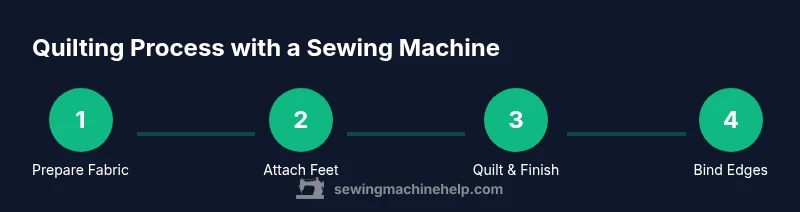
- 1
Attach walking foot and prepare machine
Power off, remove current foot, attach walking foot, and ensure presser foot pressure is suitable for multiple layers. Test stitch on scraps to confirm smooth feeding.
Tip: Walk the fabric under the foot slowly to let the feed dogs engage evenly. - 2
Thread and test tension on scraps
Thread the machine with the chosen thread and test on scrap fabric layered like your quilt sandwich. Adjust top and bobbin tension until stitches lie flat on the fabric surface.
Tip: Check for bird nesting; if seen, rethread and rewind the bobbin. - 3
Layer your quilt sandwich
Lay backing fabric face down, add batting, then top fabric face up. Use pins or clips to secure; align edges precisely.
Tip: Leave extra fabric at edges to allow easy binding later. - 4
Choose a simple quilting pattern
Begin with straight lines or stitch-in-the-ditch to learn machine control. If free-motion, lower feed dogs and use a steady hand speed.
Tip: Mark parallel guide lines to practice consistent spacing. - 5
Quilt a small section and assess
Sew a small block to gauge stitch quality and fabric behavior. Pause to realign layers if necessary before continuing.
Tip: Keep your hands relaxed and let the machine feed itself rather than forcing movement. - 6
Finish and bind the quilt
Once quilting is complete, trim excess fabric and bind edges. Inspect for loose threads and trim them, then wash lightly to set stitches.
Tip: Test wash a scrap to see how the stitches hold with your chosen batting.
Your Questions Answered
Can I quilt with embroidery settings on my machine?
Embroidery settings can be used for decorative quilting but are not ideal for all quilting tasks. Stick to straight stitches or weave patterns with the walking foot, and reserve embroidery mode for embellishments. Always test on scraps first.
Embroidery settings can work for decorative quilting, but test on scraps and stick to basic stitches for most quilting tasks.
What fabrics and batting work best for beginners?
Begin with smooth cotton fabrics and a light to medium weight batting. Avoid very slippery or very thick battings until you’re comfortable. Layering should remain stable and straight to prevent shifting during quilting.
Cotton fabrics with light to medium batting are good for beginners; start simple and steady.
Do I need a long-arm quilting machine to finish a quilt?
No. A home sewing and embroidery machine can finish many quilts, especially smaller sizes. A long-arm is helpful for large, dense quilts, but a carefully planned workflow with a walking foot can yield excellent results on most projects.
A long-arm is not necessary for most quilts; a home machine works well with planning and technique.
How can I prevent fabric from shifting during quilting?
Baste layers, use a walking foot, and minimize fabric drag with stable batting and stabilizers. Mark guides to help sew along straight lines and avoid sudden fabric shifts.
Baste layers, use the walking foot, and follow guides to keep layers aligned.
What are common issues and quick fixes?
Common issues include tension problems, thread nests, and skipped stitches. Quick fixes involve rethreading, cleaning the bobbin area, and ensuring the needle is the correct type and fully seated.
Tension issues and thread nests are common; rethread, check needle, and clean the bobbin area.
Watch Video
The Essentials
- Practice on scraps before quilting a real project
- Use the walking foot for multi-layer stability
- Prepare layers to prevent shifting and puckering
- Test tension on scraps and adjust accordingly
- Start with simple patterns and gradually expand