Embroidery with a Sewing Machine: A Comprehensive How-To for Home Sewists
Learn embroidery with a sewing machine through a comprehensive, step-by-step guide. Covers fabric selection, stabilizers, stitches, hooping, finishing, and care for durable, decorative results in 2026.


Embroidery with a sewing machine is a practical skill for home sewists that blends decorative stitching with simple machine settings. You’ll learn how to choose fabrics, stabilize the fabric, load the right thread, select stitches, and finish cleanly. According to Sewing Machine Help, a good setup and a little practice can yield professional-looking embroidery on everyday projects.
What embroidery with a sewing machine is and why it matters
Embroidery with a sewing machine combines decorative stitching with the reliability of a home machine. It’s accessible to most hobbyists and beginners who want to personalize apparel, home textiles, and gifts without investing in a dedicated embroidery unit. The technique relies on stabilizing the fabric, choosing the right needle and thread, and selecting stitches designed for embroidery rather than plain seamwork. When you master the basics, you gain the ability to add monograms, floral motifs, and custom logos to a wide range of projects. Practicing on scraps builds familiarity with stitch density and speed, reducing the risk of puckering or thread breaks. For the aspiring hobbyist, this approach is a bridge between traditional sewing and specialized machine embroidery, enabling creative exploration on a familiar toolset. In this guide you’ll learn the core ideas, practical steps, and common-sense tips that keep embroidery with a sewing machine fun and approachable.
Stabilizers: the invisible support that makes embroidery work
Stabilizers are the unsung heroes of machine embroidery. They provide the necessary body so stitches don’t pull fabric out of shape. The right stabilizer depends on the fabric and design. Tear-away stabilizers are great for woven fabrics and simple designs, while cut-away stabilizers offer stronger support for knits or dense stitching. For delicate fabrics like chiffon or silk, a water-soluble topper can prevent stabilizers from leaving marks. Always test your choice on a scrap swatch before starting a real project. If the design is large or dense, consider combining stabilizers or using a two-layer approach to balance stability and material feel. By understanding stabilizers, you gain control over stitch quality, fabric tension, and finish.
Stitch types and their best uses
Date back to basics: built-in machine stitches can be repurposed for embroidery with the right settings, but understanding stitch types is essential. Satin stitches create bold outlines, running stitches can form delicate fills, and zigzag patterns help stabilize and fill. For embroidery on sturdy fabrics, you can use denser satin or fill stitches; on light fabrics, keep stitch count lower to prevent bulk. If you’re digitizing designs, ensure the stitch angles follow the crop of your motif to avoid gaps. In general, polyester or rayon threads provide vibrant color and durability, while metallic threads add a decorative sheen with a slightly different tension behavior. Practice on scraps to find the balance between density, speed, and thread type. The aim is smooth, uninterrupted lines and even coverage across the design surface.
Fabric and thread compatibility: avoiding puckering and shredding
Not all fabrics play nicely with embroidery. Stable, medium-weight fabrics like cottons, linens, and cotton blends respond well to embroidery with a sewing machine when stabilized properly. Lightweight fabrics benefit from lighter stabilizers or toppers to prevent show-through. Knits require more careful tension and a stabilizer that prevents stitches from stretching the fabric. Choose threads that match the fabric weight and keep spool tension consistent. If you notice thread shredding or linting, rethread the machine and verify the needle is intact and properly sized for the thread type. Keeping a small stash of test fabrics helps you calibrate tension and density before you commit to a project.
Hoop setup and machine top considerations
Hooping is critical: fabric must be taut but not stretched. An improperly hooped fabric leads to skewed designs and loose stitches. Make sure the hoop is clean and free of fabric fibers before starting. Align the design area with the hoop center, then secure the hoop in place. Use the appropriate needle and thread combination for the fabric. If your machine features a jump stitch or a reposition feature, consider enabling it to prevent puckering in curved sections. Lowering the presser foot pressure on delicate fabrics can also help maintain balance between fabric and stabilizer. With careful hooping and setup, your embroidery produces clean, consistent stitches and professional-looking results.
A beginner project: practice motif step-by-step
Choose a simple floral or geometric motif with moderate stitch count for your first project. Use a cotton fabric with a tear-away stabilizer for initial practice. Hoop the fabric, load threads, and select a basic satin outline plus a fill stitch for the inner area. Start at a slow speed and watch for thread breaks or fabric shifting. After the design completes, trim loose threads, remove stabilizer, and press gently with a low-heat setting. This practice helps you understand how different fabrics respond to density and how to manage machine speed for crisp edges.
Troubleshooting common embroidery issues
If you notice looping underneath, check bobbin tension and ensure both top thread and bobbin are wound properly. Puckering occurs when fabric is too loose or stabilizer isn’t sufficient; adjust stabilizer type or tension and re-test on a scrap. Bursts of thread on the surface or bird-nesting under the fabric indicate misthreading or incorrect needle type; rethread from the needle to the spool and verify the needle size matches the thread. For satin and fill stitches, avoid excessive speed; slow, steady stitching yields cleaner edges and consistent density. Keeping your machine clean and well-lubricated is essential for reliability, especially during longer embroidery sessions.
Finishing and care: preserving embroidered projects
After completing an embroidery project, trim all jump threads and secure them. If you used tear-away stabilizer, carefully remove excess stabilizer from the back; for cut-away, completely trim away excess before washing. Iron the design on a low heat setting with a press cloth to avoid scorching threads. Always follow fabric care labels; some embroidery may shrink or change texture with washing. Proper finishing improves longevity and keeps colors vibrant through repeated use and laundering.
Additional resources and credible references
For further guidance and reliable techniques, consider consulting established, credible resources:
- Extension resources from universities offer tested guidance on stabilizers and fabric interactions:
- https://extension.illinois.edu
- https://extension.oregonstate.edu
- https://extension.psu.edu
These sources provide practical, evidence-based information relevant to home sewing projects and embroidery, helping you improve outcomes and avoid common mistakes.
Tools & Materials
- Embroidery hoop (machine-compatible)(Choose the correct size for your design and hoop type; ensure fabric is taut without distortion.)
- Stabilizers (tear-away and/or cut-away)(Select based on fabric weight and design density; test on a scrap before starting.)
- Embroidery thread (polyester or rayon)(Use high-quality thread; colorfast and smooth to reduce lint.)
- Embroidery needle (size 75/11 or 80/12)(Choose needle type by fabric (ballpoint for knits).)
- Bobbin thread(Use a compatible bobbin thread that matches top thread weight.)
- Scissors or snips(Small, sharp scissors for trimming jump stitches precisely.)
- Water-soluble topper (optional)(Helpful for delicate fabrics to prevent stabilizer impressions.)
- Fabric markers or chalk(For marking hoop alignment or practice lines on fabric.)
- Spray bottle for water or topper removal(Use to aid stabilizer removal on certain fabrics.)
- Seam ripper(Useful for correcting thread path or removing errors without damaging fabric.)
Steps
Estimated time: 30-45 minutes
- 1
Prepare fabric and stabilizer
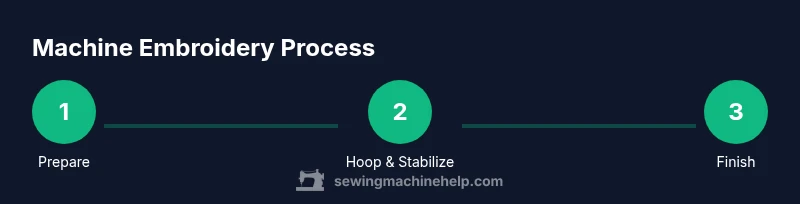
Choose the stabilizer appropriate for the fabric and design density. Cut a piece large enough to clear the hoop and secure the fabric, then position the stabilizer behind the fabric. Align the fabric with the hoop, ensuring no wrinkles or folds Twenty: test by running a short, slow stitch on scrap. This prepares a stable base for clean stitches.
Tip: Test on scrap fabric to confirm tension and density before committing to the final piece. - 2
Load thread and needle
Thread the machine with the top thread and wind a bobbin that matches the weight of the top thread. Install the embroidery needle size appropriate for the thread type and fabric, then perform a manual stitch to verify smooth feeding. Avoid tangled threads by rethreading if you see any loops on the needle plate.
Tip: Use a new needle to prevent skipped stitches and occasional breakage. - 3
Hoop fabric and set machine
Place the fabric and stabilizer between the hoop clamps, ensuring the design area is centered under the needle. Tighten the hoop so fabric is taut but not stretched. Load the design and check the bobbin cover to confirm it’s closed properly before starting.
Tip: Avoid overtightening the hoop; fabric should be taut with no slack. - 4
Choose stitch and tension
Select the embroidery stitch or design in your pattern. Adjust the machine tension if you notice looping or puckering on the back side. Start at a slow speed to monitor how stitches form; increase speed gradually as you gain confidence.
Tip: Test density on a scrap fabric to avoid heavy stitch lines on the final piece. - 5
Start stitching and monitor
Begin the embroidery and keep an eye on alignment and fabric movement. Pause if you detect threads snagging or if the fabric shifts; correct gently and resume. Let the machine complete the design without forcing it; long threads can accumulate and cause tangling.
Tip: Use a slow speed until you’re confident with the design flow. - 6
Finish, trim threads, and press
When the design completes, clip jump stitches close to the fabric and remove the hoop. If stabilizer needs removal, follow the recommended method for your stabilizer type (tear-away or cut-away). Press the finished piece with a pressing cloth at a low temperature to preserve stitches.
Tip: Cool the fabric for a moment before pressing to avoid warping.
Your Questions Answered
What fabrics are best for embroidery with a sewing machine?
Cotton, linen, and cotton blends are ideal for beginners. For knits, use a stabilizer that prevents stretching and puckering. Always test on scraps before committing to a project.
Cotton and linen are great starting points; if you’re working with knits, use a stabilizer and test first.
Do I need a dedicated embroidery machine to embroider?
No. A standard sewing machine can do embroidery with the right stabilizers, stitches, and hooping. Start with simple designs and practice to improve results.
You don’t need a dedicated machine; a regular sewing machine can handle embroidery with practice.
How do I choose the right stabilizer?
Select based on fabric weight and design density. Tear-away works well for woven fabrics, cut-away for heavier projects, and topper can help delicate fabrics. Always test on scrap.
Pick the stabilizer based on your fabric and design, and test on scrap first.
Why does my design puckers or loops appear underneath?
Puckering usually means fabric tension is off or stabilizer isn’t enough for the design. Rebalance tension, switch stabilizers, and re-test on a scrap.
Puckering happens when the fabric isn’t properly stabilized or tension is off. Try a different stabilizer and test again.
How can I remove stabilizer after embroidery?
Tear-away stabilizer should be peeled away gently; cut-away requires trimming around the design before washing. Follow the stabilizer’s instructions for best results.
Tear-away is peeled off; cut-away is trimmed after design completion.
Can metallic threads be used with a home sewing machine?
Yes, but use a sharp metallic needle and reduce machine speed to prevent thread shredding. Test on scraps to adjust tension and density.
Metallic threads work with some care—use the right needle and slower speed, test first.
Watch Video
The Essentials
- Choose stabilizer appropriate to fabric.
- Hoop securely and test before starting.
- Match threads and needles for smooth operation.
- Finish with proper care to preserve embroidery.
- Practice on scraps before tackling real designs.