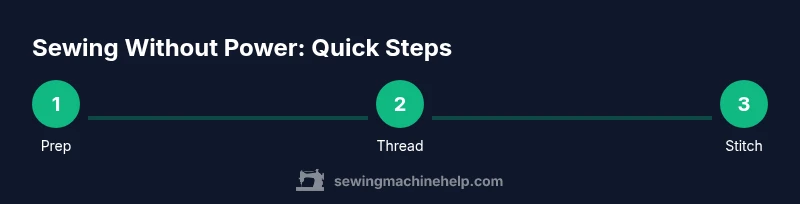
Sewing Without Electricity: A Practical Guide for Home Sewists
Learn how to sew without electricity using hand-crank or battery-powered setups. This practical guide covers tools, techniques, safety, and step-by-step methods for everyday projects.


Sewing without electricity is entirely feasible with a manual or battery-powered setup. This guide shows you how to select the right equipment, prepare your workspace, and master a step-by-step method to sew common seams, hems, and repairs by hand or with a hand-crank machine. You’ll learn practical tips to maintain stitch quality and safety.
Understanding Sewing Without Electricity
Understanding sewing without electricity requires adjusting expectations and planning ahead. According to Sewing Machine Help, many home sewists can complete everyday repairs or simple garments using a manual setup. This approach works best for straight seams, hems, and lightweight fabrics where speed is not the primary goal. By learning to control fabric feed, needle timing, and thread tension by feel, you can achieve durable stitches even when the power is out. Start by acknowledging the limits: without a motor, precision comes from manual rhythm, a steady hand, and well-wed fabrics. This foundation helps you transition to more complex tasks later and reduces frustration during power outages or travel.
Power Alternatives: Hand Cranks, Foot Pedals, and Battery Packs
Manual options include hand-crank machines, pedalless or foot-operated devices, and compact battery-powered modules. Hand-cranks require you to rotate a wheel with one hand while guiding fabric with the other. Foot-powered devices mimic pedal action but often rely on an auxiliary drive or manual wheel. Battery packs offer portable power for select models, but their availability varies by brand. When choosing, prioritize reliability of the stitch mechanism, a simple straight-stitch option, and a sturdy needle plate. Sewing Machine Help analysis shows that for most home projects, a basic manual setup provides enough control for seams held under tension and accurate seam allowances on woven fabrics.
Manual Setup: Threading, Bobbins, and Tension Without Power
Threading a manual system follows the same path as powered machines, but you won’t have a motor to assist healing any tangles. Start by threading the upper thread through the needle eye and tension guide, then wind a bobbin by hand using the same thread weight you would for a powered machine. Place the bobbin in its case with the thread exiting in the correct direction. Check tension by lifting the presser foot and pulling on the thread; a slight resistance indicates proper balance. If you notice looping or loose threads, recheck the threading path and ensure the needle is not bent. Practicing on scrap fabric helps you dial in tension before working on a real project.
Sewing Techniques When Power Is Out
Without electricity, focus on straight seams, careful fabric handling, and slower, deliberate movements. Use a light touch on the fabric to avoid puckering, and guide the fabric with your non-dominant hand just ahead of the needle. For backstitching, advance slightly and reverse by turning the wheel backward for a few stitches to lock the seam. If your device supports zigzag or other stitches, test them on scrap first; many manual machines are best suited to straight stitches. As you gain confidence, practice finishing a hem with consistent seam allowances and neat thread tails to prevent unraveling.
Maintenance, Safety, and Common Pitfalls
A clean, well-lubricated machine reduces resistance and improves stitching control. Wipe away lint from the bobbin area and lightly oil moving parts per the manufacturer’s guidance. Safety comes first: keep fingers away from the needle while turning the wheel, and never operate near children without supervision. Common pitfalls include bent needles, incorrect bobbin winding, and attempting to force fabric through the needle plate. If you experience skipping stitches, rethread everything and verify the needle is properly installed. Regular practice builds muscle memory, reducing mistakes as you work without power.
Getting Comfortable: Practice Projects and Scheduling
Start with simple projects like a straight-stitched hem or a basic repair—darning a seam or sewing a repair patch on lightweight fabric is a good warm-up. Schedule short practice sessions—15 to 30 minutes a day—to build steadiness and rhythm. As you progress, move to larger projects, such as hemming a pair of pants or sewing a basic tote bag, always prioritizing consistency over speed. Document your progress in a notebook: note fabric type, thread choice, and tension adjustments. This habit helps you tailor your approach to different fabrics and reduces trial-and-error time.
Tools & Materials
- Hand-crank sewing machine (manual operation)(Ensure the machine runs smoothly, has a straight-stitch option, and is balanced on a stable surface.)
- Spare bobbins(Wound with thread matching the fabric and machine type.)
- All-purpose sewing thread(Choose color to match projects; consider weight appropriate for fabric (lighter for delicate, medium for cottons, thicker for denim).)
- Assorted sewing needles for the machine(Select needles by fabric type; keep a sharps or universal needle on hand.)
- Fabric scissors(Sharp, dedicated to fabric—avoid using on paper or foil.)
- Practice fabric or scrap material(Cotton muslin or similar works well for initial testing.)
- Pins and pincushion(Helpful to stabilize fabric while guiding stitches.)
- Fabric chalk or marking pen(Useful for marking seam allowances or stitch lines.)
- Thimble(Protects finger during manual guiding of the needle.)
Steps
Estimated time: 60-90 minutes
- 1
Prepare your workspace
Set up a flat, well-lit table with good seating posture. Clear the area of clutter, lay out fabric, threads, and a small container for pins. Prepare any marking tools and a scrap piece for testing before you begin stitching.
Tip: Position the machine so you can reach the hand crank and fabric without twisting your body. - 2
Thread the machine and wind a bobbin by hand
Thread the machine following the path you would with power, then wind a bobbin using the machine’s bobbin winding mechanism or by hand if your model requires. Place the bobbin in its case with the thread exiting in the correct direction. Test the tension by holding the top thread and gently pulling; a slight resistance indicates proper balance.
Tip: Take your time winding the bobbin to avoid loose wraps that can cause uneven stitches. - 3
Position fabric and align seam line
Lay the fabric under the presser foot with the edge aligned to your seam line. Use pins if needed to keep fabric from shifting. Raise or lower the needle by hand to position it precisely at the start of the seam, then lower the presser foot.
Tip: Mark the seam allowance on the fabric first to guide your stitching distance. - 4
Start stitching with hand-crank or foot movement
Begin sewing with a slow, even cadence. Use a steady, controlled wrist and guide the fabric with your other hand. Stop briefly to check fabric alignment if you notice drift or misalignment.
Tip: Avoid forcing fabric; let the feed dog grab the fabric and move it forward gradually. - 5
Finish seam and secure with backstitch
When you reach the end, backstitch a few stitches to lock the seam. Trim tails neatly and inspect the seam for consistent stitch length and tension. If needed, redo the last few stitches to ensure durability.
Tip: Backstitching strengthens the seam; do it carefully to avoid skipping stitches. - 6
Finish, trim threads, and clean up
Clip threads close to the fabric, then remove pins and smooth any fabric edges. Lightly brush away lint from the bobbin area and store tools in a dedicated container. Wipe the workspace and return the machine to its resting position.
Tip: Keep a small cloth handy to wipe away oil or lint after every project.
Your Questions Answered
Can a regular sewing machine operate without electricity?
Some machines offer manual or battery-assisted operation, but most standard home machines rely on power. You can use a hand-crank attachment or rely on a dedicated manual device for basic projects.
Some machines can run without electricity with manual options, but many home machines require power. A hand-crank or dedicated manual device can handle basic sewing tasks.
What equipment is essential to sew without power?
A reliable manual sewing setup, spare bobbins, appropriate thread, and fabric. Keep marking tools, scissors, and pins handy to stabilize fabric as you sew.
You’ll need a manual sewing setup, bobbins, thread, and fabric, plus basic tools like pins and scissors.
Is sewing by hand slower than using a machine?
Yes, sewing by hand or with a hand-crank typically takes longer than powered sewing, but you gain control and can complete essential repairs when power isn’t available.
Hand sewing takes more time, but gives you control and can fix things when power is out.
What fabrics are best for hand-crank sewing?
Light to medium-weight woven fabrics like cotton, linen, and some silks work well. Heavy fabrics like denim can be challenging without power unless the machine supports heavy-duty features.
Cotton and linen are great starting fabrics; denims may be tougher without power.
How do I maintain tension when hand-cranking?
Tension is controlled by thread path and fabric grip. If stitches loop, rethread the upper thread, check bobbin alignment, and feed fabric slowly.
Adjust the thread path and fabric feed, rethread if loops form.
Are there safety concerns when using a manual machine?
Yes. Keep fingers clear of the needle, work in a stable area, and avoid distractions. Store sharp tools safely when not in use.
Yes—watch your fingers and keep tools out of reach of kids.
Watch Video
The Essentials
- Practice with a simple project to build rhythm.
- Keep fabrics light for easier manual feeding.
- Dial tension by feel; small changes matter.
- Safety first: protect fingers and store tools properly.
- The Sewing Machine Help team recommends starting with a basic hand-crank setup.