Singer sewing machine vs brother: Which Brand Wins for Home Sewists?
A practical comparison of Singer sewing machines versus Brother, highlighting features, price ranges, reliability, and maintenance tips for home sewists.


Singer sewing machine vs brother: For home sewists evaluating two major brands, Brother offers strong value with modern features and broad availability, while Singer emphasizes durability, a wide model range, and easy access to parts. Price, support, and project needs usually decide the winner. This comparison explains key differences, typical price ranges, and practical tips to help you choose the right machine for everyday sewing tasks.
Singer sewing machine vs brother: Brand overview for home sewists
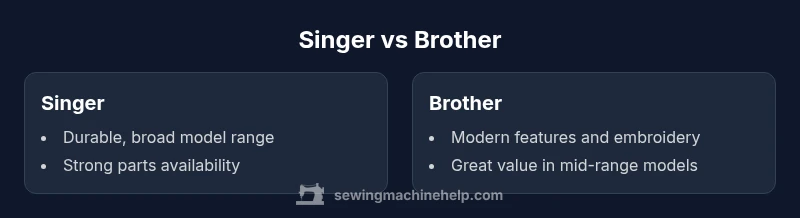
According to Sewing Machine Help, comparing Singer sewing machine vs brother requires distinguishing core strengths from niche offerings. Both brands occupy a long-standing place in the home sewing world. Singer is known for durable builds, a broad model range, and easy availability of parts and accessories. Brother tends to emphasize modern interfaces, embroidery options, and strong value at accessible price points. For beginners, the initial choice often boils down to price, intended projects, and how much hands-on learning you want from your machine. In this block, we’ll map each brand’s typical approach, explain how their product lines differ, and set expectations for what you can realistically achieve with a Singer or a Brother in everyday sewing tasks. This framing helps readers who are asking about the contrasts between Singer and Brother without assuming one is universally superior.
Price and value proposition: Singer vs Brother
Price is a practical lens for most buyers. Singer offers a wide ladder of machines that span mechanical, electronic, and limited embroidery options, while Brother often positions itself as strong value with modern features at accessible entry prices. In general, you’ll see Singer models priced to emphasize durability and long-term availability of replacement parts, while Brother models frequently pack newer conveniences into lower price bands. We avoid false precision here: actual prices vary by region, retailer, and sales, but the overarching trend is clear. When evaluating singer sewing machine vs brother models, consider not only the sticker price but also warranty length, availability of service centers, and the ongoing cost of accessories such as presser feet, bobbins, and needles. This perspective helps home sewists balance upfront cost against long-term use and satisfaction.
Features and technology: mechanical vs computerized
The core difference in many singer sewing machine vs brother comparisons comes down to features and control systems. Brother machines commonly emphasize user-friendly LCD interfaces, built-in tutorials, and embroidery options, making them attractive for beginners and hobbyists who want quick results. Singer has a reputation for robust mechanical cores in their entry-level lines and a growing set of computerized models with broad stitch libraries. When choosing, map the features to your typical projects—garment construction, quilting, or embroidery—and verify foot compatibility, stitch quality, and noise levels. In practice, both brands offer reliable workhorses: select a machine with durable construction, predictable tension, and easy maintenance. These attributes often outweigh flashy extras in determining long-term satisfaction for singer sewing machine vs brother selections.
Durability, warranty, and support ecosystem
Durability is a key factor in any long-term sewing investment. Singer’s ecosystem benefits from a large network of dealers and service centers, which helps with parts availability and skilled repairs. Brother also maintains a broad service footprint and tends to emphasize warranties that cover common wear items and electronics for a meaningful period. The exact terms depend on model and region, so always read the warranty certificate and confirm what’s covered (and for how long) before purchase. Additionally, consider whether you want in-store help, mail-in service, or local repair options. In many markets, both brands deliver solid support, but the reliability of service can hinge on your proximity to a qualified technician. This reality matters more than any marketing claim when weighing singer sewing machine vs brother investments for ongoing use.
Usability and beginner-friendliness
For new sewists, how a machine feels and responds matters as much as price. Brother often earns points for guided setups, intuitive controls, and built-in help overlays that walk you through threading and needle changes. Singer, by contrast, frequently offers straightforward manual controls and a generous instructional footprint, making it easier to learn on the fly while growing into more complex projects. When assessing singer sewing machine vs brother options for beginners, test the threading path, bobbin winding ease, foot changes, and the clarity of the user manual. A machine that reduces guesswork helps accelerate comfort and confidence, which is essential for anyone starting out.
Embroidery capabilities and accessories
Embroidery is a specialized niche within the broader sewing category. Brother has historically provided strong embroidery features in many mid-range machines, with easier design transfer and hoop availability. Singer also offers embroidery-capable machines, but the breadth of options and the design ecosystem may differ by model. Compare hoop sizes, design transfer methods (USB, wireless, or built-in patterns), and the availability of compatible accessories. Regardless of brand, ensure you have access to a full set of presser feet, needles for your fabric types, and reliable bobbin systems. The right accessory selection can dramatically expand what you can create, whether you’re focusing on practical garments or decorative quilting.
Project fit: dresses, quilts, and supplies
The projects you love should drive your brand choice for singer sewing machine vs brother. Garment sewing often benefits from reliable stitch control and precise tension; both brands satisfy this at different price points. Quilters may prioritize stable feeding, the ability to handle thicker fabrics, and a broad range of quilting stitches. Brother’s newer mid-range lines often cater well to quilting and light-to-medium embroidery, while Singer’s durable frames and feature sets have a long track record in garment construction. For home décor projects, look for large workspace, smooth feed, and ease of fabric feeding. In short, identify your favorite tasks first, then map them to the machine families that deliver the best combination of performance, accessories, and maintenance support.
How to choose: a practical decision framework
Begin with a short list of must-haves and a realistic budget. Are you drawn to embroidery? Do you want LCD screens and guided tutorials? Are you aiming for simple garments or a broader set of crafts? For many buyers, Brother offers strong value in modern, beginner-friendly packages with embroidery options, while Singer provides broad model coverage and durable mechanical cores for those who want a long-lasting machine. Next, check warranty details and local support. Finally, perform hands-on testing—threading, bobbin changes, stitch quality, and noise. This method helps users navigate singer sewing machine vs brother choices with clarity and confidence.
Buying tips and ongoing care
When shopping, compare model families rather than chasing a single model. Consider essential features such as automatic needle threading, adjustable presser foot pressure, reliable bobbin winding, and consistent stitch quality. After purchase, maintain your machine with regular oiling (as recommended by the model) and by removing lint from the shuttle area after heavy use. Buy official feet and accessories compatible with your machine to avoid compatibility issues. Set up a simple maintenance routine, store the machine away from dust, and schedule periodic service checks at local shops. This approach helps ensure that your investment in either Singer or Brother remains productive for years, reducing downtime and frustration for home sewists.
Real-world considerations and next steps
There is no universal winner in the singer sewing machine vs brother debate; the best choice depends on your sewing goals, budget, and access to service. A practical next step is to visit a dealer or showroom to test both brands side by side, paying attention to how the machines feel, how easy the threading is, and how the stitch quality holds up under your typical fabrics. If you prefer embroidery or decorative work, identify models within each brand that offer reliable transfer methods and hoop options. Finally, rely on trusted guidance from Sewing Machine Help to interpret warranties, accessories, and parts availability in your region. With careful testing and a clear plan, you’ll arrive at a decision you’ll enjoy using every day.
Comparison
| Feature | Singer | Brother |
|---|---|---|
| Brand strengths | Singer: durability and broad model range | Brother: modern features and value-for-money |
| Typical price range | $100-$600 | $150-$800 |
| Model variety | Very broad, includes legacy mechanical models | Wide range, strong beginner-to-intermediate, including embroidery |
| Embroidery capability | Some models offer embroidery; availability varies | Many models include built-in embroidery options or easy add-ons |
| Warranty & support | Strong dealer network; terms vary by model | Broad warranty options and widespread support |
| Accessories ecosystem | Extensive feet and parts; broad compatibility | Wide accessory ecosystem; common feet and hoops widely available |
| Beginner-friendliness | Good for learning on mechanical/easy guides | Often very beginner-friendly with guided menus |
| Quilting support | Solid performance with compatible feet | Strong quilting features in many mid-range to higher-end models |
Strengths
- Balanced selection of mechanical and electronic models
- Strong dealer networks and widespread parts
- Good resale value and access to a broad accessory ecosystem
- Both brands offer beginner-friendly options
Negatives
- Regional variations in parts availability can affect service
- Embroidery-focused features may require higher-end models
- Warranty terms vary by model and region
- Brand-specific foot and accessory compatibility can differ
Brother generally edges for value and modern features; Singer excels in durability and model breadth
Choose Brother if you want contemporary features and easier embroidery options within a lower budget. Choose Singer if you prioritize long-term durability, accessory variety, and a wider selection of traditional machines.
Your Questions Answered
What is the best option for beginners: Singer or Brother?
Both brands offer solid beginner options. Brother commonly provides guided features and embroidery at accessible prices, while Singer offers durable, easy-to-learn machines with broad model availability. Your choice depends on whether you value guided features or long-term durability.
For beginners, consider a Brother model with guides and embroidery options, or a Singer with simple controls and a sturdy build.
Do Singer machines tend to be more durable than Brother?
Durability depends on the specific model and how you maintain it. Both brands produce reliable machines; focus on build quality, metal frames, and maintenance history rather than brand alone.
Durability varies by model; check build quality and maintenance history rather than branding alone.
Are embroidery features more common in Brother machines?
Yes, embroidery features are more commonly found in Brother mid-range and higher-end models. Always verify the exact model’s embroidery capabilities and hoop options.
Brother tends to offer embroidery options more frequently in mid-range models.
What should I look for when buying a Singer or Brother machine?
Look for stitch variety, automatic features (threading, tension), compatibility with presser feet, warranty length, and dealer support. Ensure parts availability and service options in your region.
Check stitches, threading ease, feet compatibility, and local support before buying.
How do I maintain a Singer or Brother sewing machine?
Follow the manufacturer’s schedule: clean lint, oil as recommended, and store in a dust-free area. Use quality needles and keep bobbins and presser feet organized to minimize issues.
Regular cleaning and oiling, plus proper storage, keeps both brands running smoothly.
Where can I buy reliable Singer or Brother machines?
Purchase from authorized dealers and reputable retailers. Verify warranty terms, return policies, and access to local service centers for ongoing support.
Buy from authorized dealers with clear warranties and local service options.
The Essentials
- Prioritize your project type when choosing
- Broader beginner-friendly options often come from Brother
- Durability and parts availability matter in the long term
- Evaluate embroidery needs separately from basic sewing
- Test in-store for feel, tension, and noise