Difference Between Sewing Machine: A Practical Guide for Buyers
Explore the difference between sewing machine types, including mechanical vs electronic models, and learn how to choose the best fit for your budget, projects, and skill level with evidence-based guidance from Sewing Machine Help.


The difference between sewing machine types centers on mechanical versus electronic (computerized) systems. Mechanical machines emphasize durability, hands-on control, and straightforward maintenance, while electronic models add automated stitches, precision features, and user-friendly interfaces. For home sewists, the choice depends on budget, intended projects, and tolerance for upkeep; this guide clarifies the contrasts and helps you decide with confidence. Sewing Machine Help analysis, 2026.
What sets a sewing machine apart: core distinctions
The phrase difference between sewing machine types matters to home sewers who want reliable results without a steep learning curve. At the core, you’re choosing between mechanical systems—driven by belts, cams, and manual controls—and electronic systems, which rely on motors, sensors, and digital interfaces. This distinction affects how you select stitches, adjust tension, and perform routine maintenance. According to Sewing Machine Help, understanding these core distinctions is the first step to a smarter purchase. The term difference between sewing machine often nudges beginners toward a hands-on approach, while more advanced hobbyists search for flexibility and automation. By anchoring your decision in how you plan to sew, you’ll align features with real-world projects and avoid overpaying for capabilities you won’t use.
Mechanical vs Electronic: the fundamental split
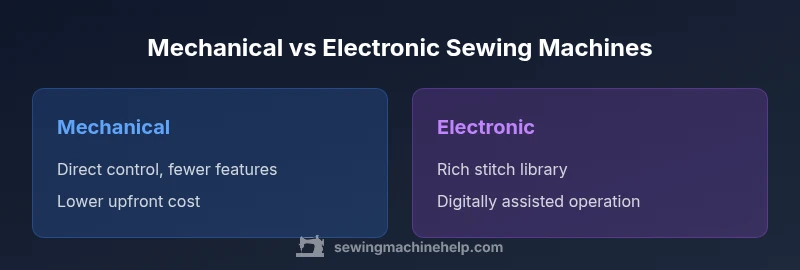
Mechanical sewing machines rely on simple levers, dials, and knobs. They tend to be robust, outperforming in low-light conditions and offering direct control over stitch width and length. Electronic models add microprocessors, LCD screens, and preset stitch programs that are easily called up with a touch or a button. The difference between sewing machine types here isn’t just about control; it’s about how you learn, adapt, and grow. If you want fast results with minimal setup, electronic machines may be the better fit; if you value longevity, repairability, and a tactile feel, mechanical models deserve serious consideration. Sewing Machine Help notes that many beginners benefit from starting with mechanical machines to build fundamentals before upgrading.
Stitch options and control interfaces
A central element in the difference between sewing machine types is stitch variety and how you select them. Mechanical machines usually offer a practical set of built-in stitches controlled by a dial, with fewer presets but sometimes longer lifespans. Electronic machines present a much larger library of stitches, including decorative and utility options, selectable via digital menus. This distinction influences projects—from simple hems to intricate quilting. For beginners, a moderate number of stitches with clear labeling is often ideal, while advanced users may prefer a broad library and programmable sequences. The Sewing Machine Help team highlights that you should test both interfaces in-store to feel the difference before buying.
Build quality, maintenance, and reliability
Durability differs notably between the two camps. Mechanical machines feature fewer electronic components and are often easier to repair with basic tools; repairs, when needed, tend to emphasize timing belts and cams rather than firmware. Electronic models introduce more electronics and sensors, which can improve precision but may require service for motherboard or display failures. Regular maintenance—like cleaning lint, oiling moving parts, and changing needles—remains essential for both, though the frequency and type of maintenance can vary. Sewing Machine Help analysis shows that buyers who value longevity and lower long-term service costs often lean toward mechanical models, while those prioritizing versatility may accept more upkeep for electronic convenience.
Price and long-term value: budgeting for the difference
Budget is a major factor in the difference between sewing machine types. Mechanical machines typically start lower and scale up with build quality and brand reputation, offering approachable prices for beginners and hobbyists. Electronic machines span a wider range, with entry-level models still affordable but mid- to high-end versions presenting substantial feature sets and higher price tags. When evaluating price versus value, consider your expected usage, the kinds of fabrics you sew, and whether you need features like automatic needle threading, variable speed, or built-in embroidery. The long-term cost should include potential repairs, replacement parts, and software updates where applicable.
Use-case scenarios: who benefits from each type
For simple tasks such as mending, straight stitching, and basic garment construction, mechanical machines deliver reliable results with minimal fuss. They are ideal for beginners who want to learn stitch mechanics without being overwhelmed by menus or screens. If you frequently tackle densely woven fabrics, quilts, or decorative projects, an electronic machine can expand your toolkit with diverse stitches and programmable sequences. In households with multiple crafters and varying skill levels, a mid-range computerized model can balance ease of use with flexibility. Sewing Machine Help emphasizes matching your projects to the machine’s strengths and avoiding feature overload that leads to buyer’s remorse.
Common myths and misconceptions
A common myth is that electronic machines automatically yield perfect seams with no effort. In reality, even computerized models require correct needle type, tension settings, and fabric knowledge. Another misconception is that mechanical machines cannot handle complex stitches; many robust mechanical units can manage a vast range of tasks when paired with the right needle and foot. A final point: price does not always predict quality. Some budget mechanical models are surprisingly capable, while expensive electronic machines may offer features you won’t use. From Sewing Machine Help’s perspective, the truth lies in aligning capabilities with what you actually sew.
How to evaluate a machine in a store
In-store testing is essential to discern the difference between sewing machine types. Bring the fabrics you sew most often and test stitch consistency, feed quality, and thread wrapping. Check the pedal response, the speed control, and the ease of changing presser feet. For electronic models, flip through stitch options and confirm the interface is intuitive. For mechanical machines, verify the tension and stitch length are smooth with minimal noise. Ask about warranty terms and availability of local service centers. The goal is to identify which machine feels reliable, supports your upcoming projects, and remains comfortable to use during long sewing sessions.
Brand-agnostic guidance: choosing across brands
Brand reputation matters, but the core difference between sewing machine types transcends brands. Compare build quality, warranty coverage, and service networks rather than chasing a single well-known brand. Some brands emphasize mechanical durability with strong customer support, while others specialize in feature-rich electronic platforms. Use a side-by-side comparison to weigh stitch libraries, foot pedestals, bobbin systems, and maintenance requirements. Remember, your choice should last several years, so consider future needs as skill grows and projects diversify. Sewing Machine Help suggests focusing on practical needs first, then exploring brand options second.
Practical testing checklist
Before purchasing, bring a few fabrics you use most often, including a dense knit and a light woven. Test straight seams, zigzag stitches, and any decorative stitches you plan to use. Make sure you can adjust stitch length, width, and tension easily. Try different fabrics with different needles to evaluate fabric feed and seam integrity. Check the machine’s responsiveness to speed control and needle threading ease; for electronic models, test the menu navigation and preset programs. Finally, verify the availability of local service, parts, and a clear warranty policy. This checklist helps you distinguish the difference between sewing machine types in practical terms.
Sustainability and repair considerations
Repairability plays a crucial role in total cost of ownership. Mechanical machines often offer easier, cheaper repairs due to simpler components and a larger pool of local technicians. Electronics may require authorized service centers and sometimes more expensive parts. Consider the environmental impact of parts replacement and the availability of refurbished options. If sustainability matters, evaluate the manufacturer’s commitment to spare parts availability and repair programs. Understanding repair paths is a practical way to assess the true value in the difference between sewing machine types.
Comparison
| Feature | Mechanical | Electronic/Computerized |
|---|---|---|
| Core difference | Manual controls, durable build | Automated stitches, digital interface |
| Stitch variety | Fewer built-in stitches, simple options | Large library including decorative stitches |
| User interface | Dial knobs, tactile feedback | LCD touch/menu-driven |
| Maintenance | Fewer electronics, straightforward maintenance | Electronic components require routine care |
| Price range | $150-$900 | $400-$2000 |
| Best for | Beginners, reliability, DIY basics | Quilting, apparel, tech-savvy users |
Strengths
- Hands-on control helps build sewing fundamentals
- Lower upfront cost for basic mechanical models
- Fewer electronics mean simpler maintenance and repair
- Long-term durability with robust mechanical parts
Negatives
- Limited stitch variety and automation compared with electronic models
- Learning curve for manual controls can be steeper
- Some complex tasks take longer to program manually
Electronic machines excel in versatility; mechanical machines win on simplicity and durability
Choose electronic if you want a broad stitch library and automation. Opt for mechanical if you value straightforward use and easy repairs; start with mechanical if you are a beginner and plan to grow into more features later.
Your Questions Answered
What is the main difference between mechanical and electronic sewing machines?
The main difference is how stitches are selected and controlled. Mechanical machines rely on knobs and levers for a straightforward, durable experience, while electronic machines use digital controls and a broader stitch library, offering more options and convenience. Both require correct needle selection and fabric knowledge for best results.
The main difference is that mechanical machines use knobs for stitches, while electronic machines use digital controls and more stitches.
Is a mechanical sewing machine better for beginners?
Mechanical machines are often recommended for beginners due to their simplicity, direct feedback, and repairability. They help you learn essential techniques without relying on automated settings. As you gain experience, you can switch to electronic models to access more features if desired.
Mechanical machines are great for beginners because they're simple and easy to repair.
Do electronic machines require more maintenance?
Electronic machines can require more specialized maintenance due to sensors and circuits, but with regular care and professional service when needed, they remain reliable. Routine cleaning, oiling prescribed parts, and dust management help maximize their lifespan.
Electronic machines need regular cleaning and occasional professional service.
Can you upgrade a mechanical machine with more stitches?
Mechanical machines typically cannot be upgraded with new stitches as easily as electronic ones. If you anticipate needing many decorative stitches, an electronic model or a hybrid may better suit your needs. Always check the stitch library before purchase.
Upgrading stitches is harder on mechanical machines; consider electronics if you want more options.
How do I test stitch quality in-store?
Bring fabrics similar to your projects and run several stitches across the material. Check seam straightness, tension, and how the fabric feeds under pressure. Evaluate the consistency of stitches and how well the machine handles different fabrics.
Test stitching on real fabrics; check seam quality and feed.
What is the best value in the difference between sewing machine types?
Value depends on your usage: mechanical machines offer reliable basics at a lower price, while entry-to-mid level electronic models provide versatility at a moderate premium. Balance intended projects, learning curve, and budget to decide.
Value depends on your projects and budget; start with basics and grow.
The Essentials
- Define your project scope before choosing a type
- Electronic machines offer greater versatility and efficiency
- Mechanical machines prioritize durability and simplicity
- Test in-store to feel the interface and feed quality
- Consider repairability and service availability in your region