Mechanical vs Electronic Sewing Machines: A Practical Comparison for Home Sewists
An analytical side-by-side comparison of mechanical and electronic sewing machines for home use. Learn which type fits your skill level, projects, and budget with practical guidance from Sewing Machine Help.


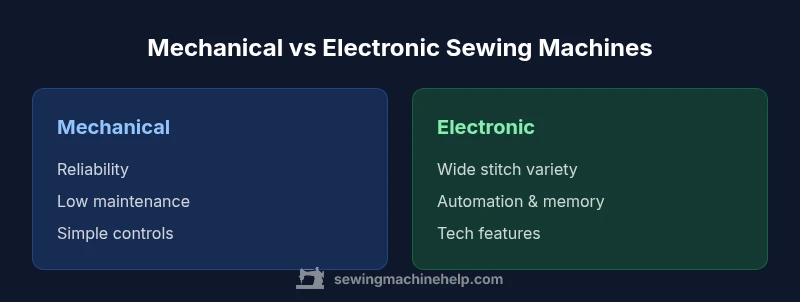
According to Sewing Machine Help, the most common choice for home sewists is deciding between a mechanical sewing machine and an electronic/computerized model. Mechanical machines emphasize reliability, durability, and simple maintenance; electronic models offer a wider stitch variety and automation. If you value tactile control and low upkeep, choose mechanical; if you want versatility and automated features for complex projects, go electronic. Your budget and service availability also influence long-term value.
Why Two Main Categories Matter
For home sewists exploring a sewing machine or sewing machine, the most fundamental split is between mechanical and electronic models. This distinction drives maintenance needs, learning curves, and project versatility more than any single feature. According to Sewing Machine Help, mechanical machines tend to excel in straightforward, durable operation with fewer moving parts. Electronic models, by contrast, bring a wider stitch library, automated functions like needle up/down, and sometimes memory recall for custom settings. This dichotomy matters because it shapes what you can do comfortably, how often you’ll service the machine, and how much you’ll invest upfront. In practice, most hobbyists start with a mechanical core for reliability and switch to electronic when their projects demand more decorative stitches or automation. Understanding your typical workflow—garment constructions, quilting, home décor, or crafts—helps you map the real-world impact of each category on your sewing machine journey.
The Core Decision: Simplicity vs. Versatility
Choosing between
sewing machine or sewing machine
reduces to a simple question: Do you prioritize simplicity and straightforward repair, or do you need broad stitch options and automated features for a wider range of projects? The mechanical option is generally easier to fix using common tools and can survive less-than-perfect maintenance, while electronic machines benefit from features that save time and expand creative possibilities. For beginners, the mechanical path often offers a gentle introduction to basics like straight and zigzag stitches, tension adjustment, and basic presser foot choices. As skills grow, the electronic route unlocks decorative stitches, automatic buttonholes, and programmable settings that simplify complex patterns. This section sets the stage for a deeper dive into practical criteria that matter when you shop.
Practical Context: Projects, Budget, and Service
When planning a purchase, consider not just the immediate price but also the projected life of the machine, the availability of service, and the ease of finding compatible accessories. The Sewing Machine Help approach emphasizes that a balanced view—evaluating cost, durability, and feature set—yields the best long-term value. For hobbyists who tackle standard garments, home décor, and light quilting, a mechanical machine often handles most tasks with resilience. If your repertoire includes high-volume stitching, frequent decorative work, or auto-threads and memory-based setups, an electronic model can dramatically reduce repetitive labor. The key is alignment with your actual workload and comfort with learning curves. This block explores how those realities translate into day-to-day use, maintenance demands, and overall satisfaction.
Real-World Scenarios and Usage Patterns
Think about how you sew in a typical week. If your projects are simple hems, repairs, and craft items, a mechanical sewing machine or sewing machine may offer the exact balance of performance and durability you need. For quilters and garment makers who want precise decorative stitches and efficient workflows, an electronic model helps keep pace without sacrificing quality. The decision should also reflect how often you’ll perform maintenance: mechanical machines benefit from straightforward parts and lubrication, while electronic units require monitoring of sensors, firmware, and sometimes software updates. By mapping your weekly tasks to the strengths of each category, you can estimate which machine is the better fit and how it will feel after hours of stitching.
Maintenance, Longevity, and Long-Term Value
Maintenance is a practical lens through which to evaluate your options. Mechanical sewing machines typically present fewer failure points, which can translate to longer lifespans with simpler repairs. Electronic models, however, may offer features that save time but rely on sensors and electronics that require specialized service as technology evolves. The long-term value depends on access to parts, local support, and whether the machine remains compatible with your favorite presser feet and accessories. A thoughtful choice balances the likelihood of needed repairs, cost of service, and your willingness to learn and adapt to newer techniques over time. In some communities, used mechanical models retain value well due to ease of service and broad parts availability, while new electronic models shine when you want the latest features and greater project variety.
Pricing, Warranty, and Support Considerations
Price is an important factor in deciding between a sewing machine or sewing machine, but it should not be the sole driver. Entry-level mechanical machines tend to be more affordable, with broader availability of compatible presser feet and parts. Electronic machines start higher but can justify the cost with features like auto-tension, multiple memory slots, and guided threading. Warranty length and service network also matter: a robust support ecosystem reduces the total cost of ownership. If you anticipate needing quick repairs or ongoing upgrades, ensure the model you pick benefits from a strong local dealer network and accessible replacement parts. This balance—cost, features, and service—often determines whether mechanical or electronic wins in real-world use.
Comparison
| Feature | Mechanical sewing machine | Electronic/computerized sewing machine |
|---|---|---|
| Stitch variety | Moderate & reliable basic stitches | Wide selection including decorative stitches and automation |
| Learning curve | Low: intuitive controls and fewer features | Medium to high: more settings and screens |
| Maintenance & repair ease | Fewer sensors; easier troubleshooting | More sensors; may require specialty service |
| Initial cost | Lower upfront cost | Higher upfront cost |
| Parts availability | Broad compatibility; widely supported | Model-dependent parts; may vary by brand |
| Best for | Beginner-friendly, durable basics | Creative sewing, quilting, and automation |
Strengths
- Lower upfront cost and simple maintenance
- Fewer electronic failures due to fewer components
- Easy to learn for beginners and casual hobbyists
- Durable construction with straightforward repair options
Negatives
- Limited stitch variety and automation
- May lack built-in memory or advanced features
- Parts support can vary by model and region
- Heavier machines can be less portable
Mechanical sewing machines offer reliable basics at lower cost; electronic models excel in versatility and automation.
For simple, durable projects and frequent maintenance, mechanical is ideal. If you frequently tackle complex stitches and automated tasks, an electronic machine provides greater flexibility and time-saving features.
Your Questions Answered
What is the main difference between mechanical and electronic sewing machines?
The main difference is control over features: mechanical machines rely on manual settings and fewer options, while electronic machines offer more stitches, automatic features, and memory. Both can perform common tasks; your priorities determine which is best for your sewing machine or sewing machine needs.
Mechanical machines are simpler; electronic machines give you more options. Think about your typical projects.
Are mechanical machines easier to repair than computerized ones?
Generally yes. Mechanical machines have fewer electronic components, so basic maintenance and repairs are often straightforward with basic tools. Electronic models may require specialized service for timing, sensors, or firmware-related issues.
Mechanical are often easier to fix with common tools.
Is a computerized machine worth it for a beginner?
For many beginners, a computerized machine can be worth it if they plan decorative projects or varying fabrics, since built-in stitches and automatic features reduce trial-and-error. If simplicity and budget are top concerns, start with a mechanical model and upgrade later.
If you want lots of stitch options early on, computerized helps; otherwise start mechanical.
Can I upgrade a mechanical machine to add computer features later?
Most upgrades are not generally modular; you typically buy a new machine rather than retrofit electronics into an older mechanical model. Consider your long-term plans and whether a hybrid model might meet your needs.
Upgrades are usually not modular; consider a model that fits your future needs.
Which is better for heavy fabrics like denim?
Both can handle denim when equipped with the proper needle and stitch type, but mechanical machines are often preferred for their robust torque and direct drive. Ensure you have a heavy-duty needle, fabric choice, and presser foot suitable for dense fabrics.
Denim works on both, but mechanics often feel sturdier.
What maintenance routine helps prolong life?
Regular cleaning, oiling (where indicated), and timely needle or belt replacements extend life. Follow the manufacturer’s service schedule, especially for timing and tension checks, to keep both types running smoothly.
Keep it clean, oiled where needed, and service when due.
The Essentials
- Define your project mix before buying.
- Weigh long-term maintenance against upfront cost.
- Test stitching options if possible.
- Check warranty and service availability.
- Choose based on how much automation you actually want.