Sewing Machine Like: Mechanical vs Computerized Comparison
A rigorous, 2026 guide comparing mechanical vs computerized sewing machines for home sewists. Explore similarities, differences, cost, reliability, and buying tips to choose the right model for your projects.


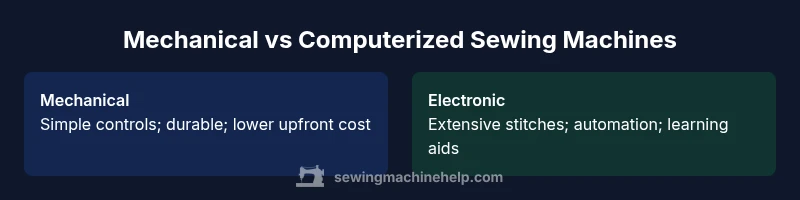
For home sewists, a mid-range computerized sewing machine often delivers the best balance between versatility and learning support, while a solid mechanical option provides simplicity, durability, and lower upfront costs. The choice hinges on your projects, budget, and how much you value automated features. This comparison highlights core distinctions to help you decide which is best for a sewing machine like setup in 2026.
What does sewing machine like mean for hobbyists?
In community discussions, the phrase sewing machine like is used to describe devices that perform the core fiber of sewing—needle movement, fabric feeding, and stitch formation—while integrating other functions such as embroidery or quilting frames. For home sewists, understanding what makes something sewing machine like is essential when you encounter multifunctional devices, online kits, or compact machines marketed for fabric crafts. The Sewing Machine Help team notes that many buyers encounter machines that blend features from traditional sewing and modern electronics; recognizing this blend helps you assess whether the device truly serves as a sewing machine or a close cousin with limited support for garment construction. The term is most commonly applied when evaluating weight, pedal responsiveness, and the availability of basic stitches rather than cosmetic capabilities.
Core differences: mechanical vs electronic/computerized models
The most fundamental distinction is how each machine processes stitch creation. Mechanical (often called manual or traditional) models rely on simple gears, cams, and levers that you control with dials and a foot pedal. They tend to be robust, easy to repair, and require less ongoing software maintenance. Electronic or computerized machines add microprocessors, memory banks, and touch controls that store stitch programs, offer automatic thread cutting, needle threading aids, and step-by-step guides. For beginners, computerized machines can reduce trial-and-error by providing guided presets; for experienced sewists, the straightforward control of mechanical machines can feel faster and more tactile. When comparing sewing machine like devices, evaluate how the control scheme matches your projects and comfort with technology.
How to map features to your projects
Begin with the scale and scope of your typical projects. If you focus on simple hems, home decor, or basic garment repairs, a mechanical machine can deliver reliable results with predictable tension and stitch length. If your projects require varied stitches, decorative finishes, or quilting, a computerized model unlocks a library of stitches, automatic features, and memory presets. Consider whether you need automatic functions like auto-threading, auto-bobbin winding, or auto-reverse. For home sewists who want a learning path with guided support, computerized machines often provide on-screen help, built-in tutorials, and community resources. When assessing a sewing machine like device, test whether the core sewing function works smoothly in both modes and whether the learning curve aligns with your goals.
Cost and value: price ranges and ownership costs
Cost is a major factor in choosing between mechanical and computerized options. Mechanical machines typically carry lower upfront price points and simpler parts, which can translate to lower maintenance costs over time. Computerized machines generally come with higher initial prices but offer a broader feature set, faster setup, and more built-in assistance, which can reduce practice time and waste. In broad terms, expect mechanical units to fall into a lower price tier and computerized models into mid-range or higher, depending on stitch variety and brand. Ownership costs should also include potential parts, service, and accessory purchases (like specialty presser feet). For budget-conscious buyers, a carefully chosen mechanical model can be a durable workhorse, while for those who value versatility and guided learning, investing in a mid-range computerized option tends to pay off over the machine’s lifespan.
Durability and build quality across classes
Durability often correlates with the materials used and the number of moving parts exposed to wear. Mechanical machines built with metal frames and fewer electronic components can fare well under heavy use and simpler maintenance routines. Electronic machines, while potentially more fragile in high-use environments, benefit from modern manufacturing and protective enclosures that mitigate dust and moisture exposure. Longevity depends on routine maintenance: oiling, cleaning lint from bobbin areas, and keeping feed dogs clean. For many hobbyists, the choice comes down to how much time you’re willing to invest in routine care versus valuing extended warranty coverage and service networks that come with computerized brands.
Usability, learning curve, and support resources
The usability of sewing machine like devices varies with interface design and help features. Mechanical models reward immediate tactile feedback, enabling fast speed control through foot pedal pressure and direct dial adjustments. Computerized models, however, can remove some guesswork by presenting stitch options on a display and guiding you through setup. Both types benefit from good support: local repair shops, official manuals, and online communities can shorten your learning curve. If you are new to sewing, prefer a machine with clear diagrams, easy threading, and generous support resources. For experienced sewists, testing speed, needle accuracy, and fabric handling under real-world loads is crucial when comparing options.
Accessories, presser feet, and maintenance ecosystem
Accessories often define how well a machine adapts to different projects. Mechanical machines commonly rely on a broad ecosystem of universal presser feet, while computerized models may include specialty feet and built-in guides for specific stitches. The availability of feet such as overlock, walking foot, or Teflon feet can expand your capabilities. Maintenance is another critical factor: mechanical machines benefit from straightforward oiling and cleaning routines; computerized units demand awareness of software updates and occasional motor checks. When evaluating a sewing machine like device, verify the supply chain for spare parts, foot kits, and thread-tension options, since these can significantly influence long-term performance.
Noise, vibration, and workspace comfort
Noise and vibration can influence your enjoyment and accuracy, especially in small workspaces. Mechanical machines tend to emit a steady, predictable sound pattern, which can be less startling to some users. Computerized models may produce additional sounds from fans or electronic components, though many modern units are engineered for quiet operation. Workspace ergonomics matter: ensure your table height, light source, and chair support align with your sewing routine. If you plan to stitch for extended sessions, consider a model with smoother bobbin winding and reduced vibration to minimize fatigue and improve precision.
How to compare in-store demos and online specs
In-store demos let you observe stitch quality, presser foot feel, and noise firsthand. Bring a scrap of fabric similar to your typical projects and run a few stitches at different speeds. Evaluate thread tension and fabric feed accuracy at both the beginning and end of your samples. Online specs help you compare features at a glance, but they can be deceptive if they lack context. Look for real-world reviews about reliability, service experiences, and parts availability. A balanced evaluation should combine hands-on testing with credible documentation.
Common myths and misconceptions about sewing machine like devices
A common myth is that more stitches automatically mean better results. In reality, stitch quality depends on fabric type, thread choice, tension, and user skill. Another misconception is that computerized machines always outperform mechanical ones; while they offer automation, experienced users may achieve faster, cleaner finishes on a well-maintained mechanical model. Some buyers assume that higher price is always better; value depends on the fit for your projects. Finally, the idea that you must own every accessory upfront can slow progress; start with essential feet and add specialized options as needed. Understanding these nuances helps you avoid overpaying for features you won’t use.
Practical decision checklist
- Define your typical projects (garments, quilting, decor, repairs) and choose the platform that matches those needs.
- Set a realistic budget for the upfront purchase and ongoing maintenance.
- Test the machine in-store, focusing on fabric types you work with most.
- Assess support networks: local shops, manuals, and online communities.
- Consider future-proofing: does the model offer features you’ll want as skills grow?
- Verify the availability of parts and presser feet that suit your projects.
- Review warranty terms and service options to minimize long-term risk.
- Plan a gradual skill-building path with preferred guides or courses.
Getting started: setup, first stitches, and care
After unboxing, follow the manufacturer’s setup guide to thread the machine, wind a bobbin, and select your first stitch. Practice on scrap fabric to gauge tension and feed speed, then gradually introduce seams, curves, and corners. Record settings that work well for your materials so you can reuse them. Regular maintenance should include cleaning lint, oiling moving parts per the manual, and storing the machine in a clean, dry space. With consistent practice, you’ll build muscle memory for both mechanical and computerized workflows, making sewing more efficient and enjoyable.
References and authoritative sources
- This article references established guidelines and consumer review practices. For broader context on sewing machine history and operation, consult credible sources such as Britannica and major publications that discuss machine design and consumer guidance. See the sources below for further reading.
Comparison
| Feature | Mechanical sewing machine | Electronic/computerized sewing machine |
|---|---|---|
| Core differences | Manual controls, fewer electronics | Microprocessor control, memory for stitches and presets |
| Stitch options | Fewer built-in stitches; relies on manual dialing | Large stitch library; automatic features and presets |
| Price range (generalized) | $150-$600 | $350-$1500 |
| Best for | Budget-friendly projects; durability and simplicity | Versatility, guided learning, and complex finishes |
| Maintenance | Simple lubrication, fewer software dependencies | Periodic firmware updates, more electronics care |
| Learning curve | Steep at first but intuitive for basics | Gentler learning curve with guided features |
Strengths
- Lower upfront cost for many mechanical models
- Fewer electronics mean easier basic repairs
- Durable construction when well maintained
- Broad availability of parts and accessories
Negatives
- Limited built-in stitches on basic mechanicals
- Fewer automated features may slow complex projects
- Repair options can be scarce for older mechanicals
- Computerized models may require firmware updates over time
Electronic/computerized machines generally offer more versatility and learning support, while mechanical machines excel in simplicity and cost.
If you value a broad stitch library and guided help, a mid-range computerized model is usually best. If you want straightforward reliability and lower ongoing costs, a solid mechanical machine remains a strong choice for beginners and budget-focused buyers.
Your Questions Answered
What is the main difference between mechanical and computerized sewing machines?
Mechanical machines rely on manual controls and have fewer built-in features, while computerized models use microprocessors, offer stitch libraries, and automation. Your choice should align with project needs and comfort with technology.
Mechanical machines are straightforward and rugged; computerized models add features and presets that help with complex tasks.
Is a sewing machine like device really a sewing machine?
Yes. Devices described as sewing machine like perform the core functions of stitching fabric with a needle and thread, even if they include embroidery or quilting capabilities. Assess whether they provide reliable needle movement and fabric feeding for your projects.
It functions like a sewing machine for basic stitching and fabric work.
Do I need a computerized model to learn modern techniques?
Not necessarily. Many techniques can be mastered on a mechanical machine, and some teachers prefer mechanical machines for fundamentals. Computerized machines can speed up learning with guided presets and tutorials.
You can learn many techniques on either type; computerized models just offer extra guidance.
What budget should I set for a reliable starter machine?
Prices vary by region and brand, but general ranges are common: mechanical machines often land in a lower range, while computerized models span mid-range to higher ranges. Plan for a purchase that includes essential features and reasonable warranty coverage.
Expect a budget that matches your project needs; start with a reputable mid-range model if you’re unsure.
What maintenance is essential for longevity?
Regular cleaning of lint, oiling moving parts as recommended, and proper storage are key. For computerized units, occasional firmware updates and professional checks may be advised. Always follow the user manual for specific intervals.
Keep it clean, oiled, and stored properly for best longevity.
How do you test a sewing machine in-store?
Bring fabric scraps similar to your projects, test several stitches, and evaluate speed control, thread tension, and feed smoothness. Listen for unusual noises and ensure the machine handles different fabrics with consistent results.
Try stitching on samples; listen for noise and check tension on different fabrics.
The Essentials
- Prioritize your project types to pick the right platform
- Budget for both purchase and ongoing maintenance
- Test stitching, feeding, and noise in real-world conditions
- Check parts, feet, and service options before buying
- Leverage learning resources to maximize value from your machine