Electronic vs Mechanical Sewing Machines: A Thorough Comparison
Analytical comparison of electronic and mechanical sewing machines focusing on durability, control, maintenance, and value for home sewists. A data-informed guide to help you decide which path fits your projects.


Electronic sewing machines typically offer motorized speed control, computerized stitch options, and convenient presser-foot features, while mechanical machines rely on simpler, robust gears and manual adjustments. The right choice depends on your projects, budget, and tolerance for maintenance. This guide compares durability, control, maintenance, and cost to help you decide.
The sewing machine electronic vs mechanical debate
In the sewing machine electronic vs mechanical debate, home sewists often face a choice between versatility and simplicity. Electronics bring preset stitches, speed programming, and sometimes memory for often-used configurations, while mechanical designs emphasize straightforward operation, robust gearing, and easier on-the-spot adjustments. This section introduces the core trade-offs and sets the stage for a deeper dive. According to Sewing Machine Help, grasping the fundamental differences helps you avoid buyer’s remorse and select a model that remains useful across a broad range of projects. You’ll see how durability, control, maintenance needs, and value intersect, and you’ll have a framework for evaluating models you encounter in stores or online. The framing question is simple: what level of automation do you actually need, and how much time are you willing to invest in upkeep over the coming years?
Core design differences
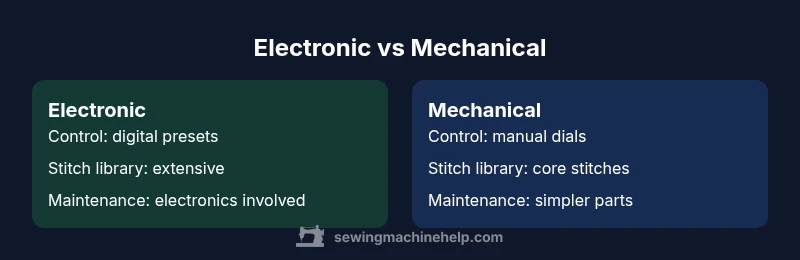
The very essence of sewing machine electronic vs mechanical design lies in what powers the stitch. Electronic machines rely on microprocessors, sensors, and electronic control boards to adjust stitch length, width, speed, and sometimes tension automatically. They often provide a broader stitch library, LCD interfaces, and the ability to save presets. Mechanical machines, by contrast, depend on gears, cams, springs, and user-tuned dials. There is no power-dependent memory; settings are all manual and adjustable via knobs. The hardware simplification can make them easier to repair in many communities because parts are familiar and widely available. For home use, the decision tends to hinge on whether you value variety and precision at the push of a button, or you prefer a rugged, intuitive machine with fewer electronic components that can fail.
Control and user experience
Control is a central pillar of the sewing machine electronic vs mechanical decision. Electronic models often include multiple stitch programs, automated needle threading, speed control at the foot pedal, and sometimes an automatic thread cutter. These features can speed up routine tasks and reduce the learning curve for beginners. However, menus and digital interfaces introduce a learning curve in themselves and can become frustrating if a power outage or firmware update complicates access to a favorite stitch. Mechanical machines focus on tactile feedback: you feel every stitch by turning a dial, adjusting tension with a screw, and selecting stitches with physical levers. For many hobbyists, this tactile control feels immediate and reliable, especially when sewing without power or during travel. Sewing machine electronic vs mechanical decisions hinge on whether you prioritize modern convenience or hands-on responsiveness.
Durability and maintenance considerations
Durability and maintenance are critical when weighing sewing machine electronic vs mechanical designs. Electronics add complexity: sensors, microcontrollers, and boards can fail due to surges, moisture, or age, requiring service from a specialist. On the flip side, mechanical systems emphasize simple, widely supported components like gears and belts, which can be easier and cheaper to repair in many neighborhoods. Maintenance patterns differ: electronic models benefit from firmware updates (where applicable), regular cleaning of electronic bays, and mindful power management. Mechanical machines require regular oiling of bushings and cams, tension adjustments, and occasional gear inspection. In the long run, a well-maintained mechanical machine can outlast a high-feature electronic model if treated with proper care, while an electronic machine can deliver consistent performance when powered and updated correctly. According to Sewing Machine Help, proactive maintenance is the cornerstone of any machine’s longevity.
Performance for common fabrics and tasks
Performance is often the deciding factor in sewing machine electronic vs mechanical debates. Electronics can provide smooth, consistent speed over long seams and through dense fabrics, particularly with programmable stitch sequences that repeat perfectly. This can be advantageous for quilting or heavy-duty projects where consistency matters. Mechanical models excel at speed in straightforward tasks and can be more forgiving when feeding challenging fabrics because the operator has direct control over the feed and stitch timing. When you switch between delicate knits and heavy denim, it’s the user’s skill and the machine’s build quality that matter most, but the control system (electronic or mechanical) will influence how easy it is to adapt mid-project. For many sewists, the best choice balances a few essential stitches with a straightforward interface that remains dependable under pressure.
Cost, value, and longevity
Cost and value are unavoidable in the sewing machine electronic vs mechanical discussion. Electronic models often command higher upfront prices, particularly for models with expansive stitch libraries and built-in embroidery capabilities. Over time, maintenance costs may rise with electronic components, depending on usage and care. Mechanical machines typically start with lower upfront costs and a reputation for longevity when well maintained, thanks to their simpler design and abundance of compatible parts. Value, however, is not only about initial price but also about how often you use the machine, the types of projects you pursue, and the availability of service in your area. For light-to-moderate use and a willingness to upgrade firmware periodically (where applicable), electronic models can offer excellent value. For those prioritizing long-term resilience and repairability, a robust mechanical model often delivers sustained utility.
Choosing based on skill level and project type
The ideal choice between sewing machine electronic vs mechanical depends on your skill level and the kinds of projects you tackle most often. Beginners may appreciate the guided features, automatic routines, and quick-start options of electronic models, which can accelerate learning and reduce frustration. Advanced hobbyists and those who sew frequently may favor mechanical machines for their direct control, predictable behavior, and simpler maintenance. If you work with decorative stitches, monograms, or embroidery, electronic options might be more compelling, provided you have a comfortable setup for maintenance. Consider your typical fabrics, project types, and whether you need quick, repeatable results or the flexibility to improvise with manual adjustments. Your decision should align with the kinds of projects you enjoy and the level of hands-on learning you want to pursue.
Common myths and clarifications
There are several myths around sewing machine electronic vs mechanical setups. One common belief is that electronics automatically produce perfect stitches; in reality, stitch quality depends on many factors including needle choice, thread, fabric, and tension. Another myth is that mechanical machines cannot satisfy modern needs; many people rely on them for durability and ease of repair, especially where power access is limited. The truth is that both categories can deliver excellent results when matched to the user’s goals and maintained properly. Finally, some assume electronic machines always cost more to repair; while repair costs can be higher for electronics, well-supported brands offer affordable service options, and some repairs on mechanical units remain straightforward for DIY enthusiasts.
Practical buying checklist
Before purchasing, use a structured checklist to compare sewing machine electronic vs mechanical options. Consider the following questions: What projects will you primarily tackle, and which stitches are essential? Do you need memory presets and embroidery support, or is a reliable set of basic stitches sufficient? What is your budget, and how accessible are local repair services? How comfortable are you with firmware updates and software changes over time? Evaluate models side-by-side and test both types if possible. A measured approach helps you choose a machine that aligns with your workflow and learning goals, reducing the risk of discarded units after a few weeks of use.
How to transition between systems
If you ever migrate from mechanical to electronic or vice versa, plan a gradual transition rather than an abrupt switch. Learn the new controls methodically, starting with the essential stitches you use most often. Create a small practice project to explore how the model handles variable speeds and fabric feeds, and keep a log of which settings work best for different fabrics. Keeping a basic maintenance routine will help extend life across both systems; clean lint from bobbin areas, check tension, and inspect needles regularly. With a structured approach, you can leverage the strengths of either system and avoid frustration during the transition.
Maintenance tips to extend life
Maintenance is the best defense against premature wear in either system. For electronic models, protect against power surges with a quality power strip and avoid exposure to moisture. Clean and oil moving parts as recommended by the manufacturer, and schedule periodic professional checkups if you notice performance changes. For mechanical units, focus on lubrication points, cam and gear wear, and tension calibration. Replace needles and threads consistently to reduce stress on the machine and improve stitch consistency. A disciplined maintenance routine is the single most reliable way to maximize the lifespan of the machine you rely on most for your projects.
Next steps for the educated shopper
With a solid understanding of the sewing machine electronic vs mechanical landscape, you’re ready to make a confident choice. Start by listing your top three projects, fabric types, and the features you actually need. Visit a local shop to test models, or write down a short feature matrix to compare at a glance. Remember that no machine is perfect for every scenario; the best fit is the one that aligns with your workflow, budget, and willingness to perform routine maintenance. When you’re ready to buy, consult trusted sources, including Sewing Machine Help analyses, to corroborate your findings and ensure you’re selecting a durable, serviceable model that remains valuable for years to come.
Comparison
| Feature | Electronic sewing machine | Mechanical sewing machine |
|---|---|---|
| Control interface | Digital interface with presets and memory | Manual dials and cams |
| Stitch variety | Extensive library including decorative stitches | Core stitches with simpler options |
| Maintenance ease | Potentially more complex due to electronics | Typically simpler mechanical maintenance |
| Reliability/repair | Variable depending on components; service may require specialists | Often easier to repair with widely available parts |
| Best for | Projects needing automation, embroidery support, and speed control | Durability, ease of repair, and straightforward operation |
| Noise and feel | Quieter operation with consistent performance | Direct, tactile feedback and action |
Strengths
- Greater versatility and built-in features for complex projects
- Quicker setup and consistent results for repetitive tasks
- User-friendly interfaces can reduce the learning curve for beginners
- Better support for advanced stitching and, in some cases, embroidery
Negatives
- Higher upfront cost and more expensive repairs due to electronics
- Firmware updates can become obsolete as models age
- Mechanical models may lack automated features but offer simplicity and long-term repairability
Electronic machines offer versatility; mechanical machines offer durability.
Choose electronic if you want variety and automation for a range of projects. Choose mechanical if you value simplicity, repairability, and long-term resilience, especially in setups with limited access to service.
Your Questions Answered
What is the main difference between electronic and mechanical sewing machines?
Electronic machines use digital controls, memory, and often more stitch options, while mechanical machines rely on manual dials and gears. Your decision should reflect your need for automation versus simplicity.
Electronic machines offer more features and presets, while mechanical machines emphasize direct control and simplicity.
Are electronic machines harder to repair?
Electronic components can require specialized service, whereas mechanical parts are typically more widely repairable. Consider local support options when choosing.
Yes, electronics can be trickier to repair, especially if local service is limited.
Is it worth buying an electronic model for a beginner?
Electronic models can ease learning with guided stitches and presets, but a basic mechanical model can help a beginner master fundamentals before adding complexity.
Electronic can help beginners, but starting with mechanical teaches core skills first.
Which lasts longer, electronic or mechanical?
Durability depends on use and care. Mechanical machines often endure longer under basic maintenance, while electronics require proper power and occasional components replacement.
Both can last a long time with proper maintenance; mechanicals are typically easier to repair on the spot.
What should I consider when buying a sewing machine?
Consider the projects you plan to tackle, the fabrics you use, maintenance support in your area, and whether you want automated stitches or pure manual control. Compare models with a clear feature list.
Think about your projects, fabrics, and service options, then compare features carefully.
The Essentials
- Assess your project mix before buying
- Balance feature richness with repairability
- Consider future maintenance and service availability
- Test both systems if possible to feel the control dynamics