Heavy Duty Sewing Machine vs Regular: A Practical Guide for Home Sewers
A thorough, balanced comparison for home sewers: when to choose heavy-duty machines, key features, maintenance, and buying tips for 2026.


For most home sewers, a heavy-duty sewing machine offers more muscle for thicker fabrics (denim, canvas) and long-term reliability. A regular home machine handles lightweight garments well but may struggle with heavy fabrics. This guide weighs the trade-offs, practical use cases, and budgeting considerations.
Why the distinction matters for home sewers
For many home sewists, understanding the difference between a heavy duty sewing machine vs regular is not a luxury—it's a practical decision that affects project success, durability, and long-term satisfaction. The phrase heavy duty sewing machine vs regular captures a spectrum of capabilities that directly influences what fabrics you can sew, the speed you can sustain, and how often you will need to service the machine. This guide from Sewing Machine Help helps you map your typical projects to the right category, with an eye toward durability, maintenance, and total cost of ownership in 2026. The goal is to help you choose the machine that matches your workload, not just your budget.
Core technical differences: torque, frame, and feed rate
Two core dimensions separate heavy duty machines from regular home models: motor torque and the robustness of the frame, and the machine’s feed mechanism. Heavy-duty units usually deliver higher torque at the needle, allowing thicker fabrics to be advanced without stalling. The frame is often made of stronger steel or reinforced metal to resist flexing under load; this translates into more stable stitches when you sew through multiple layers. Finally, the feed system—how the fabric moves under the presser foot—tends to be tuned for consistent performance with heavy fabrics. Regular models excel at light-to-medium weight materials and casual projects, but they can struggle when you push the limits of thickness or multiple layers.
Heavy-duty models: build, features, and limits
Heavy-duty machines are designed with reinforced frames, larger needles, and higher presser foot pressure. Many models offer industrial-grade presser foot pressure adjustments, thicker stitch plates, and metal gears that resist wear. However, they are not universal repair machines; some still rely on domestic electronics, and replacement parts can vary by brand. Look for features that matter to your projects: adjustable stitch length, dual feed options, and compatible needles for denim or leather. Also consider the noise and vibration you’ll tolerate; heavier machines can be louder, but stable operation reduces fatigue during long sessions.
Regular machines: where they shine
Regular or standard sewing machines deliver excellent value for everyday sewing. They tend to be lighter, more portable, and easier to use for beginners. Many come with beginner-friendly features like automatic threading, speed control, and built-in stitches that cover most garment construction needs. They usually excel at cotton, knits, and light fabrics, and are often cheaper to purchase upfront. If your projects seldom involve thick layers or leather, a regular model can be a reliable workhorse with a shorter learning curve and less maintenance complexity.
Fabric handling: denim, leather, canvas vs knits
When you’re choosing between heavy duty vs regular for fabric handling, consider the worst-case project you plan to tackle. Denim and canvas benefit from stiff motors and a sturdy bed, which reduce skew and fabric drift. Leather requires stronger needles and careful presser foot pressure; some heavy-duty machines support multiple layers with consistent bite. Knits and lighter fabrics demand gentler foot pressure and more delicate feed, where a regular machine or a lighter-duty heavy model can deliver clean seams without distortion. The key is to map your most frequent fabrics to the machine’s capabilities rather than chasing the most expensive gear.
Built-in features, accessories, and compatibility
A machine’s accessories can dramatically affect practicality. Heavy-duty machines often ship with industrial-grade needles (e.g., denim needles), higher-beam presser feet, and thicker needle plates. They may also support metal bobbins and stronger feed dogs. Regular machines come with a broad range of stitches and some automatic features that speed up projects; they may have fewer metal components and lighter presser foot pressure. Ensure compatibility with the needles and presser feet you own, and verify that your chosen model can handle the fabrics you plan to sew most often. Also check for quilting feet, binding feet, and walking-foot options if you anticipate layered projects.
Durability, maintenance, and long-term costs
The longer you own a machine, the more maintenance factors matter. Heavy-duty machines typically endure higher workloads with less risk of overheating under thick fabrics, but they can require regular lubrication, tension checks, and occasional servo motor maintenance. Regular machines may require more frequent fabric checking and belt or pulley adjustments if pushed beyond their standard duties. Keep a simple maintenance schedule: oil or grease points per the manufacturer, clean under the bobbin area, and replace needles regularly. The goal is to extend life and ensure consistent performance without surprises in the middle of a project.
Space, weight, and setup considerations
Heavy-duty machines are heavier and require sturdy tables and more stable mounting. If you have a small studio, a heavy machine might dominate your workspace; measure your bench height and ensure you have enough clearance around the throat area for bulky fabrics. Regular machines are more portable and easier to move between rooms or to classes. If your sewing area is shared or you travel to workshops, consider a mid-weight model with a solid warranty that balances performance and mobility.
Budgeting and total cost of ownership
Upfront price is just one piece of the puzzle. Heavy-duty machines may cost more initially but can reduce the time spent on thick projects and may lower replacement frequency if you work with heavy fabrics. Regular machines typically have lower sticker prices and reduced maintenance costs in the short term, but you may outgrow them if your projects evolve toward denim, leather, or upholstery. Think in terms of total cost of ownership: purchase price, maintenance expenses, availability of parts, and expected lifespan. Seek models with generous warranties and accessible service networks.
Warranty and service: what to expect
A reliable warranty matters for any sewing machine, but coverage can differ between heavy-duty and regular models. Look for coverage that includes mechanical components, motors, and the sewing area around the needle. Check service networks in your region and whether authorized repair centers exist nearby. A longer warranty can be a strong indicator of build quality, but read the fine print for exclusions, such as wear and tear or improper maintenance.
How to test machines before buying
Whenever possible, test machines in person. Bring the fabrics you sew most often and evaluate stitch quality, tension stability, and feed performance on both light and thick layers. Check noise and vibration under load, and try slow and fast speeds to gauge control. If you’re shopping online, request video demonstrations and verify the manufacturer’s testing standards. Keep notes on your impressions to compare later.
Beginner’s path: when to start with regular and upgrade later
If you’re new to sewing, start with a reliable regular machine that handles common fabrics well. Plan to upgrade later as your skills grow and you begin tackling thicker materials. A stepwise approach reduces learning friction and helps you build confidence while you master basic seams, buttonholes, and zippers. When you reach the point of needing multi-layer denim, leather, or upholstery stitches regularly, evaluate a heavier model with the appropriate presser feet and needle systems.
Practical buying checklist with action steps
Create a quick, actionable checklist you can reuse. Define your top fabrics, preferred projects, and the maximum weight you’ll tackle in a given session. List essential features such as needle compatibility, presser foot options, and thread tension controls. Then compare two or three models using your own checklist and cost-of-ownership analysis. Finally, test in-store or request a dealer demo to confirm the feel and performance before purchase.
Comparison
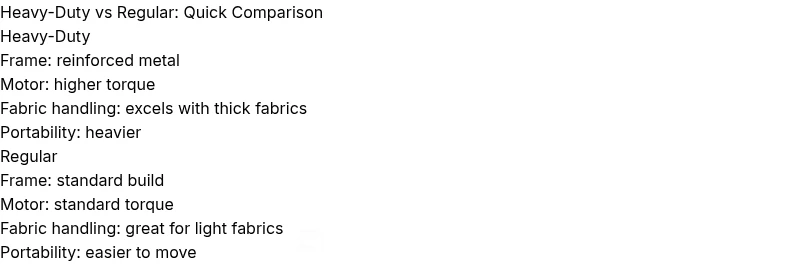
| Feature | Heavy-duty sewing machine | Regular sewing machine |
|---|---|---|
| Motor power | Higher torque and stronger drive | Standard torque suitable for light-to-midweight fabrics |
| Frame and build | Reinforced metal frame for stability | Lighter construction for portability |
| Fabric handling | Better performance with thick fabrics and multiple layers | excels with lightweight materials and single-layer projects |
| Needle and presser feet compatibility | Supports heavy needles, wide presser feet, and metal plates | Typically supports standard needles and feet for everyday sewing |
| Maintenance needs | Often more robust with potential for longer service life | Often simpler maintenance with fewer heavy-duty components |
| Noise and vibration | Can be louder but steadier under load | Generally quieter but more susceptible to skipping with heavy fabrics |
| Best for | Denim, canvas, upholstery, leather projects; long sessions | Cottons, knits, dresses, quick repairs; everyday sewing |
Strengths
- Handles thick fabrics with ease
- Longer machine life under heavy use
- Better resale value in some markets
- More stable stitch quality on multi-layer projects
- Widens project possibilities like upholstery and leather
Negatives
- Higher upfront cost
- Heavier and less portable
- Potentially more complex maintenance
- Can be noisier during heavy-duty use
Heavy-duty sewing machines are the better choice for frequent heavy fabrics; regular machines fit most casual, lightweight projects.
If your projects routinely involve denim, leather, or multiple layers, a heavy-duty model delivers reliability and performance. For everyday garments and light fabrics, a regular machine remains a cost-effective, approachable option. The best path balances your typical workload with space, budget, and willingness to maintain a more capable device.
Your Questions Answered
What counts as a heavy-duty sewing machine?
A heavy-duty sewing machine typically has a reinforced frame, higher motor torque, and accessories designed for thicker fabrics. It is built to sew denim, leather, and multiple layers more reliably than standard home machines. Not all “heavy-duty” labels are equal, so verify specifications like needle size, presser foot pressure, and supported fabrics before buying.
A heavy-duty machine has a stronger frame, more torque, and is built for thick fabrics like denim and leather.
Is a heavy-duty machine necessary for home sewing?
Not always. For light-to-medium projects like garments from cotton or knits, a regular machine is typically sufficient. If your projects include frequent thick fabrics or upholstery, a heavy-duty model becomes a practical investment that saves time and reduces frustration.
For most home sewers, regular machines work fine unless you regularly sew thick fabrics.
Can I upgrade a regular machine to handle heavy fabrics?
You can improve performance with better needles, walking feet, and correct tension, but there are practical limits. Some regular machines won’t maintain stitch quality on dense fabrics despite upgrades, so a heavier base machine may be necessary for sustained thick-material work.
Upgrading can help, but there are limits; you may still need a heavier machine for frequent thick fabrics.
What maintenance does a heavy-duty machine require?
Maintenance generally includes regular cleaning, oiling points per the manual, occasional belt or pulley checks, and tension calibration. Because they run hotter under heavy use, ensure proper cooling and service intervals if your workload is high.
Keep it clean, well-lubed, and follow the manufacturer’s service intervals.
How do I choose between computerized and mechanical heavy-duty machines?
Computerized models offer presets and easier control, useful for complex or repetitive tasks. Mechanical heavy-duty machines are typically built simpler, potentially more durable in harsh environments. Your choice should align with how you sew, how much you value presets, and how important quick, straightforward use is to you.
Choose based on how you want to set stitches and how much you value presets.
What is the typical price range for heavy-duty machines?
Prices vary widely across brands and features. Expect a broader range than entry-level regular machines, with cost influenced by frame strength, motor torque, and available accessories. Compare warranties and service networks to determine total value.
Prices vary a lot; look at warranties and service networks to judge value.
The Essentials
- Assess your most common fabrics first
- Choose a model with robust frame and torque for heavy work
- Balance upfront cost with long-term maintenance costs
- Test machines with your typical fabrics before buying
- Consider warranties and service network for peace of mind
- Plan a phased upgrade path if you’re new to sewing