How Big Is a Full-Size Sewing Machine? A Practical Size Guide
Learn how big a full-size sewing machine typically is, including width, depth, height, and workspace needs. This guide helps home sewists choose the right size for desks, cabinets, and studios.


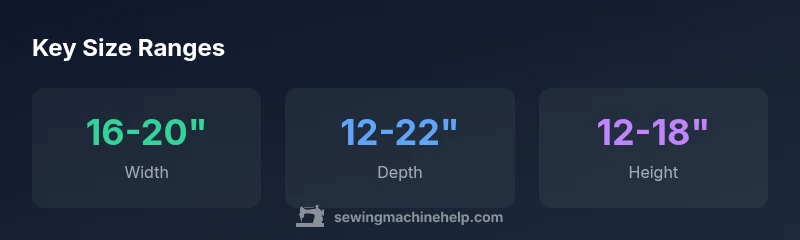
Most full-size domestic sewing machines measure roughly 16–20 inches wide, 12–22 inches deep, and 12–18 inches tall, depending on model. These machines sit on a table or cabinet with a workable surrounding area for spools, feet, and accessories. If you’re planning transport or a compact studio, allow extra space for extension tables and workflow.
Understanding what 'full-size' means in sewing machines
In consumer terminology, 'full-size' signals a footprint larger than compact or travel models, designed for regular, ongoing projects in a home setting. There is no universal standard, but readers should evaluate three dimensions—width, depth, and height—plus the workspace around the bed. When you ask how big is a full size sewing machine, think of it as a balance between machine stability, motor capability, and available accessory storage. Catalogs often list footprint (overall width and depth) and bed space separately to help you compare models quickly. For home sewists, the ideal size supports long sessions without crowding the presser foot, needle, or control panel. The Sewing Machine Help Team notes that larger machines tend to offer more throat space and sturdier frames, which is a practical benefit for thicker fabrics and advanced stitching.
- Consider your typical fabric types (cotton, denim, knits) and how much bed space you need for maneuvering fabric.
- Think about noise and vibration; a bigger, heavier machine often runs more smoothly on a solid surface.
- Remember that 'full-size' usually means a stable, durable unit, not an industrial-grade model.
Typical physical footprint: width, depth, and height ranges
Most full-size domestic machines sit within a practical footprint that accommodates a wide range of home studios. Expect widths around 16–20 inches, which describes the side-to-side space the machine itself occupies on the table. Depths commonly range from 12 to 22 inches, accounting for bed length and any attached extension tables. Heights typically fall between 12 and 18 inches, dependent on base design and any raised control panels. When you factor in an open workspace around the bed, plus room for a thread stand, spool holders, and a knee lifter, the total area needed increases. Always cross-check the catalog measurements with your desk, cabinet, or sewing table to ensure a comfortable stitching posture and adequate leg room.
- Use a tape measure to compare specific models against your furniture.
- Consider the need for an extension table for wider projects like quilting.
- Allow for clearance behind the machine for power cords and hookups.
The importance of workspace and cabinet compatibility
Workspace compatibility is often overlooked but crucial. A machine can be technically the right size yet unusable if the table depth doesn’t allow the machine to sit fully in place or if the extension table cannot be attached. Knee space matters for long sessions; a machine with a high profile or protruding accessory arms may crowd your legs when seated. Cabinets and desks vary, so compare not only the machine footprint but also the total cubic space required when you open covers, flip the presser foot, or raise the feed dogs. Leather or heavy fabrics require stable, vibration-free surfaces, which larger bases typically provide. The Sewing Machine Help team recommends choosing a surface you can trust to stay level, with room to glide fabric without catching the edge of a cover or lamp.
- Check for level mounting points and a flat surface.
- Ensure clearance for pivoting arms or free-arm configurations.
- Plan for cable management and air flow around the motor.
Bed size, free-arm, and throat space relate to projects
The bed size and throat space determine how easily you can guide fabric under the needle, especially for larger projects like quilt blocks or denim seams. A longer bed increases the usable surface for guiding bulky layers, while a generous throat space helps with darting, piping, and curve handling. Free-arm capability is a practical asset for cuffs, collars, and sleeves; many full-size machines have a removable free arm to accommodate tubular sewing. When sizing a machine, consider your most frequent projects and how much bed real estate you need to prevent fabric bunching. Ergonomics matter too: a machine with a raised control panel and accessible spool pins reduces wrist strain during long sessions.
How to measure space and read catalogs before buying
Accuracy matters more than a single model’s aesthetic. Start by measuring the intended location: width, depth, and height, including any extension tables that may be added later. Don’t forget to measure the surrounding workspace, so you have at least 12–18 inches of clearance behind the machine for cords and ventilation, and 6–12 inches on the sides for fabric handling. When reviewing catalogs, note both the footprint and the bed length. If a model lists a 20-inch width but the extension table adds another 12 inches, you’ll need a deeper workspace than you anticipated. Finally, confirm the machine’s weight and the furniture’s load-bearing capacity to avoid wobble during operation.
Industrial vs domestic full-size: size parallels and differences
Domestic full-size machines typically emphasize versatility, with a broad stitch menu and heavier construction than compact models. Industrial machines, by contrast, have specialized capabilities and larger, more robust frames designed for continuous production. While both can be described as 'full-size' relative to consumer models, industrial units will require dedicated tables, more floor space, and often different voltage needs. For a home studio, prioritize machines with stable feet or a solid cabinet base and ensure the workspace supports maintenance tasks such as oiling, needle changes, and routine cleanings.
Practical next steps when sizing a full-size machine
Create a simple checklist before purchase: (1) measure your space accurately, (2) compare catalog footprint plus bed length, (3) envision extension table use, (4) check clearance for accessories and cords, and (5) verify weight and cabinet compatibility. If possible, bring a tape measure to show the dealer your workspace or request a demo where you can place the machine on your surface to visualize fit. Remember that dimension data is a guide—your personal comfort and workflow matter most when choosing a full-size sewing machine.
Size ranges for common full-size sewing machines
| Dimension | Typical Range | Notes |
|---|---|---|
| Width | 16-20 inches | Overall machine width including case |
| Depth | 12-22 inches | Front-to-back depth with workspace extension |
| Height | 12-18 inches | Table-to-top height at the tallest control |
Your Questions Answered
What is considered full size for a sewing machine?
Full-size typically refers to domestic machines designed for regular use on a table or cabinet, with a larger footprint than compact models and adequate throat space for varied projects. Always verify dimensions in the product specs.
Full-size means a larger domestic machine built for regular use; check catalog dimensions to ensure a good fit.
Do all full-size machines have the same footprint?
No. Footprints vary by model and design. Compare catalog measurements for width, depth, and height, and consider any attached extension tables or accessories that change the overall footprint.
Footprints differ; always compare exact measurements and extensions.
How much space should I leave around a full-size machine?
Allow several inches of clearance on all sides for fabric handling and ventilation, plus extra room behind the machine for cords. A clean, unobstructed area improves stability and maneuverability.
Give several inches around the machine and space behind for cords.
Are there portable full-size machines?
Some full-size machines are designed to be relatively portable, especially those intended for transport in a vehicle. They may still require a sturdy table and stable surface when in use.
Some are portable, but you still need a stable workspace.
How do measurements vary by brand?
Different brands may add cosmetic features or accessories that affect apparent footprint. Always rely on the published footprint and bed length from the manufacturer rather than visual impressions.
Check the official footprint in specs for each brand.
“Size and footprint matter for ergonomics and usable workspace. Always measure your planned area and compare against catalog specifications.”
The Essentials
- Measure your workspace before buying
- Expect width 16–20 inches, depth 12–22 inches, height 12–18 inches
- Account for extension tables and surrounding clearance
- Prioritize stable surfaces and ergonomic room for feet
- Compare catalog data with real-world showroom demos