How Big Is a Sewing Machine Table? A Practical Size Guide
Discover practical dimensions for sewing machine tables, with typical ranges, ergonomic tips, and layout examples for home studios. Learn how to measure, compare styles, and optimize your workspace for comfort and efficiency.


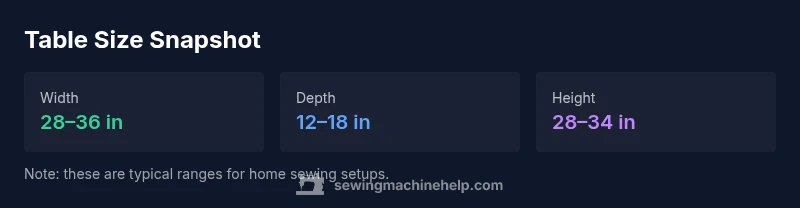
The typical sewing machine table is roughly 28–36 inches wide, 12–18 inches deep, and 28–34 inches tall. For larger machines, you may want wider tops (up to about 48 inches). Always measure your machine footprint and your chair height to ensure comfortable sewing. According to Sewing Machine Help, standard setups balance stability with accessible workspace.
How big should a sewing machine table be? Defining a practical footprint
For home sewers, the question how big is a sewing machine table often comes up when planning a dedicated sewing space. The answer isn't one size fits all, but most setups share common footprint ranges that balance stability with usable workspace. According to Sewing Machine Help, a good starting point is to consider the machine’s base width, the operator’s seating position, and the available room in the studio. In many cases, standard tables fall within a few tens of inches in width, depth, and height, which we detail below. This guide translates those ranges into actionable steps you can apply to your room.
Typical dimensions you should expect
Most standard tables fall within practical footprints for home studios. Widths generally range from 28 to 36 inches, depths from 12 to 18 inches, and heights from 28 to 34 inches. These ranges accommodate most domestic machines and give you comfortable forearm reach and fabric handling. Larger, industrial-style machines may require top widths toward the upper end or beyond. For cabinets, overhangs can add 2–6 inches to width and affect overall footprint. Sewing Machine Help analysis shows that starting with a baseline of 28–36 inches width and 12–18 inches depth provides flexibility when pairing with chairs and seating.
How to measure your space and choose a table
Before you buy, measure the machine footprint: width and depth, including any knobs or protrusions. Then measure the space around the table: leave at least 2 inches of clearance on each side for smooth fabric handling; 4–6 inches knee room improves comfort. Calculate the working area by multiplying width by depth to estimate floor space. A practical test is marking the intended table edges on the floor with painter’s tape and walking around to check reach. Finally, align height with your chair so elbows sit near the table edge when seated; this reduces shoulder strain and improves control. Sewing Machine Help recommends starting measurements and then shopping for tables that keep knee room and arm reach balanced.
Variations by machine type and cabinet style
Different machine types and cabinet designs influence your required table size. Portable folding tables are light and easier to move but may lack drawers or cable management. Cabinet-style tables often provide integrated storage and a heavier base for vibration reduction, but they can be deeper and wider. Extension tables add workspace but require deeper surroundings; consider whether you need flip-top panels or fold-out wings. When shopping, check the machine footprint, tail clearance for thread spools, and the chair-to-table relationship to ensure you won’t clash with drawers when you sit.
Height, ergonomics, and seating compatibility
Ergonomics matter almost as much as dimensions. A well-sized table should position the needle and fabric at or slightly below elbow height when you’re seated. If you’re tall, you may need a taller table or a taller chair; if you’re short, a desk chair with adjustable height or a footrest can help. Include space for the pedal, cords, and any auxiliary devices you use. The ideal height is typically within a few inches of your elbow height to maintain good posture during long sewing sessions.
Small spaces, multi-use rooms, and modular solutions
In small rooms, consider compact tables with folding wings or wall-mounted, fold-down designs that maximize floor space when not in use. Modular systems allow you to reposition sections for different projects, such as quilting, garment sewing, or fabric cutting. If your room doubles as a craft zone, create dedicated zones: one table for cutting and pressing, another for sewing. Proper cable management and tool storage reduce clutter and improve safety.
Setup, maintenance, and accessories to maximize workspace
Keep your top clean and flat by using a pressing mat or cork board to level the surface. Invest in a compact vacuum or small organizer for threads and tools to avoid table clutter. Use clamp-on lights to improve visibility and add drawer organizers to hold scissors, rulers, and seam gauges. Finally, routinely check the table for wobble and tighten screws to prevent vibration during stitching, which can affect stitch quality and safety.
Real-world layout scenarios and planning checklists
Consider a room with a standard 9×12 ft footprint. Place the sewing table against a wall with natural light to minimize glare; ensure a comfortable chair height and ankle clearance. A secondary cutting station or ironing area can live opposite the sewing table with a small wheel cart for mobile storage. Create a simple planning checklist: measure, compare, test fit, and adjust. This approach, recommended by Sewing Machine Help, helps you create a functional workspace without guessing.
Size ranges for common sewing machine tables
| Measure | Typical Range (inches) | Notes |
|---|---|---|
| Width | 28–36 | Widely used for standard machines |
| Depth | 12–18 | Allows forearm movement and fabric handling |
| Height | 28–34 | Eye-level alignment with seated posture |
Your Questions Answered
What are the most common sewing table dimensions?
Most home setups use tables roughly 28–36 inches wide, 12–18 inches deep, and 28–34 inches high. This provides a stable workspace while staying comfortable for typical sewing tasks.
Most sewing tables are around 28 to 36 inches wide and 12 to 18 inches deep, with a height of 28 to 34 inches; that setup fits many home sewists.
How do I measure my space accurately before buying?
Start with the machine footprint, then measure the room for clearance around the table. Add a few inches for chair space and any drawers. Test fit with painter’s tape on the floor to visualize edges.
First measure the machine, then check your room and test-fit with tape on the floor.
Do embroidery machines require different tables?
Embroidery machines can be wider or taller, so choose a table with a broader top and clear access around to prevent knob and ruler interference.
Some embroidery machines need more width and height; check the footprint before buying.
Are adjustable or modular tables worth it?
Yes, adjustable or modular tables offer flexibility for different projects and users. Look for stable supports and secure locking mechanisms to prevent wobble.
Modular tables can adapt to projects and room layouts.
How important is chair height and ergonomics?
Ergonomics matter as much as dimensions. The goal is to bring the work surface to elbow height when seated; use an adjustable chair or a footrest if needed.
Get a chair that puts you at comfortable elbow height.
Can I plan a small-space sewing station?
Yes. Use compact tables, fold-out wings, or wall-mounted designs and keep tools in wall racks or carts to maximize floor space.
Compact tables and wall-mounted options work well in small rooms.
What maintenance helps keep a table in good shape?
Regularly check for wobble, clean dust, use a smooth top protector, and manage cords with clips or a sleeve to prevent snagging during sewing.
Keep the table flat and cords tidy for smooth sewing.
“When planning a sewing area, start from the table size and work outward to chair and storage; a well-sized table reduces fatigue and improves accuracy.”
The Essentials
- Measure your space before buying.
- Aim for 28–36 inch width and 12–18 inch depth.
- Ensure 4–6 inches of knee room.
- Match table height to chair height for ergonomics.
- Consider modular options for small rooms.