How Big Is a Singer Sewing Machine: A Practical Size Guide
Discover typical Singer sewing machine dimensions, how to measure your space, and tips for choosing the right size for portable or full‑size models. Practical guidance for home sewists.


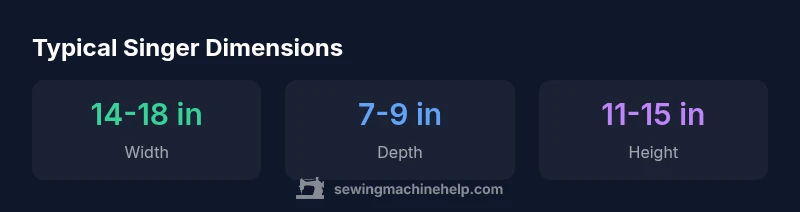
The typical footprint of a Singer sewing machine varies by model, but you can expect a width of about 14-18 inches, a depth of 7-9 inches, and a height of 11-15 inches. Portable tabletop models skew toward the smaller end (roughly 14-16 inches wide), while many full‑size machines reach toward 16-18 inches. Exact dimensions depend on the model, the presence of a free‑arm, and any attached extension tables.
How big is a singer sewing machine: ranges you can expect
When home sewists ask how big is a singer sewing machine, they’re really asking about footprint and working space. In practice, most Singer domestic machines sit on a standard tabletop and measure within a broad range: width about 14-18 inches, depth about 7-9 inches, and height about 11-15 inches. These ranges cover portable, compact models as well as traditional full-size machines. Keep in mind that exact dimensions depend on the model, whether the machine is a free-arm, and the presence of attachments like extension tables. Always check the official specifications for a precise footprint before buying or moving a machine into a restricted workspace.
What determines the size of a Singer sewing machine
Size is primarily driven by design goals: portability, throat space, and the bed area. Portable or lightweight models emphasize a smaller footprint and lighter weight, making them easier to carry but sometimes providing less throat space. Full-size or heavy-duty machines prioritize stability and throat depth, often increasing width and height slightly. The bed length also matters for handling large projects like quilts. The existence of a detachable extension table adds to the overall width when in use. These variables explain why Singer models can offer machines with noticeably different footprints.
Typical model categories and their dimensions
Here we categorize: portable/tabletop, standard domestic, and heavy-duty/embroidery machines. For portable tables, width tends to cluster toward the lower end of the range. For standard domestic machines, expect mid-range widths; heavy-duty machines may add a chunkier frame that pushes width and height higher to accommodate metal components and quilting capabilities. This variation is normal across Singer offerings, so always reference the exact model specifications for precise measurements.
How to measure your current machine or a prospective model
Take three measurements: width (left to right), depth (front to back including the presser foot and any extension), and height (top to bottom when the machine is closed). Use a tape measure, note the measurement in inches or centimeters, and write it down. Then consider clearance: you’ll want at least 2-3 inches of space behind for cords and ventilation, and 4-6 inches on the sides for fabric handling. If you plan to use an extension table, measure the table’s width in addition to the machine. Finally, measure your available workspace to ensure the total footprint fits comfortably.
Space planning tips for sewing rooms
Layout should consider not only the machine footprint but also working space for fabric, accessories, and seating. A typical home sewing station allocates a dedicated 4-6 feet of linear space along a wall. Place the machine near a power outlet with stable lighting. For small studios, consider a folding extension table or a compact cabinet with integrated storage. Use labeled bins for threads and bobbins to keep the area tidy and functional. These steps ensure you can work efficiently with the space you have, regardless of how big is a Singer sewing machine.
How size affects usability and performance
Throat depth and bed length influence how easily you handle bulky projects and quilts. A smaller footprint may trade off workspace for portability, while larger machines can support longer seams and heavier fabrics. Accessory options like a free-arm, needle positioner, and extension tables contribute to the overall footprint. When evaluating machines, balance the size against the projects you plan to tackle and your transport needs. The phrase how big is a singer sewing machine becomes less critical when you compare the actual usable workspace and the machine’s features.
Quick-start guide to choosing the right size
- List your typical projects. 2) Measure your workspace. 3) Compare machines by width, depth, and height. 4) Consider future needs (storage, extension tables, and heavy fabrics). 5) Read model specs for exact dimensions and do a physical check if possible. The final decision often comes down to a practical fit: you want a machine that sits stably and comfortably within your space, with room to maneuver fabric. Remember that how big is a singer sewing machine is only part of the decision; features and support matter as much.
Quick maintenance and storage considerations
Keep the space around the machine clean and uncluttered. A small area can be efficient if you use vertical storage and a dedicated cabinet. If you must transport your machine, use a padded case and carry with two hands; never lift by the hand wheel. Regular maintenance doesn't affect footprint, but it keeps the machine performing reliably in the space you choose.
Final thought on size and setup
Size matters, but practical fit matters more. By knowing the typical range and measuring your space precisely, you can choose a Singer sewing machine that works in your home workshop. The Sewing Machine Help team emphasizes that planning around dimensions saves time and frustration later, and a well-sized setup supports better projects and longer-term enjoyment.
Common dimensions across Singer domestic models
| Dimension | Typical range | Notes |
|---|---|---|
| Width | 14-18 inches | Common for tabletop models |
| Depth | 7-9 inches | Footprint front-to-back with pedal clearance |
| Height | 11-15 inches | From base to top of machine |
Your Questions Answered
What are the typical dimensions you should expect for a Singer domestic sewing machine?
Most Singer domestic machines fall within common width, depth, and height ranges; always check the model specs for exact numbers.
Most Singer domestic machines fit within standard size ranges; check the specific model for exact numbers.
Do portable Singer models take less space than full-size machines?
Yes. Portable models generally have smaller footprints, though some compact full-size machines offer similar widths with different depths.
Yes, portable models usually take less space.
How much space should I leave around my machine?
Allow at least 2-3 inches behind and 4-6 inches on the sides for cords, ventilation, and fabric handling.
Give a few inches around the machine for clearance.
Can I fit a Singer sewing machine in a small apartment?
Yes, with a compact model and careful space planning; measure and compare dimensions before buying.
Yes, with careful planning.
Where can I find exact dimensions for my model?
Check the official model specification sheet or retailer listings for precise measurements.
Look up the model’s official specs.
Should I consider a larger machine for quilting projects?
If quilting is frequent, ensure adequate throat depth and bed size; larger machines help, but verify you have the needed space.
A larger throat helps quilts; ensure space.
“Dimension awareness is the first step to a successful sewing setup. A well‑sized unit reduces setup time and boosts comfort.”
The Essentials
- Measure your space before buying.
- Expect model variation within broad ranges.
- Account for extension tables and storage.
- Check official specs for precise dimensions.