How Big Is a Brother Sewing Machine? A Practical Size Guide
Learn typical dimensions for Brother sewing machines—width, height, depth, and weight ranges—and how to measure your workspace. This guide helps beginners and hobbyists select the right model and plan for clearances.


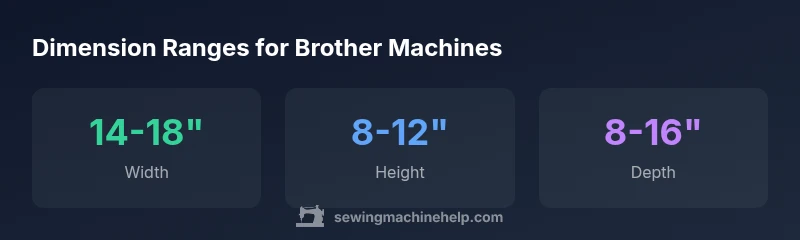
Most Brother sewing machines measure roughly 14-18 inches wide, 8-12 inches tall, and 8-16 inches deep, with weight commonly between 10 and 20 pounds. Exact numbers vary by model and accessories, but these ranges help estimate footprint for workspace and storage. If you need portability, look for models under 15 inches wide or around 12 inches tall. For sewing tables, plan extra clearance around the needle area and thread spools.
How Big Is a Brother Sewing Machine? Understanding footprint basics
If you’re wondering how big is a Brother sewing machine, start with three core measurements: width, height, and depth. Add weight to gauge portability and base size to understand stability on a table. For most home setups, these metrics translate into practical decisions about where the machine fits, how much room you need to sew comfortably, and whether you should invest in an extension table or a larger work surface. In this section, we’ll translate often-quoted specs into real-world space planning. We’ll also discuss how accessories, such as free-arm extensions and snap-on tables, can extend the footprint. By the end of this section, you’ll be able to estimate whether a machine will fit through your doorway, over your workspace, and in your sewing nook without constantly maneuvering around it.
In our experience at Sewing Machine Help, other factors like cable routing and foot pedal placement influence usable space just as much as the stated dimensions. This is why you should not rely on a single number; instead, compare the full spec sheet, look at the machine on a scale diagram, and if possible, test the footprint with a cardboard cutout before you buy. This practical approach helps avoid buyers’ remorse and ensures the chosen Brother model supports your most common projects without crowding your crafting area.
What dictates the size of Brother machines across model families
Brother offers a range of machines from compact, entry-level models to heavier-duty units with embroidery capabilities. The footprint grows with features like embroidery modules, larger freearm openings, and supporting bases. Light-duty household models tend to stay near the smaller end of the spectrum, while models designed for quilting or embroidery can be wider and heavier, sometimes necessitating a sturdier table or a dedicated cabinet. When you compare sizes, look beyond width alone: consider height to ensure you can access the needle and thread spools comfortably, and account for depth when you open accessory drawers or use a wide presser-foot with a tall spool tower. Space planning is especially important if you share your workspace with cutting mats, lighting, and a storage area for fabrics.
Measuring your space: a practical, step-by-step approach
To assess whether a Brother machine will fit in your setup, start with a simple floor plan. Measure the available width, depth, and height, then add at least 6-12 inches of clearance around all sides for maneuverability and air circulation. If you plan to use an extension table, include its footprint in the total. Check the desk height relative to your chair; a comfortable sewing posture typically benefits from a table height that matches your forearm level when seated. Consider power access; place the machine near an outlet with safe cord management. Finally, verify doorways and storage access so you can bring the machine into your sewing room without disassembly. These steps reduce the risk of buying a machine that looks good on paper but fails in your workspace.
How to compare dimensions across models effectively
When evaluating two Brother machines for size, create a side-by-side comparison using the spec sheets. Start with width, height, and depth as your primary filters, then add weight to gauge portability. Look for exact dimensions listed in inches or centimeters and convert to your preferred unit if needed. If a model offers an optional extension table, factor that into the total footprint. Don’t forget to assess the footprint of accessories like spool pins, thread stands, and foot pedal cable routing. Reading reviews focusing on setup and workspace fit can also highlight dimension-related surprises other buyers encountered. Finally, consider your workflow: a slightly larger machine with a bigger workspace may significantly improve your sewing experience if you handle bulky fabrics or long seams.
Size guidance for different user profiles: beginners, hobbyists, and advanced sewists
Beginners often benefit from compact, easy-to-use machines with a small, stable footprint that fits a tidy sewing nook. A moderate footprint provides room for basic tasks and occasional extension table use. Hobbyists who juggle multiple projects may prefer a larger workspace that accommodates a wider extension table and accessory storage. Advanced sewists or developers of complex projects might opt for models with embroidery capabilities and a bigger freearm, which increases footprint but can speed up workflows. In all cases, ensure the machine sits securely on a sturdy table and that you have enough clearance to raise the presser foot and maneuver fabric comfortably. Remember, size is a means to a smoother sewing experience, not a constraint on creativity.
Quick-reference dimension ranges for planning and purchasing
Across common Brother lines, you’ll typically see: width 14-18 inches, height 8-12 inches, depth 8-16 inches, weight 10-20 pounds. These broad ranges cover most consumer models and offer a practical baseline for comparing products. If you’re shopping online, print the dimensions sheet and bring it to your workspace to verify fit. If your work involves large quilts or dense fabrics, you may need to allocate more space for a larger model with additional extension capabilities. By prioritizing fit with your workspace, you’ll avoid frustration and find a machine that feels comfortable to use over long sewing sessions.
Representative dimension ranges for common Brother sewing machines
| Dimension | Low estimate | High estimate | Notes |
|---|---|---|---|
| Width | 14 inches | 18 inches | Footprint across most Brother models |
| Height | 8 inches | 12 inches | From base to top of presser foot |
| Depth | 8 inches | 16 inches | Front-to-back footprint including accessory tables |
| Weight | 10 pounds | 20 pounds | Varies with features and embroidery options |
Your Questions Answered
What is the typical footprint of a Brother sewing machine?
Most Brother machines have a compact footprint, typically around 15 inches wide and 10 inches deep, with height around 9 inches. Models vary, so always check the exact spec.
Most Brother machines are compact, around 15 by 10 inches footprint, with about 9 inches in height.
Do Brother models vary a lot in size?
Yes, size varies by family. Entry-level models stay compact while embroidery or quilting models can be wider and heavier.
Yes. Size varies a lot by model family.
How can I measure my workspace for a new Brother machine?
Measure width, depth, and height; add 6-12 inches clearance; consider extension tables and cable routing; verify door access and storage.
Measure the space, add clearances, and check for extension tables.
Are there compact Brother machines under 15 inches wide?
Yes, several compact models stay under 15 inches in width, though they may offer fewer features.
Yes, you can find under-15-inch Brother machines.
Is weight a good indicator of sturdiness for Brother machines?
Weight can reflect sturdiness and built-in features, but construction quality and design also matter.
Weight helps, but it's not the whole story.
What should beginners know about size vs functionality?
Beginners should prioritize stability and ease of use. A compact model is fine to start, with upgrades possible later as you grow.
Start small, then upgrade as you need more features.
“A machine’s footprint matters as much as its features. By aligning dimensions with your workspace, you preserve comfort and efficiency in every project.”
The Essentials
- Understand width, height, and depth first to gauge fit
- Account for extension tables and accessories
- Use safe clearance: 6-12 inches around the machine
- Weight varies by model; portability matters
- Always verify model-specific specs before buying