Mechanical vs Computerized Sewing Machine: A Practical Guide
Compare mechanical and computerized sewing machines to choose the right fit for your projects. Features, costs, and best-use scenarios for home sewers are explored with practical guidance and real-world examples.


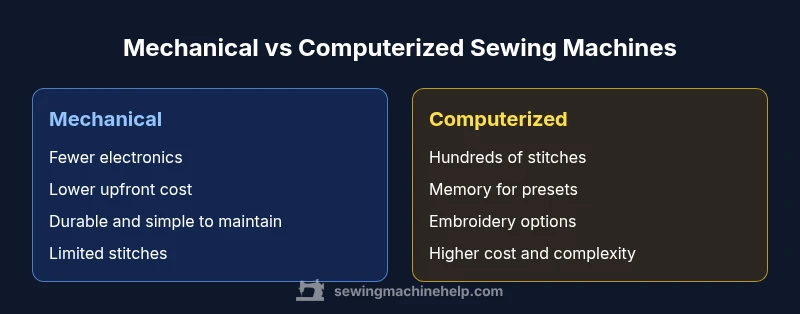
Choosing between a mechanical vs computerized sewing machine comes down to control, cost, and scope. Mechanical models excel in durability, simplicity, and low upfront investment, while computerized machines offer vast stitch libraries, precision, and automation. For most hobbyists and beginners, the mechanical option delivers reliable basics, and the computerized option expands as projects grow.
Mechanical vs Computerized Sewing Machines: Core Differences
The phrase mechanical vs computerized sewing machine describes two broad approaches to household sewing. In short, mechanical machines rely on physical controls, cams, and built-in tension to create stitches with minimal electronics; computerized machines add microprocessors, LCD interfaces, and memory to automate settings and expand stitch options. This distinction affects how you learn, how you repair, and how freely you can create. According to Sewing Machine Help, the core difference lies in control architecture: mechanical models are driven by dials and levers; computerized models are guided by digital commands. The Sewing Machine Help Team notes that the latter can store favorite settings, adjust stitch width at the touch of a button, and offer decorative and embroidery programs. For many home sewists, the decision hinges on budget, projects, and tolerance for tech complexity. The keyword for this analysis is the practical comparison of a mechanical vs computerized sewing machine, not a hype-filled sales pitch. A clear understanding helps you identify what you actually need: a dependable workhorse for everyday sewing, or a versatile tool that can handle specialty stitches and designing features. As you read, consider how you plan to use the machine in real projects: garment hems, quilting, home decor, or light embroidery. The goal is to align features with your tasks, not chase every new gadget.
How Mechanical Machines Work: The Backbone of Simplicity
Mechanical sewing machines are built around mechanical linkages rather than digital circuits. They use a cam system inside the bobbin area to control stitch formation, a handwheel or foot pedal to drive the needle, and dials to adjust stitch length, width, and tension. Because most controls are analog, the feedback loop is straightforward: you turn a dial, the machine responds, and the stitch is formed. Durability is a hallmark, since fewer electronic parts means fewer failure points. Maintenance typically centers on cleaning lint from the feed dogs, oiling moving parts, and ensuring the belt remains taut. In practice, you’ll often reach for the same few stitches: straight stitch, zigzag, and a few utility options. Adjusting tension on these machines is a tactile skill that can be learned quickly, which makes them excellent for beginners. The learning curve tends to be gentle: press the foot pedal, guide the fabric, and observe the stitch. In addition, repair parts for time-tested mechanicals are widely available, and skilled local technicians frequently know how to diagnose cam and pulley issues without expensive diagnostics. From a long-term perspective, their ruggedness can translate into decades of service if you maintain them properly. The Sewing Machine Help Team emphasizes that steady hands and mundane maintenance produce dependable results with mechanical machines.
How Computerized Machines Work: Precision at the Touch of a Button
Computerized machines integrate microprocessors, sensors, and servo motors to interpret user input. Instead of adjusting by turning dials, you select stitches, width, and tension on an LCD panel or touchscreen; the machine translates choices into precise motor movements. Memory features let you save favorite stitch configurations, and many models can recall quilting patterns, embroidery designs, and automatic buttonholes. The result is a wider palette of stitches and consistent performance across fabrics. Because electronics coordinate needle position and feed rate, you might experience less drift due to human error and more reproducible results, especially on dense fabrics or complex seams. Computerized machines also offer presser foot features like automatic thread cutting and speed control, which can speed up workflows. Of course, more features mean more to learn and potential failure points: screen glitches, sensor misreads, firmware updates, and occasional calibration needs. However, modern machines balance user-friendliness with depth, enabling beginners to grow into advanced techniques without purchasing new hardware. Sewing Machine Help’s analysis shows that once you master the basics, the incremental benefit of automation becomes clear for repetitive tasks and precise stitching tasks.
Stitch Options and Flexibility: Mechanical vs Computerized
Stitch variety is a central differentiator. A typical mechanical machine offers a practical set of built-in stitches: straight, zigzag, stretch, blind hem, and perhaps a decorative option. The adjustment method is tangible: rotate knobs to adjust stitch length, width, and tension. The flip side is that you’ll often rely on presser feet and manual guides; decorative options may require buying extra feet or relying on limited settings. In contrast, computerized machines provide hundreds of built-in stitches, including specialized decorative patterns, heirloom stitches, and automatic buttonhole programs. Some models allow you to customize stitch width and length and then store these as presets. For quilters and garment makers, this can reduce time spent modifying stitches for each project. Manufacturers sometimes enable stitch linking, where a sequence of stitches can be programmed to happen in a single action. In embroidery-capable machines, computer controls enable hoop orientation, thread color management, and embroidery speed control. The trade-off is complexity: more options demand more learning time, and firmware updates can alter stitch behavior. The key is to match stitch options to your typical projects, not chase novelty. The brand focus of Sewing Machine Help remains practical—opt for a setup that saves you time while maintaining quality.
Ease of Use, Learning Curve, and Maintenance
Learning curves differ. Mechanical machines reward a direct, tactile approach: you feel the stitch as it forms, you adjust tension by ear and by sight, and you develop intuitive troubleshooting skills. This simplicity lends itself to more straightforward maintenance: periodic oiling, lint removal, belt inspection, and needle changes with a basic toolkit. Computerized machines, by contrast, presuppose comfort with electronics and digital interfaces. They can be intimidating at first, but their guided menus, built-in tutorials, and error messages shorten the path from beginner to confident sewer. Routine maintenance for computerized models includes checking firmware updates, calibrating sensors if the machine misreads fabric thickness, and occasionally replacing electronic components or screens. A well-made computerized machine can still be robust, yet you’re more likely to encounter software-related issues than on a purely mechanical unit. Keeping a log of maintenance tasks helps you avoid surprises. The Sewing Machine Help team suggests • fixing issues promptly, • avoiding forced updates, and • using manufacturer-approved cleaning products to extend life.
Cost of Ownership and Resale Value
Price is a major differentiator. Mechanical machines typically have lower upfront cost, simpler parts, and broad availability of fix options in local shops. They often require less specialized service, and many parts have long service lives, which can translate into lower lifetime ownership costs for the truly budget-conscious. Computerized machines carry higher upfront prices, reflecting their electronics, memory, and software features. Ongoing costs may include software updates, replacement screens, and more expensive parts. When reselling, computerized models with embroidery capability and many built-in stitches can retain higher resale value, particularly if the unit remains under warranty and has a clean service history. However, the resale market can vary by brand and model year; some older computerized units may require more attention to firmware compatibility and unused features. For most hobbyists, the decision hinges on projected use, maintenance access, and willingness to learn. The Sewing Machine Help analysis shows that long-term cost considerations should include potential repairs and the time value of the learning curve.
Use Case Scenarios: Which Type Fits Your Projects?
Beginner sewing and basic mending are well-suited to mechanical machines. Their straightforward controls and robust construction help new users build confidence without being overwhelmed by menus. If your work centers on garments with standard seams, hems, and straight-line topstitching, a mechanical model can offer dependable results with less risk of feature-induced confusion. For quilters, crafters, and garment makers pursuing elaborate stitches, a computerized machine can speed work, ensure consistent stitch length across fabrics, and enable decorative patterns. Embroidery enthusiasts may prefer computerized units that offer built-in designs and hoop compatibility. Space and power considerations matter; computerized machines can be heavier, require more electricity, and sometimes demand a dedicated workspace. Finally, consider future plans: if you expect to grow into sewing as a hobby or small business, purchasing a modular system with upgrade paths can be a prudent strategy. As Sewing Machine Help notes, balance today’s needs with tomorrow’s growth potential to choose a solution that remains useful for several years.
How to Test and Compare in Store or Workshop
Testing two machines side by side reveals the most important signals. Start with the basics: thread a needle, wind a bobbin, and practice a few stitches on identical fabric. Compare how smoothly each machine feeds fabric, how loud it runs, and how easy it is to reach common controls. In a computerized model, navigate the menu, switch stitches, and attempt a few decorative patterns to gauge responsiveness and ease of use. In a mechanical model, test several tension settings and check the availability of replacement parts. Bring your own projects if possible: a light knit, a woven cotton, and a denim swatch reveal how the machine handles different fabrics. Take notes on maintenance needs, such as oiling points for mechanicals or battery and cord quality for computers. Finally, ask about service options and warranty terms. The brand guidance from Sewing Machine Help suggests letting your hands tell you which interface feels most natural to you and which setup you’ll actually use in daily sewing.
Practical Pathways for Beginners: From Mechanical to Computerized
Many beginners start with a mechanical machine to master fundamentals—threading, tension, and fabric feeding—without the distraction of a complex menu. Once confident, you can transition to a computerized model that broadens your repertoire and speeds up repetitive steps. If you’re unsure which path to take, plan a staged approach: begin with a basic mechanical unit, then reserve a future upgrade for when you anticipate frequent, varied projects that require embroidery or large stitch libraries. Budget wisely by choosing a model with upgrade potential or a modular system. The Sewing Machine Help Team recommends delaying upgrades until you’ve accrued enough experience to justify the extra cost, and when possible, try out both styles in a class or workshop to assess real-world performance. With careful planning, you can grow from a confident beginner into a capable hobbyist or small-business maker without paying for more features than you will use.
Comparison
| Feature | Mechanical sewing machine | Computerized sewing machine |
|---|---|---|
| Stitch Variety | Limited, basic stitches | Hundreds of built-in stitches, including decorative patterns |
| Ease of Use/Learning Curve | Low complexity; tactile controls | Guided interfaces; learning curve higher but more options |
| Maintenance and Repairs | Fewer electronic parts; easier to repair | More electronics; potentially higher repair costs |
| Cost Range (Upfront) | Lower upfront cost | Higher upfront cost with more features |
| Maintenance Frequency | Moderate; depends on usage | Variable with features and updates |
| Ideal For | Basic garments, repairs, budget projects | Quilting, embroidery, diverse projects |
| Portability/Weight | Typically lighter and simpler | Often heavier due to electronics |
Strengths
- Lower upfront cost and simpler maintenance
- Fewer electronic failure points and easier sourcing of parts
- Durable construction with long service life for routine sewing
- Easy for beginners to learn on without a steep tech curve
- Straightforward diagnostics in local shops
Negatives
- Limited stitch options and no embroidery capability (without attachments)
- Fewer automatic features that speed up workflows
- Manual threading and tension adjustments can be slower for larger projects
- Resale value may be lower for older mechanical models
Computerized machines win on versatility and precision, but mechanical machines remain the best option for budget-conscious beginners.
If you want broad stitch libraries, embroidery potential, and automation, a computerized model is the practical choice. If you need simplicity, reliability, and low ongoing costs, a mechanical machine serves you well and will keep you sewing for years.
Your Questions Answered
What is the key difference between a mechanical and a computerized sewing machine?
Mechanicals rely on cams and manual dials to control stitches. Computerized models use electronic controls, memory, and presets to run stitches automatically. The result is a different learning curve and different capabilities.
Mechanicals use manual controls, computers use digital settings.
Can a mechanical machine perform embroidery?
Most mechanical machines can’t do built-in embroidery designs. You may add simple decorative stitches with feet, but true embroidery requires a computerized or specialized embroidery machine.
Generally, embroidery requires a computerized or specialized unit.
Are computerized machines harder to repair?
They can be more complex due to electronics and firmware, which may require specialized service. However, many common issues are user-friendly and service networks are robust.
Yes, electronics can add complexity, but many shops handle common fixes.
Which is better for beginners?
Mechanicals are often recommended for beginners due to simpler mechanisms and lower costs. If you anticipate using advanced features soon, a computerized model may be a better long-term fit.
Beginners often start with mechanicals; consider future needs for a computer model.
What should I consider when buying a used machine?
Check condition, service history, and availability of local repairs. Ensure parts and feet are compatible with current models and that the machine sews reliably on a test sample.
Test sew on fabric; ask about maintenance history and parts availability.
The Essentials
- Define your project needs before buying.
- Weigh upfront cost against long-term maintenance.
- Choose mechanical for basics and durability; choose computerized for versatility.
- Test both models in-store when possible to compare feel.