Sewing Machine or Serger: A Practical Buying Guide
Compare sewing machines and sergers to decide the best tool for home sewing. This analytical guide from Sewing Machine Help covers capabilities, use cases, and buying tips.


According to Sewing Machine Help, choosing between a sewing machine or serger hinges on your projects, finishes, and budget. For most home sewists, starting with a versatile sewing machine is the smart first step, then adding a serger later for knit fabrics and clean edges. This comparison highlights the strengths and tradeoffs to help you decide quickly.
Core Difference: What Each Tool Brings to Projects
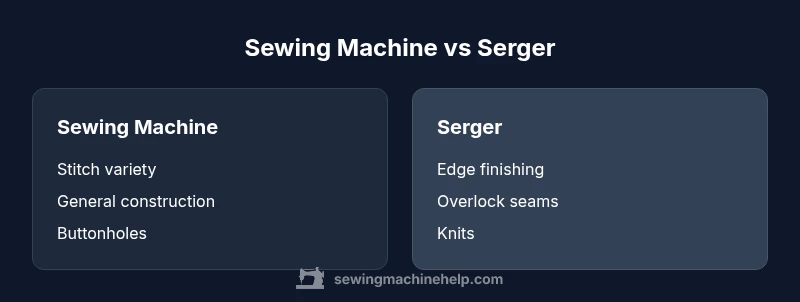
In the world of home sewing, the phrase sewing machine or serger refers to two distinct machines designed for different ends. A traditional sewing machine is a versatile workhorse that handles a wide range of stitches, from basic construction to decorative details, buttonholes, and topstitching. A serger, on the other hand, specializes in edge finishing and seam construction using overlock stitches that prevent fraying and produce a clean, professional edge—especially valuable when working with knits and delicate fabrics. Understanding this core distinction helps set expectations: the sewing machine excels at versatility and embroidery-like finishes, while the serger excels at speed and edge finishing. For most projects, both tools are complementary rather than mutually exclusive, enabling a broader set of techniques with less manual effort. As you plan, map out which tasks appear most often in your sewing workflow—sewing machine tasks for general construction, serger tasks for edging and knit fabrics—and you’ll see how the two categories balance each other.
How Sergers Differ in Construction and Stitching
A serger operates with loopers, knives, and differential feed to create overlock stitches that simultaneously seam and finish fabric edges. Its primary strengths are speed and edge control: rolled hems on light fabrics, narrow seams on knits, and tidy last-minute finishes where traditional seams may curl or fray. The threading path on a serger is typically more complex than a standard sewing machine, and tension adjustments on loopers impact stitch quality across fabrics. Serger fabric handling favors stable, knit-based or woven fabrics where a clean edge is more important than a wide stitch repertoire. The result is a concise set of high-precision finishes that look professional and hold seams neatly under stress. If your projects involve frequent knitwear or edge finishing as a primary concern, a serger becomes a powerful asset in your toolkit.
Traditional Sewing Machines: The Core Capabilities
A standard sewing machine provides a broad spectrum of stitches and features designed to support general garment construction, quilting, home decor, and craft projects. Buttonholes, zippers, topstitching, and a robust needle system are typical strengths. Modern machines often include automatic needle threading, adjustable presser feet, and a versatile stitch selector that makes it easier to adapt to different fabrics and projects. For beginners, this is a scalable platform: start with essential stitches and progressively add features as your skills grow. The sewing machine offers a flexibility that sergers rarely match, especially when you need to combine multiple fabrics, apply decorative stitches, or perform precise topstitching. Your choice here shapes how broad your project range will be and how you approach future upgrades.
Use-Case Scenarios: Garments, Home Décor, and Crafting
Consider your typical projects to weigh the sewing machine versus serger decision. If most of your work involves woven fabrics, buttons, zippers, and hems, a sewing machine will cover the majority of tasks with ease. If you frequently sew knits or want professional-edge finishes, a serger delivers the clean edges and quick seam construction knit fabrics demand. Home decor projects like cushions, curtains, and piping often benefit from a mix: a sewing machine handles the construction, while the serger takes care of finishing edges on seam allowances. For craft projects, the sewing machine’s stitch variety often outweighs the serger’s edge-first approach, unless you specifically require durable overlock seams. The best strategy is to inventory your typical projects and preview the exact stitches and finishes you’ll rely on.
Key Features to Compare: Stitches, Speed, and Precision
The leading features to compare span stitch repertoire, fabric handling, and maintenance demands. A sewing machine typically offers a wide stitch library, buttonhole options, programmable features, and accessory feet for zippers, walking feet, and quilters’ feet. A serger emphasizes speed, multiple overlock options, and knife-based edge finishing, with a differential feed that adapts to stretchy fabrics. When evaluating models, prioritize a machine with a diverse stitch range and a solid user interface, then assess a serger’s loopers, knife quality, and ease of threading. Look for built-in tension adjustments and compatibility with common presser feet for your most-used fabrics. Both machines benefit from reliable warranties and accessible parts for long-term performance.
Price, Value, and Lifespan Considerations
Cost often guides early decisions. Entry-level sewing machines typically provide a lower upfront investment and abundant support resources, making them friendly for beginners. Sergers generally require a higher initial outlay, though they can offer faster finishes and professional results that improve with experience. When budgeting, also consider ongoing costs such as thread, needles, lifters, and replacement parts. Value assessment should weigh not just the sticker price but the range of projects you can complete without constraints, the availability of instruction and repair services, and the machine’s reliability over time. Warranty length, brand reputation, and accessory ecosystem influence long-term cost of ownership, sometimes more than the initial price tag.
Setup, Threading, and Troubleshooting for Beginners
Getting started with either a sewing machine or serger requires a calm, methodical approach to threading and setup. For a sewing machine, begin with the machine powered off, thread guides followed in sequence, and the bobbin wound correctly. Return to the top left of the machine, thread the needle, and test stitch on scrap fabric. A serger, while more complex to thread, benefits from following a step-by-step path: thread loops and needle tensions in the order specified by the manual, engage the presser foot, and test on stable fabric before moving to a real project. Common issues include skipped stitches, tension irregularities, and misaligned edges; most are solved by re-threading, re-checking tension, and ensuring proper fabric feed. Practice with inexpensive fabrics to build confidence before tackling actual projects.
Getting Started: Decision Framework for Beginners
A practical approach begins with a clear plan. First, list your typical projects and identify where you most need versatility versus edge finishing. Second, establish a realistic budget that includes accessories and maintenance. Third, prioritize a capable sewing machine with a robust stitch library and decent presser feet; reserve serger upgrades for when you consistently work with knits or require professional edging. Finally, create a phased purchase plan: basis on the first machine, then add a serger as needed. This framework helps you avoid buyer’s remorse and ensures your toolkit grows with your skills.
Maintenance and Longevity: Care for Your Machines
Regular maintenance extends service life. For a sewing machine, clean lint from the bobbin area, oil only where the manufacturer recommends, and replace needles frequently to protect fabric and stitches. For a serger, keep the loopers clean and aligned, change blades as needed, and maintain blade sharpness for clean cuts. Always follow the user manual for lubrication schedules and tension checks. Store machines in a dry, dust-free environment and cover them when not in use to minimize dust accumulation. Routine care reduces the risk of jams, skipped stitches, and mis-threading, preserving performance over time.
Expanding Your Toolkit: When to Upgrade or Add a Serger
Upgrading decisions should hinge on project demand rather than trend alone. If you notice a growing need for fast edge finishes, knit-friendly construction, or neat seams that don’t require extra finishing time, a serger becomes a compelling addition. Conversely, if your projects continue to demand a wide range of stitches and complex constructions, investing in a higher-end sewing machine may deliver greater long-term value. The general strategy is to establish a solid base with a capable sewing machine and monitor your workflow for recurring edge-finishing tasks that justify adding a serger. Your toolkit should evolve with your skills and project load.
Comparison
| Feature | Sewing machine | Serger |
|---|---|---|
| Stitch range | Broad library including utility, decorative stitches, and buttonholes | Overlock/edge stitches focused on finishing and seaming |
| Edge finishing | Limited edge finishing options without separate feet | Exceptional edge finishing with rolled hems and overlock seams |
| Fabric handling | Versatile across woven and knit fabrics with appropriate feet | Optimized for knits and fabrics requiring clean edges |
| Speed and efficiency | Moderate to high depending on model and project | Very fast for edge finishing and seam construction |
| Setup and maintenance | Simpler threading and broader accessory ecosystem | More complex threading with loopers and knife; requires careful maintenance |
| Price range | Usually lower upfront cost, varied by features | Higher upfront cost for reliable serger models |
| Best for | General sewing, garments, crafts, and quilting | Knit fabrics, quick finishes, and professional edging |
Strengths
- Sewing machines offer broad stitch options and project versatility
- Serger delivers fast, clean edge finishes for knits and woven seams
- A two-tool setup covers most projects with flexibility
- Extensive support and accessory ecosystems aid learning and repair
Negatives
- Sergers have a narrower stitch range and higher learning curve
- Entry-level sergers can be expensive and space-demanding
- Maintenance complexity can increase with multiple machines
- Owning both requires more workspace and cost management
For most beginners, start with a versatile sewing machine; add a serger later as knit work and edge finishes become common.
A sewing machine provides broad capability for a wide range of projects. A serger specializes in efficient, professional edging. Together, they form a complete setup, but the starting point should be a sturdy machine, then evaluate a serger as your projects demand specific finishes.
Your Questions Answered
What is the difference between a sewing machine and a serger?
A sewing machine provides a wide range of stitches for general sewing, including buttonholes and topstitching. A serger specializes in overlock edges and seam finishing, delivering a neat edge quickly, especially on knits. The two tools complement each other to cover typical home sewing tasks.
A sewing machine offers many stitches for general sewing, while a serger finishes edges and sews knits quickly. Together they cover most home projects.
Can I do all projects with a regular sewing machine, or do I need a serger?
A regular sewing machine can handle most garments and crafts, but a serger speeds up edge finishing and gives professional edging on knits. Many hobbyists start with a machine and add a serger later when the project mix requires it.
A sewing machine handles most tasks; a serger is often added later when you work with knits or require clean edges.
Is a serger necessary for beginners?
Not strictly necessary for beginners. A solid sewing machine will cover most learning needs. A serger becomes valuable as you advance to knit fabrics or projects that need durable, clean edges.
A serger isn’t required for beginners, but it’s helpful once you start knitting or edge-finishing a lot.
How do I choose between a sewing machine and a serger?
Start by listing your typical projects and the finishes you want. If versatility and a broad stitch set are priorities, choose a good sewing machine first. Add a serger later if edge finishing and knit work become frequent.
List your projects first; then pick the tool that best fits your main needs, plus plans for future upgrades.
What basic stitches should I learn first on a sewing machine?
Learn straight stitch and zigzag first, then practice a basic buttonhole. These stitches form the foundation for most garments and repairs, and you can expand as you gain confidence.
Start with straight and zigzag stitches, then move to buttonholes as you gain confidence.
What maintenance tasks are common for sergers?
Keep the loopers and knives clean, check tension, and follow the manufacturer’s guidance for lubrication. Regularly replace needles and blades as needed to maintain edge quality.
Keep the loopers clean, check tension, and maintain blades and needles.
The Essentials
- Choose a sewing machine first for versatility and growth.
- Add a serger later if knitwork and edge finishing are frequent.
- Assess stitch variety, fabric handling, and maintenance needs.
- Plan your budget to cover basic tools, accessories, and repairs.