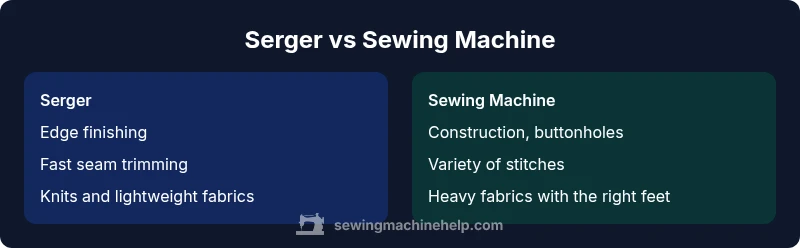
Is a Serger or Sewing Machine Better? A Practical Guide for Home Sewists
A thorough, data-driven comparison of serger versus sewing machine to help home sewists decide which tool fits their projects, budget, and skill level. Learn when to choose each, and how to plan a practical starter setup.


There is no universal winner in the serger vs sewing machine question. For most home sewists, a regular sewing machine offers greater versatility, a wide stitch library, and broader fabric support. A serger shines for fast, professional edge finishing on knits and lightweight fabrics. Start with a capable sewing machine, then add a serger if finishing seams becomes a priority.
The core difference: what each machine does
A serger (often called an overlock) and a conventional sewing machine serve different purposes in the sewing room. A traditional sewing machine provides a broad stitch library—straight, zigzag, blind hems, buttonholes, and many decorative stitches—delivering control for seams, hems, topstitching, zippers, and precise construction. It excels at garment-making, quilting, and home décor projects where accuracy and a wide range of stitch options are paramount. A serger, however, is designed to finish raw fabric edges quickly while trimming away excess fabric. It uses multiple threads and loopers to create an enclosed edge that resists fraying, especially effective on knits and stretch fabrics. For most home sewists, the optimal path is a strong sewing machine to handle the majority of tasks, with a serger added later if finishing speed and professional edge finishes become a priority. According to Sewing Machine Help, the decision should hinge on typical fabrics, the need for edge finishing, and how comfortable you are with threading and setup. If you frequently sew knits or lighter fabrics and want edge-to-edge finish in one pass, a serger can be a game changer; for heavy fabrics, precise construction, and a wide stitch repertoire, a sewing machine remains indispensable.
When a serger makes sense
A serger shines in several practical scenarios. If your projects regularly involve knits, stretch fabrics, or delicate woven fabrics that fray easily, the serger’s overcast edge prevents unraveling and delivers a clean, professional finish at high speed. For homemade athletic wear, baby garments, or t-shirt quilts where a neat, parallel edge matters, sergers save time because they trim, stitch, and finish edges in one pass. Another common case is when you’re assembling long seams on large projects like home décor or activewear; the serger’s speed and edge stability can dramatically shorten production time. However, sergers are not a universal upgrade; they lack the broad stitch library needed for topstitching, buttonholes, and precise zippers. They also require learning to thread multiple looms and tensions, which increases the learning curve. The Sewing Machine Help team notes that a serger is best treated as a companion tool rather than a replacement for a full-featured sewing machine. When you anticipate primarily finishing edges on knit fabrics or want to speed up garment production with consistent edges, a serger becomes a strategic asset.
When a standard sewing machine makes sense
A conventional sewing machine is the backbone of most hobbyist and beginner sewing rooms. It offers: a wide stitch catalog (straight, zigzag, stretch stitches, buttonholes, decorative stitches), needle-position control, presser foot options, and compatible accessories for zippers, piping, topstitching, and precise seam allowances. This versatility is invaluable for garment construction, quilts, home décor, and repairs. If you routinely work with wovens like cotton, linen, and denim, or you require precise buttonholes and topstitching, a sewing machine is unmatched. Even for knits, you can achieve sturdy seams with dedicated knit stitches and walking feet. The main caveat is speed relative to a serger; while many modern machines are fast, they still require a separate finishing step if you want a clean edge on every seam. A robust sewing machine also supports a broader range of stitches and adjustable machine settings for intricate tasks, such as free-motion quilting or embroidery. In short, for most people starting out, the sewing machine remains the primary investment, with a serger filling gaps when finishing speed and edge durability on knit fabrics become critical.
Key features to compare head-to-head
When evaluating sergers vs sewing machines, focus on a core set of features:
- Stitch repertoire: A sewing machine typically covers straight, zigzag, buttonholes, blind hems, and decorative stitches; a serger provides overlock stitches and edge finishing.
- Fabric handling: Sewing machines generally handle a wide range of fabrics, including denim and leather with appropriate feet; sergers excel with knits and light to medium wovens that fray.
- Threading and tension: Sewing machines often have simpler threading paths, while sergers involve multiple threads and loopers with precise tension balance.
- Speed and throughput: Sergers operate at high speeds on finishing edges, while sewing machines balance speed with precision for complex seams.
- Maintenance: Sergers require blade changes and looper maintenance; sewing machines emphasize needle timing, oiling, and feed-dog cleanliness.
- Price and space: Sergers tend to be compact but specialized; sewing machines offer broader capabilities but can be heavier and more feature-rich. Consider your budget, workspace, and long-term goals when choosing.
For home sewists, a balanced setup often means starting with a solid sewing machine and then evaluating whether a serger adds enough value to justify the cost and space. The goal is to match your typical projects to the tool’s strengths, rather than pursuing a all-in-one solution.
Fabric types and stitch capabilities
Different fabrics demand different tool strengths. Knits benefit from serger-finishing edges and stretch-friendly stitches; wovens require stable seams and precise topstitching that a sewing machine provides. For hybrid projects—garments that mix knits and wovens—many sewists use both tools in tandem. Stitch compatibility also matters: sergers use multiple threads (often 4 threads), while sewing machines may use single, dual, or triple-thread configurations depending on the stitch. It’s essential to consider how often you’ll encounter serger-friendly tasks like hems on lightweight jerseys or seaming on fleece. If your planned projects include more than casual garments, it’s likely worth investing in a capable sewing machine first, then considering a serger to complement your workflow. This approach aligns with practical guidance from the Sewing Machine Help team and ensures you’re choosing tools that align with your typical fabric types and finishing needs.
Threading, setup, and learning curve
Threading a serger is notably different from threading a sewing machine. A typical serger requires threading multiple loopers plus the needles, sometimes in a specific order to avoid tension issues. It can be intimidating for beginners. A sewing machine usually has a single thread path, often with color-coded guides and intuitive presser foot changes. The learning curve for a sewing machine is generally shallower for basic tasks, making it more approachable for beginners. To minimize frustration, set aside time to practice on scrap fabric, follow threading diagrams carefully, and keep spare parts (needles, looper replacements) on hand. For many hobbyists, mastering the sewing machine first yields faster project completion and satisfaction, while a serger becomes a later enhancement that unlocks professional edge finishes.
Maintenance, durability, and costs over time
Maintenance is a critical consideration. Sewing machines require periodic needle changes, cleaning, oiling (depending on model), and occasional timing checks. Sergers demand attention to blade changes, thread tension alignment, looper care, and more frequent nozzle-like cleaning of thread paths. In terms of durability, both types can last many years with proper care, but reliability hinges on model quality, usage intensity, and maintenance routines. Cost-wise, a basic beginner sewing machine may start lower, while an entry-level serger often has a higher upfront cost relative to a bare-bones sewing machine. Over time, maintenance costs for sergers include blade replacements and looper maintenance that sewing machines typically do not require as frequently. A thoughtful budget plan considers both the initial investment and ongoing upkeep for the long haul, ensuring you’re not surprised by maintenance demands or accessory replacements.
Project planning: matching tool to project
Before purchasing, map your typical projects: are you sewing simple hems and repairs, creating garments with diverse fabrics, or finishing knits quickly? If speed and clean edges on stretch fabrics are a daily goal, a serger is attractive. If you’re building a wardrobe, quilting, or doing home décor with stable fabrics, a sewing machine is essential. A practical approach is to list your most common tasks, identify which tool covers each task efficiently, and then weight the cost and space requirements. If you’re just starting, invest in a versatile sewing machine with a solid stitch repertoire; evaluate the need for a serger after working on several projects and discovering your finishing needs. This strategy minimizes waste and maximizes learning, helping you grow confidence before expanding your toolkit.
Budgeting for a starter setup
For beginners, start with a dependable sewing machine that supports a broad range of stitches and accessories. A reasonable starter budget may include: a quality machine, a few essential feet (zigzag, buttonhole, walking foot), a spare needle set, and fabric for practice. If you discover a strong volume of knit-based projects or you consistently finish garments with clean edges, add a serger when your budget allows. The decision should be incremental, not all-at-once; this approach reduces risk and ensures you actually use the tool you purchase. Sewing Machine Help suggests prioritizing a solid sewing machine first, then adding a serger as your projects evolve and you have regular finishing needs that justify the investment.
Common myths debunked
Myth 1: Sergers can replace sewing machines entirely. Reality: Sergers excel at finishing edges but cannot create many stitches needed for construction, buttonholes, or intricate topstitching. Myth 2: More expensive equals better for beginners. Reality: A well-chosen, mid-range sewing machine often delivers more value for learning and versatility than a high-end serger starter kit. Myth 3: Sergers are threadproof and easy. Reality: Sergers require attention to threading, looper tension, and blade maintenance, which can be challenging for new users. Myth 4: You can fix every project with one tool. Reality: Many projects benefit from both tools—use the sewing machine for construction and the serger for finishing edges.
Practical accessories and etiquette
To maximize your setup, invest in essential accessories: needles suited for your fabrics, compatible feet for different seams, a walking foot for knits, a serger knife blade replacement kit, and a reliable spool holder. Establish a workflow where fabrics are prepped, seams are stitched on the sewing machine, and edges are finished on the serger (when applicable). Keep a dedicated cleaning routine for both machines, and store threads in color-coded spools to reduce confusion during threading. Practicing with scrap fabric helps you get a feel for tension, stitch length, and seam allowances, which saves time on real projects.
Summary of choices by user profile
If you’re a beginner focused on learning garment construction and basic repairs, prioritize a stable sewing machine with a diverse stitch library. If you’re an intermediate sewist who regularly makes knit garments or wants professional edge finishes, add a serger to your toolkit. For advanced hobbyists or small-scale makers, a dual setup—quality sewing machine plus a capable serger—often delivers the most efficient workflow and best results across a broader range of fabrics. The ultimate decision rests on your typical projects, budget, and tolerance for threading complexity; start small, practice consistently, and scale your toolkit as your skills grow.
Comparison
| Feature | Serger | Sewing Machine |
|---|---|---|
| Stitch types | Overlock/edge finish stitches | Straight, zigzag, buttonholes, decorative stitches |
| Threading complexity | Multi-thread loopers; higher threading complexity | Single-thread path (plus looper options in some models); easier setup |
| Fabric handling | Best with knits and light to mid-weight fabrics | Versatile across knits and wovens; handles heavy fabrics with right presser feet |
| Speed | Very fast edge finishing | Balanced speed for construction and finishing |
| Maintenance | Blade changes; looper maintenance; more moving parts | Needle timing, oiling, external cleanliness; fewer looper parts |
| Price range | Low to mid-range (varies by model) | Mid to high range (varies by model) |
| Best for | Edge finishing, knit-heavy projects, fast production | Garment construction, quilting, repairs, varied fabrics |
Strengths
- Faster edge finishing for knits and speed-focused projects
- Produces clean, professional seam finishes that resist fraying
- Compact size for sergers fits smaller workspaces
- Expands finishing options and can reduce hand-sewing time for certain tasks
Negatives
- Steeper learning curve and threading complexity
- Higher upfront cost and ongoing maintenance
- Limited ability to perform construction-focused tasks
- Not a full replacement for a sewing machine in most projects
A sewing machine generally offers broader versatility for beginners; a serger adds valuable speed and edge finishing for knits, making it the ideal complement rather than a replacement.
For most home sewists, start with a capable sewing machine to cover construction, repairs, and varied fabrics. If you frequently work with knits or need rapid edge finishing, add a serger later. The right setup is a balanced combination aligned with your projects and budget.
Your Questions Answered
What is a serger and what does it do?
A serger, or overlock machine, finishes fabric edges and trims excess material in one pass using multiple threads. It excels on knits and delicate fabrics where fraying is a concern. It does not typically replace a sewing machine for construction tasks like buttonholes.
A serger finishes edges and cuts fabric in one pass, great for knits but not a full sewing replacement.
Can a serger replace a sewing machine?
Not entirely. Sergers handle edge finishing quickly, but they lack the wide stitch library and construction capabilities of a sewing machine. Most projects benefit from both tools. Start with a sewing machine and add a serger if your finishing needs justify it.
A serger is great for edges, but you still need a sewing machine for most construction tasks.
Do beginners need a serger?
Beginners don’t necessarily need a serger right away. A solid sewing machine with essential stitches will cover most first projects. A serger can be added later as you take on knit garments or seek faster edge finishing.
You can start without a serger, then add one when you’re ready for knit fabrics and faster finishing.
Are serger stitches different from regular stitches?
Yes. Sergers produce overlock edges with interlocking threads and a trimmed fabric edge, while sewing machines create stable seams with various stitch types. Each serves different functions in garment construction.
Serger stitches hug the edge of fabric; sewing machine stitches build the seam itself.
What about budget and where to buy?
Set a realistic budget for a beginner kit: a reliable sewing machine first, then evaluate serger value. Look for reputable brands, good warranty, and local service options to minimize maintenance surprises.
Budget wisely: buy a solid sewing machine first, then consider a serger if it suits your projects.
Which is better for knits?
Knits benefit from serger edges, but a modern sewing machine with stretch stitches can handle many knit projects well. Your choice depends on how much finishing speed you want versus stitch versatility.
Knits often do well with both, but sergers excel at quick edge finishes on knits.
The Essentials
- Start with a versatile sewing machine for broad tasks
- Add a serger later if edge finishing on knits becomes a priority
- Practice threading and setup to reduce frustration
- Choose tools based on your most common fabrics and projects
- Plan a scalable budget to grow your toolkit over time