Sewing Machine Suppliers Near Me: How to Find Local Options in 2026
Find reliable sewing machine suppliers near you. Learn how to compare inventory, services, and warranties, and make an informed local purchase in 2026.


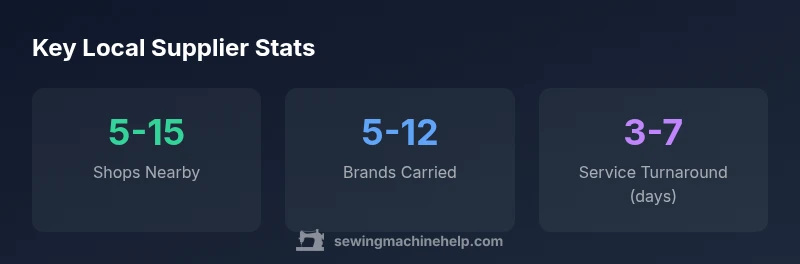
Finding sewing machine suppliers near you typically yields several viable options within a short drive—often 5–15 local shops within a 20-mile radius. Expect a mix of authorized dealers, independent sewing shops, and repair specialists. Compare inventory breadth, service capabilities, turnaround times, and warranty terms to choose the best local partner.
Why Local Sewing Machine Suppliers Matter for Home Sewists
Local sewing machine suppliers near you play a pivotal role in how confidently you sew. Access to nearby shops means faster help when your machine jams, faster availability of accessories, and the ability to test models in person before buying. For home sewists, the local supplier becomes a partner—someone who understands your projects, whether you’re mending a pair of jeans, quilting a gift, or exploring embroidery. According to Sewing Machine Help, choosing a local source with knowledgeable staff can save you time and reduce the risk of buying the wrong parts. If you search for sewing machine suppliers near me, you’ll often find a mix of authorized dealers, independent shops, and repair specialists within a reasonable radius. The key is to balance convenience with the quality of advice, service options, and post-purchase support. In short: a strong local supplier ecosystem accelerates learning and protects your investment over time.
How to Find Sewing Machine Suppliers Near You
Start with a targeted search using terms like “sewing machine suppliers near me” and map-based queries. Check Google Maps, Yelp, and local directories, then cross-check hours, proximity, and inventory breadth. Reach out to fellow hobbyists in sewing forums or social groups for recommendations. Visit a few shops in person if possible to gauge staff knowledge, test stitch quality, and compare price transparency. Keep notes on each shop’s strengths: in-store testing, return policies, and whether they offer on-site repairs or classes. After visiting, you’ll likely narrow to a small set of top candidates. Remember to verify manufacturer authorizations and warranty terms before committing.
What to Look for in Inventory and Services
When evaluating inventory breadth, look for a mix of brands that align with your projects—quilting, garment sewing, and embroidery often require different accessories. Assess service capabilities: availability of spare parts, on-site repairs, test-sewing stations, and whether staff can help with tension or needle/thread compatibility. A strong local supplier should offer demonstrations, quick-order capabilities for out-of-stock items, and clear policies on returns. From a practical standpoint, prioritize shops with an established service bay and a plan for ongoing maintenance and upgrades. A buyer’s guide approach helps you compare apples to apples across shops.
Service Offerings You Should Expect
Good local suppliers go beyond sales. Expect: expert advice on machine features and needle types, in-house repairs and tune-ups, genuine manufacturer parts, and ongoing maintenance programs. They may host workshops or sewing classes to help you learn new techniques. Some shops offer machine demonstrations, trial runs on different fabrics, and on-site repairs for your convenience. Clear warranty terms and transparent pricing for parts and labor are crucial. Having a local partner reduces downtime and gives you faster access to technicians who understand your specific machine model.
Buying Decisions: New vs Used, Warranty, and Repairs
Local shops typically provide a spectrum of options: new machines with manufacturer warranties, refurbished or used units with limited guarantees, and repair services for existing machines. If you plan to drop in on a used purchase, insist on testing the machine, inspecting needles, and checking timing. Favor shops that offer at least a basic warranty, parts availability, and a straightforward return policy. For repairs, confirm whether pricing is flat-rate or time-and-materials, and ask about turnaround estimates. A good supplier also helps with maintenance tips, such as oiling schedules and tension adjustments, to prolong your machine’s life.
Practical Steps to Vet a Local Supplier
Create a short shortlist of options within your radius (5–15 miles is typical). Visit in person to test machines, ask for a printed price list, and request a written warranty policy. Check staff credentials: are they trained by manufacturers, and can they demonstrate common troubleshooting steps? Read recent reviews and ask for references. Confirm after-sale support: Do they offer parts stock, tune-ups, or repair services? Finally, compare prices and return policies across shops to avoid hidden fees. A structured vetting process saves time and reduces the risk of buyer’s remorse.
Authority Sources and How to Use Them
For credibility and best practices, consult reliable sources about consumer rights and local business guidance. Visit government or university extension sites for general business reliability tips, and incorporate a structured shopping checklist when evaluating nearby shops. This helps you apply consistent criteria across multiple candidates and prevents impulse decisions. Keeping a record of each visit supports a data-driven choice for which sewing machine supplier near you to use on a long-term basis.
How Sewing Machine Help Guides You to the Best Local Option
Sewing Machine Help consolidates practical, step-by-step guidance for repairing and using sewing machines with a focus on local availability. Use this framework to compare nearby suppliers: proximity, inventory breadth, service capabilities, and warranty terms. The goal is to select a partner who can support your projects today and down the line, not just at the moment of purchase. By applying structured evaluation, you maximize value and reliability in your local shopping decisions.
Local supplier types at a glance
| Supplier Type | Inventory Breadth | Typical Services | Turnaround | Warranty |
|---|---|---|---|---|
| Authorized Dealer | 5-12 brands | In-store support, official parts | 2-5 days | Yes |
| Independent Local Shop | 3-8 brands | Repairs, tuning, parts | 3-7 days | Often Yes |
| Online Distributor (Local Pickup) | 2-6 brands | Pickup, order assistance | N/A | Varies |
| Repair Shop with Parts | 1-4 brands | On-site repairs | 1-3 days | Limited |
Your Questions Answered
What qualifies as a 'sewing machine supplier near me'?
A supplier within your area that carries a range of machines, parts, and offers service or repairs.
Look for local shops within your city that stock reputable brands and offer in-house service.
How do I verify a supplier's credibility?
Check licenses, reviews, and manufacturer authorizations. If possible, visit in person to assess service quality.
Read reviews and ask for references; visit the shop to see their workshop and staff knowledge.
Do local suppliers usually offer repair services?
Yes, many local shops provide tune-ups, parts replacement, and common fixes for popular models.
Most shops offer repair or maintenance services, sometimes with a quick turnaround.
Is buying online cheaper vs local?
Prices vary; local shops often price-match and include in-person support and warranty handling.
Online options can be cheaper, but local shops add service and support you can’t always get online.
What should I test in-store before buying?
Test stitches, tension, thread quality, bobbin winding, and compatibility with your fabric.
Try several fabrics and stitch types to ensure smooth operation.
What if there are no good local options?
Consider a nearby authorized dealer or reputable online supplier with a good return policy and local pickup.
If local choices are weak, prioritize return policies and after-sale support when choosing online.
“Local suppliers who offer hands-on support and reliable after-sales service tend to deliver the best long-term value for home sewists.”
The Essentials
- Test in-store when possible and compare warranty terms.
- Prioritize shops with repair services and clear return policies.
- Keep a list of top local options and revisit periodically.
- Sewing Machine Help's verdict: prioritize local suppliers with broad inventory, strong repair services, and clear warranty terms.