Sewing Machine Rental Guide for Home Sewists (2026)
Learn how to rent a sewing machine, compare options, and test features. This Sewing Machine Help guide helps beginners pick right rental unit and plan costs.


You will learn how to rent a sewing machine, compare options by features and price, and verify the unit before taking it home. Essential requirements include a valid ID, a refundable security deposit, rental duration, and a simple test drive to check stitch quality, tension, and foot pedal response. That initial check helps catch basic issues and ensures the rental fits your projects.
Why Renting Makes Sense for Home Sewists
Renting a sewing machine can be a smart bridge between impulse buys and long-term commitment. For home sewists, a rental lets you tackle a specific project without tying up capital or committing to a single model. It’s ideal when you want to explore features like automatic needle threading, variable speed control, or a walking foot without purchasing. According to Sewing Machine Help, renting is particularly advantageous for beginners who are still learning tension and foot pedal feel, or for hobbyists who have seasonal projects. By trying different brands and machines, you can gauge ergonomics, noise level, and thread compatibility before you invest. The approach reduces risk if your space is small or if you’re testing a portable machine for travel or classes. In short, a rental keeps your options open while you build sewing confidence.
How Rental Options Are Structured
Rental options typically come in short- and longer-term formats to fit a range of projects. Most shops offer daily, weekly, or monthly terms, with longer commitments often providing a lower per-period rate. A refundable security deposit is common and is returned after the machine passes an end-of-term check. Delivery, setup, and basic maintenance may be included or offered for an additional fee. Insurance against loss or damage is sometimes required, especially for shipments or long-term rentals. When you’re deciding, compare total costs over your planned project window and confirm who covers routine service during the rental period.
Features to Prioritize in a Rental
Before you sign, list the features you truly need. Prioritize stitch options (straight, zigzag, decorative), speed control, needle system compatibility (e.g., household vs. industrial needles), bobbin tension stability, and presser-foot options. Ensure the machine handles your intended fabric types, from lightweight cotton to denim, and check that the feed dogs operate smoothly. If you plan heavy use, verify torque, motor warm-up, and stability on a stable table. Also confirm the availability of essential accessories like extra feet, spare bobbins, and a user manual. A well-chosen rental should feel familiar, not alien, and reduce the time you waste learning on a new model.
Reading the Rental Agreement and Policies
Carefully review the rental terms. Look for hidden fees, late return penalties, and conditions for extensions or early termination. Confirm what happens if the machine fails or requires service while you’re in possession of it, and whether you’ll receive a replacement unit promptly. Check whether maintenance is included and who is responsible for consumables like needles and bobbins. Understanding the policy up front protects you from unexpected charges and makes the rental smoother.
How to Inspect a Rental Unit on Pickup
Start with a visual and functional check. Inspect the power cord and plug for damage, test the on/off switch, and verify that the presser foot, feed dogs, and bobbin case operate freely. Thread the machine with the included thread and a scrap fabric to observe tension, stitch quality, and stitch length. Ensure the bobbin winds correctly and that the thread tails pull smoothly. Take a test run on a variety of fabrics you intend to sew. Document any issues with photos or notes and report them before you leave the counter.
How to Test Stitch Quality and Function
Run a quick suite of stitches on scrap fabric: straight stitch, a zigzag, and a decorative option if available. Check for even stitch length, balanced thread tension, and uniform needle penetration. Check reverse stitching and ensure backstitching holds. Test thread break prevention by sewing without interruptions and observe for skipped stitches. If your projects require specialty stitches, confirm their availability and setup. A confident, comfortable feel when testing is a strong predictor of success when you get home.
Maintenance and Care for Rental Machines
Treat the rental as if it were your own for the duration of the term. Wipe down surfaces after tests, keep lint cleared from the bobbin area, and report any unusual noises or overheating immediately. Do not oil or disassemble the machine beyond the guide’s instructions unless the provider explicitly approves it. If the unit requires service during your rental, coordinate with the provider for a prompt replacement or repair to avoid project disruption.
When Renting vs Buying Makes Sense
Renting makes sense when your project is short, you’re learning a new technique, or you want to evaluate a brand before purchase. If you sew regularly with the same requirements, a purchase may be more economical in the long run. Consider storage space, maintenance responsibilities, and the total cost of ownership over several years. The rental option gives you flexibility to adapt as projects evolve and skills grow.
Practical Rental Scenarios: Quilting, Garment Sewing, Repairs
Quilting tends to benefit from a machine with features like multiple stitch options and good fabric handling; garment sewing often requires precise control and a reliable walking foot; repairs and alterations may need precise straight stitching and adjustable stitch lengths. Prioritize models that align with your primary usage. If you’re unsure, test a few models and compare ergonomics, noise, and ease of changeovers between different feet and settings.
Budget Considerations and Time Frames
Budget-minded sewists use rentals to cover peak workloads or trial periods. Understand the total cost over your planned duration, including delivery, setup, and any environmental or insurance fees. If you foresee multiple short-term projects, negotiate a multi-project plan with your provider. Sewing Machine Help analysis shows that flexible terms can reduce friction during seasonal surges and allow you to scale up or down as needed.
How to Return the Rental and Avoid Fees
Return the machine on the agreed date with all supplied accessories in the same condition you received it. Photograph the unit at drop-off and keep a copy of the return receipt. If there’s a deposit, confirm its refund timeline and be mindful of any required cleaning or lubricants per the policy. Leaving a clean, documented exit helps prevent disputes and speeds up the final settlement. The concluded process should leave you with confidence and a clear path for future rentals.
Tools & Materials
- Identification(Government-issued photo ID)
- Payment Method(Credit/debit card or digital wallet)
- Test Fabric Scraps(Practice swatches for testing stitches)
- Measuring Tape(For projects and compatibility checks)
- Sewing Scissors(Trim threads during testing)
- Spare Bobbins(Bring a few in various sizes)
Steps
Estimated time: 60-90 minutes
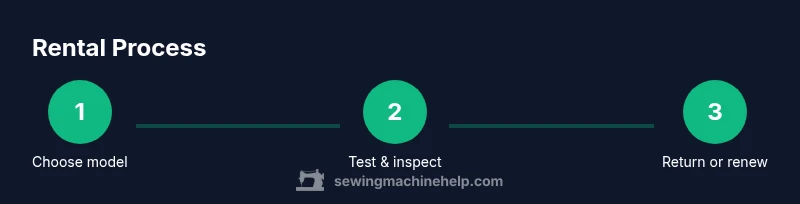
- 1
Choose rental provider
Compare local shops and online options. Check terms, deposits, and delivery availability. Ensure the model matches your planned projects.
Tip: Ask about extension options before you select a plan. - 2
Check model compatibility
Verify the machine supports your fabric types, needle sizes, and foot options. Confirm that essential parts (bobbin, presser foot) are included.
Tip: Bring a short project list to test required features. - 3
Inspect on pickup
Examine power cord, switch, and overall condition. Do a quick test run with fabric scraps.
Tip: Document any issues with photos before leaving. - 4
Test stitch quality
Run straight, zigzag, and any specialty stitches; check tension and feed response.
Tip: Repeat tests on multiple fabric types to ensure consistency. - 5
Review the return policy
Clarify penalties for late returns, missing parts, or damage. Confirm deposit refund timing.
Tip: Keep receipts and notes to avoid disputes. - 6
Return or renew the rental
Return on time with accessories; request a receipt. If you need more time, arrange extension before the due date.
Tip: Request a renewal quote in writing to avoid miscommunication.
Your Questions Answered
What is the typical duration you can rent a sewing machine?
Rental durations vary by shop and model, from a few days to several weeks. Always confirm a clear return date and any renewal options.
Rental durations vary by shop and model; confirm the return date and renewal options before you sign.
Do rental machines include maintenance or repairs?
Many shops include basic maintenance; if a problem arises, report it immediately and request a replacement or service under the rental agreement.
Most shops offer basic maintenance; report issues and request service or a replacement within the rental terms.
Can I rent a serger or overlocker?
Some shops offer serger rentals; availability varies by location. Check compatibility with your projects and confirm threading options.
Serger rentals may be available in some locations; verify compatibility and threading options before renting.
What should I test before accepting a rental?
Test straight and zigzag stitches, thread tension, needle action, and foot pedal response on scrap fabric to avoid surprises at home.
Test basic stitches, tension, and pedal response on scrap fabric before accepting.
What if the machine breaks during my rental?
Notify the provider immediately; most rentals offer a replacement or repair within the term. Do not continue using a reported faulty unit.
If it breaks, contact the provider right away for a replacement or repair policy.
How do I return the rental to avoid extra charges?
Return the machine on the agreed date with all supplied accessories in the same condition you received it. Photograph the unit at drop-off and confirm deposit refund timing.
Return on time with included accessories and keep a quick photo record to avoid fees.
Watch Video
The Essentials
- Rent when flexibility matters for projects.
- Test and inspect before taking home.
- Clarify terms to avoid hidden fees.
- Choose a model that matches your project needs.