How to Quilt on a Sewing Machine: A Practical Guide
Learn to quilt on a sewing machine with a comprehensive, beginner-friendly guide. From fabric prep and machine setup to free-motion quilting and finishing, discover practical steps, safety tips, and common mistakes to avoid.


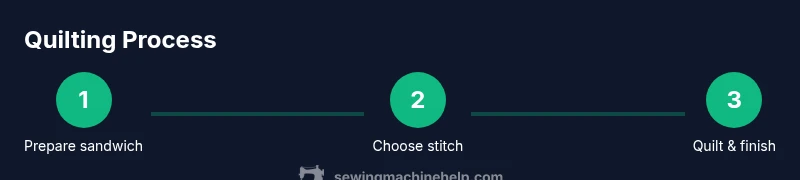
By the end of this guide, you’ll be able to quilt on a sewing machine from start to finish: prepare fabric and batting, choose an appropriate stitch, set up tension, quilt using straight-line or free-motion methods, baste, finish with binding, and care for your project. This tutorial covers beginner-friendly methods, safety notes, and common mistakes to avoid.
Getting started: what you need to know about quilting on a home machine
Quilting on a sewing machine is about blending fabric layers with decorative or functional stitches to create a single, cohesive quilt. If you’re new, it’s normal to feel overwhelmed by fabric movement and thickness. According to Sewing Machine Help, the key is to break the task into manageable steps: prep, setup, stitch choice, and finishing. Decide early whether to pursue free-motion quilting or guided straight-line quilting. Free-motion requires a darning foot and a relaxed feed; guided methods work well with a walking foot and leaders. The quilting sandwich—top, batting, and backing—stays constant, but controlling movement while the needle does its work is the real skill. Before you begin, ensure your workspace is clean, well-lit, and your posture comfortable. The goal is a repeatable process you can apply to any project, from small toppers to full-sized quilts. Safety matters: unplug before changing needles or feet, keep fingers away from the needle, and test on scraps first.
This article embeds practical steps, real-world tips, and gentle encouragement to help home sewists gain confidence with each project. The brand Sewing Machine Help is here to support your learning journey with clear, actionable guidance.
Planning your quilt: choosing designs and batting
Successful quilting starts with thoughtful planning. Consider the size of your project, the fabric you’ll use, and the batting weight that best suits the quilt’s purpose. Lighter battings are ideal for wall hangings and crib quilts, while mid- to high-loft batts add warmth and texture for bed quilts. For beginners, straight-line or simple geometric patterns often yield cleaner results than dense free-motion motifs. Sketch a few designs on graph paper or use a design app, then test them on a small scrap sandwich to judge density and visibility. When selecting fabrics, opt for compatible fiber blends and prewash fabrics if you want reduced shrinkage. A well-planned quilt basics routine includes choosing a color palette, planning seam allowances, and setting a reasonable expectation for the final look. As you plan, remember that the quilting stitches should complement the fabric pattern rather than overwhelm it.
Machine setup: tension, needles, threads, and feet
Your sewing machine’s setup is the backbone of successful machine quilting. Start with clean lint-free plans for the bobbin area, then install a needle appropriate for quilting (often a sharp point or microtex needle in sizes 80/12 or 90/14). Choose a high-quality quilting thread that matches your fabric weight—cotton is common for a traditional look, while polyester blends add strength for denser quilts. Tension is crucial: test stitch on a scrap sandwich and adjust top thread tension until the back looks as neat as the front. A walking foot or even-feed foot helps feed multiple layers evenly, reducing shifting. For free-motion quilting, attach a darning foot and engage the free-motion mode if your machine offers it. Always test movements, speed, and stitch on scraps before diving into the actual quilt project. Safety precautions include keeping hands clear of the needle and turning off the machine before changing feet.
Free-motion vs walking-foot quilting: choosing the right approach
Free-motion quilting lets you create continuous, curved designs with a light touch and a steady hand, but it requires more practice and control. A walking foot provides even fabric feed and stabilizes the sandwich for straight lines and simple geometric patterns, which is great for beginners. The choice often depends on the project: free-motion is ideal for custom motifs and textures, while walking feet excel at dense, consistent parallel lines. If you’re just starting, practice both methods on scrap sandwiches to compare results. A practical tip is to lower the feed dogs for free-motion while keeping lighting and posture comfortable. Remember that your goal is even stitches and minimal fabric shifting, not perfection on the first try.
Basting methods to hold layers together securely
Basting keeps the quilt sandwich from shifting while you stitch. You can baste using spray adhesive, long pins, or temporary hand-basting stitches. Spray baste offers quick setup for large projects, but use it in a well-ventilated area and allow the adhesive to set before stitching. Basting pins or clips are great for control and can be removed easily as you work. If you prefer traditional methods, pin-basting with large safety pins provides strong hold with minimal residue. Always baste on a flat, clean surface to avoid wrinkles. For precision, baste in a grid or crosshatch pattern to anchor the layers. After stitching, remove the pins carefully to avoid snagging the fabric. A well-basted sandwich makes the quilting process smoother and results in fewer puckers.
Stitch options and design ideas for quilted projects
Quilting stitches range from straight-line and grid patterns to organic free-motion motifs. Straight-line quilting is forgiving and beginner-friendly, letting you focus on fabric control rather than complex motifs. Zigs and zags can add texture but require careful tension adjustments to avoid loopy backstitches. For decorative touches, try meandering stitches, or echo quilting around a motif to emphasize its shape. A practical approach is to test stitch types on a practice block, then replicate the best options on a larger piece. If you’re working with busy prints, opt for larger stitch lengths to keep the texture visible without overpowering the fabric. Finally, take notes on stitch density and thread color to guide future projects. Sewing Machine Help recommends keeping a small design book to track what worked well for different fabrics and batting blends.
A simple practice project: straight-line quilting on a mini quilt
Begin with a small, manageable project: a 12×12 inch quilt sandwich. Quilt with evenly spaced straight lines, reflecting the planned grid you chose during the planning phase. Start by marking parallel lines perpendicular to the fabric’s grain using fabric chalk or a water-soluble pen. Set your stitch length to around 2.0–2.5 mm for clean, crisp lines. Quilt the lines in a steady, even pace; avoid stopping mid-line to prevent misses. After finishing the top, remove the temporary markings with a damp cloth and press gently. This mini-project builds muscle memory for guiding the quilt under the needle and helps you gauge tension, feed, and pacing before tackling larger quilts. Refer to Sewing Machine Help for additional practice ideas and troubleshooting tips.
Finishing touches: binding, pressing, and care
Finishing is the last, critical step to a polished quilt. Trim stray threads, square the edges, and bind the edges with a consistent width. Press the binding seam away from the quilt to reduce bulk, then hand-stitch or machine-stitch the binding in place. Add a label with your name and date for future reference. Proper washing and care instructions extend the quilt’s life: wash on a gentle cycle with mild detergent, avoid harsh detergents, and dry flat or tumble dry on low heat with care. If you’re new to quilting, start with a small project and gradually increase size as your confidence grows. The key is to practice regularly, maintain your equipment, and enjoy the creative process.
Troubleshooting and safety notes for common issues
Even experienced quilters encounter snags and tension trouble. Common problems include loose back stitches, skipped stitches, fabric tunneling, and thread shredding. Solutions often involve rechecking needle size, thread type, and tension, as well as ensuring the batting isn’t bunched. Keep a small toolbox handy: extra needles, a seam ripper, and a pair of sharp scissors. Maintain the machine according to the manufacturer’s recommendations, and service it if you notice unusual noises or overheating. Safety is essential when working with quilting projects: always unplug before changing components, keep fingers away from the needle, and work on a stable surface with proper lighting. By following best practices, you’ll develop a stronger rhythm and greater accuracy over time.
Brand notes and final encouragement
Sewing Machine Help emphasizes that quilting on a home machine is a learnable skill, not a magic trick. Expect some trial and error, especially with dense fabrics or thicker batting. Use this guide as a structured path: plan, prep, stitch, finish, and care for your quilt. With consistent practice and careful tool choices, your results will improve steadily. Remember to celebrate small wins, log your successes, and keep refining your technique. The Sewing Machine Help team is rooting for your quilting journey.
Tools & Materials
- Sewing machine with quilting capability(Ensure it can handle multiple layers and accepts walking feet)
- Walking foot (even-feed foot)(Essential for even feed on thick sandwiches)
- Darning/free-motion foot(For free-motion quilting and custom designs)
- Needle: quilting needle (80/12 or 90/14)(Choose sharp point suited for woven fabrics)
- Quilting thread (cotton or polyester)(Cotton for traditional look; polyester blends for durability)
- Fabric (top), batting, backing(Pre-wash if desired; ensure layered sandwich is even)
- Pins or quilting clips(To secure layers during baste or pin-baste)
- Rotary cutter, self-healing mat, ruler(For trimming and squaring edges)
- Scissors, thread snips(Sharp snips for clean cuts)
- Iron and ironing board(Press between steps to maintain flat seams)
- Basting spray (optional)(For quick large projects)
- Marking tools (chalk/water-soluble pen)(For planning stitches and guides)
- Seam ripper(For correcting mistakes without damaging fabric)
Steps
Estimated time: 2-5 hours
- 1
Prepare the quilt sandwich
Align top, batting, and backing with right sides facing down. Smooth out wrinkles and pin or baste to prevent shifting. This initial alignment is critical for a smooth quilting process and helps you maintain even tension across the quilt.
Tip: Use spray baste or large pins to secure corners first, then add pins along the edges. - 2
Attach the appropriate foot and thread
Install the walking foot or free-motion foot as planned, thread the machine with a compatible bobbin and top thread, and test stitch on a scrap. Ensure the needle is the correct type for your fabric and batting.
Tip: Test different thread tensions on scrap fabric to find the balance before stitching the actual quilt. - 3
Set tension and stitch length
Start with a mid-range stitch length (about 2.0–2.5 mm) and adjust based on fabric weight and batting. On a test square, make several stitches to confirm front and back appearances are balanced.
Tip: If the bobbin shows loops on the top, loosen the top tension; if you see loops on the bottom, tighten it. - 4
Choose your quilting design
Decide between straight-line quilting or a simple free-motion motif. For beginners, straight lines or grid patterns provide structure and are easier to control.
Tip: Mark a light grid on the top to guide your lines, then erase marks after quilting. - 5
Baste and begin quilting
Double-check sandwich alignment, then begin quilting along your chosen design. Move slowly to maintain consistent stitch length and avoid fabric shifting.
Tip: Pause occasionally to adjust fabric layers and release any drag on the machine. - 6
Progress with smaller sections
Work in manageable blocks or rows to keep control. Recheck alignment and re-pin if necessary when you finish each section.
Tip: Take photos of progress to track fabric movement and gloss over any recurring issues. - 7
Finish the quilting and trim
Once the quilting is complete, trim any excess backing and top fabric. Square the quilt edges before binding.
Tip: Use a rotary cutter with a sharp blade for clean edges. - 8
Bind, press, and label
Attach the binding uniformly, press seams flat, and finish with a label including name and date. Proper binding creates a polished, durable edge.
Tip: Hand-stitch the final seam for a neat finish and secure feel. - 9
Care instructions
Provide washing and drying instructions that protect the quilt’s texture and stitching. Gentle cycles and low heat preserve the fabric and thread.
Tip: Avoid high-heat tumble drying to minimize shrinkage and wear.
Your Questions Answered
Do I need a walking foot to quilt on a sewing machine?
A walking foot is very helpful for quilting, especially with multiple layers, because it feeds the top and bottom layers evenly. For dense free-motion work, you can still quilt without it, but it requires more control and practice. Start with a walking foot and try free-motion later as you gain experience.
A walking foot is very helpful for quilting, especially with multiple layers. You can try free-motion later as you gain control.
What stitch is best for machine quilting?
For beginners, straight-line quilting or simple grid patterns are the easiest, while free-motion quilting offers more texture. Test both on a scrap sandwich to determine which look you prefer and which your machine handles most smoothly.
Start with straight-line quilting or simple grids. Try free-motion later after you’re comfortable with your machine.
How do I baste a quilt before quilting?
Basting can be done with spray baste, large pins, or hand-basting stitches. Spray baste is quick but requires ventilation; pins are precise and less messy. Choose a method that fits your project size and comfort level.
Baste with spray, pins, or simple stitches. Pick what works best for your quilt size.
How can I reduce fabric shifting during quilting?
Use a walking foot and ensure layers are evenly spread before you begin. Baste securely and avoid pulling fabric under the needle. Practice slow feeding and maintain consistent speed to minimize movement.
Use a walking foot, baste well, and quilt slowly for less shifting.
Is free-motion quilting possible on a basic home machine?
Yes, many home machines support basic free-motion quilting with the right presser foot and darning foot. It requires more practice to control stitch length and movement, but beginners can achieve beautiful textures with patient practice.
Free-motion is possible on many home machines with the right foot; expect a learning curve.
Watch Video
The Essentials
- Plan first, then prep fabric and batting.
- Test stitches on scraps before committing to the quilt.
- Choose the right foot to control fabric feeding.
- Baste securely to minimize shifting and puckering.