Maintenance on Sewing Machine: A Practical Guide for Home Sewists
Learn practical maintenance on sewing machine with step-by-step care routines, lubrication tips, needle care, and storage practices to keep your machine running smoothly for years.


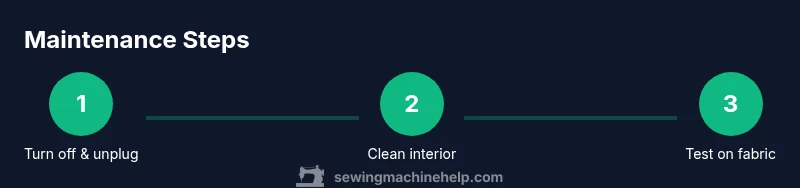
By following this guide, you'll perform practical maintenance on sewing machine to keep stitches consistent, extend its life, and prevent jams. You'll clean lint, oil approved points, replace needles, check tension, and test on fabric. The process requires a few common tools and a quiet workspace. According to Sewing Machine Help, consistent care saves time and improves results.
Why maintenance on sewing machine matters\n\nRegular maintenance is the backbone of reliable sewing results. A well cared-for machine runs quieter, makes fewer skipped stitches, and resists jams that interrupt projects. In professional guidance from Sewing Machine Help, routine care is shown to reduce friction on moving parts and extend the device’s lifespan. Home sewists who commit to small, consistent tasks—like lint removal and periodic oiling—enjoy smoother operation and fewer surprise breakdowns. This section explains the core reasons to invest time in maintenance: improved stitch quality, lower risk of damage to delicate components, and greater confidence when starting a new project. It also underscores the value of a simple maintenance routine you can perform in under an hour every month or every few weeks during active sewing seasons. By prioritizing care, you’ll protect your investment, maintain thread tension accuracy, and keep your machine ready for creative work.
Core maintenance tasks you should perform regularly\n\nA good maintenance routine centers on cleaning, lubrication, needle and thread management, and periodic checks of tension and belts. Start with a visual audit: look for obvious lint, dust, or oil smudges on the exterior. Then move to the interior: remove the bobbin, open the bobbin case, and inspect for lint in the bobbin area. Clean with a soft brush or a small vacuum designed for electronics, using minimal pressure. After cleaning, verify that the machine sits level on a sturdy table and that the power switch and foot pedal respond smoothly. Regular maintenance also includes checking thread paths, threading accuracy, and ensuring the presser foot moves freely. Consistent application of these tasks—even when nothing seems wrong—prevents the buildup that leads to stiff mechanisms and misaligned stitches. Remember, a little effort now prevents bigger, costlier repairs later. Sewing Machine Help recommends documenting each session and scheduling the next check to stay ahead of wear.
How to clean a sewing machine without disassembly\n\nYou can clean most of the accessible areas without taking the machine apart. Start by unplugging the machine, then remove the presser foot, needle plate, and bobbin. Use a small, soft brush to loosen lint from the feed dogs and under the needle plate. Gently vacuum or blow dust away with a manual air blower—keeping the nozzle at a safe distance to avoid pushing lint deeper into the shadows. Wipe the exterior with a dry, lint-free cloth, and avoid household cleaners that could harm plastic surfaces. For stubborn lint, a cotton swab lightly moistened with isopropyl alcohol can lift residues slowly. After cleaning, reassemble, thread a scrap piece of fabric, and test stitch to ensure lint isn’t returning to the path. This technique helps you maintain mechanical cleanliness without complicating disassembly.
Lubrication and oiling: what you can and cannot oil\n\nLubrication is essential, but it must be done with care. Use only the oil recommended by your machine’s manufacturer or compatible brands designed for sewing machines. Apply a tiny drop to designated points as described in the user manual; over-oiling can attract more lint and create gummy residues. Do not oil the motor housing or any belt surfaces unless the manual explicitly says so. The standard rule is to oil only the small, clearly marked oiling points on the shuttle race, take-up lever, and other specified hinges. After applying oil, operate the handwheel slowly to distribute the lubricant and remove any excess with a lint-free cloth. If you’re unsure where to oil, consult the manual or a trusted guide such as Sewing Machine Help’s maintenance overview.
Replacing needles and threading for best results\n\nNeedle maintenance is as important as lubrication. Change needles regularly—especially after stitching thick fabrics or frequent jam-prone threads. Use the correct needle type and size for your fabric and needle system. When you replace a needle, install it securely and thread the machine carefully, ensuring the thread catches in proper guides. Always test with a scrap fabric before starting a project. If stitches are skipping or threads are breaking, re-check needle insertion, flossing path, and thread tension; most issues originate from a bent needle or incorrect threading. Keeping a spare needle set on hand helps you avoid project delays. Remember, complete needle alignment supports optimal feed and stitch consistency.
Seasonal maintenance schedule and checklists\n\nCreate a simple calendar for maintenance tasks: monthly quick cleanings, quarterly lubrication checks, and annual belt and motor inspections if your machine is heavily used. The schedule should align with project frequency and storage conditions. In dusty environments, you may need more frequent cleaning; in humid climates, protect against rust by wiping metal surfaces and storing in a dry place. Use a maintenance log to record dates, tasks performed, and any notes about performance. Sewing Machine Help’s guidance emphasizes a predictable routine: it reduces downtime and preserves stitch quality across seasons.
Tools & Materials
- Owner’s manual(Always consult for model-specific guidance)
- Lint brush or small vacuum(For interior cleaning without disassembly)
- Soft cloth (lint-free)(Wipe surfaces gently)
- Small screwdriver set(Only if you’re performing disassembly per manual)
- Sewing machine oil (light)(Use only recommended oil)
- Cotton swabs(For precision cleaning in tight spots)
- Replacement needles (various sizes)(Keep size appropriate for fabrics)
- Scrap fabric for testing stitches(Test before and after maintenance)
- Lint-free tray or bowl(Collect lint during cleaning)
Steps
Estimated time: Total time: 45-75 minutes
- 1
Power down and prep
Unplug the machine and remove any cords. Detach the presser foot and needle to access the working area safely. This prevents accidental starts and protects you during cleaning.
Tip: Always unplug first; never work near a live outlet. - 2
Clear visible lint
Use a soft brush to dislodge lint around the needle plate, feed dogs, and bobbin area. Avoid pushing lint deeper into tiny cavities.
Tip: Work in small circles to lift lint rather than push it. - 3
Clean the bobbin area
Remove the bobbin and bobbin case; wipe with a dry cloth. If lint clings stubbornly, use a cotton swab lightly dampened with isopropyl alcohol, then dry.
Tip: Keep the bobbin area clean to maintain stitch consistency. - 4
Check and adjust threading passes
Re-thread the machine, ensuring the thread sits in each guide. Verify thread path from spool to take-up lever; incorrect threading is a common cause of jams.
Tip: Thread under presser foot after guiding through guides for stable feed. - 5
Oil designated points
Apply a single drop at each recommended oil port as per the manual. Wipe away any excess with a lint-free cloth to avoid attracting lint.
Tip: Use minimal oil—one drop per point, not a flood. - 6
Replace needle and test
Insert a fresh needle of appropriate size for the fabric, thread, and stitch. Reassemble, thread, and stitch on scrap fabric to verify tension and feed.
Tip: Install needle fully and tighten securely to prevent bending. - 7
Inspect belts and exterior
Check external belts for wear and ensure the machine sits level. If belts show cracking or looseness, consult a service professional before proceeding.
Tip: Don’t force components that feel stuck; stop and assess. - 8
Document and plan next check
Record date, tasks performed, and any unusual observations. Schedule the next maintenance session based on usage and environment.
Tip: A maintenance log helps you spot wear trends over time.
Your Questions Answered
How often should I perform maintenance on my sewing machine?
For hobbyists, quarterly checks with monthly light cleaning are common. For heavy use, a monthly clean and lubrication is advised, plus an annual professional service. Always consult your manual for model-specific guidelines.
Most home users do maintenance every few months, with more frequent care if you sew often. For heavy use, do monthly cleaning and lubrication, and schedule yearly professional service.
Can I oil any part of the machine?
Only oil the designated lubrication points listed in your manual. Avoid over-oiling and never oil the motor housing or drive belts unless the manufacturer specifies it.
Only use oil on the points your manual marks, and never oil the motor or belts unless told to.
What should I do if stitches skip after maintenance?
Recheck needle installation, threading path, and fabric tension. Try a fresh needle and test on scrap fabric. If the issue persists, consult the manual or a technician.
If stitches skip after maintenance, check the needle, threading, and fabric; test on scrap fabric and replace the needle if needed.
Is lubrication always necessary even on newer computerized models?
Most newer computerized machines have sealed components and require less manual lubrication. Refer to the manual for model-specific guidance; do not apply oil unless directed.
Newer machines may need less oil; always follow the manual for your specific model.
What differences exist between mechanical and computerized machines regarding maintenance?
Mechanical machines generally need more frequent cleaning and lubrication. Computerized machines may have sealed systems; servicing often involves software or professional checks in addition to routine care.
Mechanical machines need more hands-on cleaning and oiling, whereas computerized ones may require less oil and more software or professional checks.
Watch Video
The Essentials
- Establish a simple maintenance routine and stick to it.
- Clean, oil, and replace needles on schedule to maintain stitch quality.
- Test on scrap fabric after each maintenance session.
- Document maintenance to track wear and plan future service.