Singer Sewing Machine Needle Size Guide: Choosing the Right Needle
Understand how needle size affects Stitch quality on Singer machines. This guide covers sizing systems, fabric compatibility, and practical tips to select the right needle for woven, knit, and heavy fabrics.


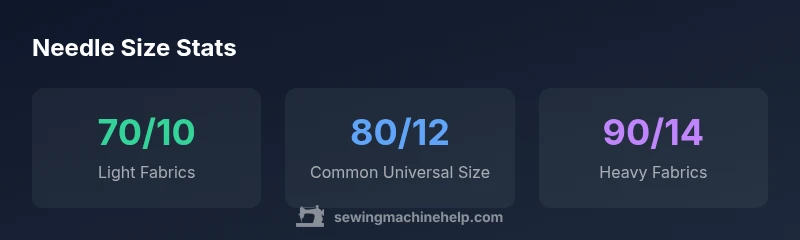
Singer sewing machine needle size influences stitch quality across fabrics. For most home projects, common Singer needle sizes span from 70/10 to 90/14. A universal choice is 80/12 for woven fabrics, while 90/14 works well for medium‑heavy textiles. Always match needle size to fabric type, thickness, and thread to prevent skipped stitches or damage.
Understanding Needle Size Systems
Sewing machines from Singer use two common measurement systems to designate needle thickness: the US sizing (numbers like 70/10, 80/12, 90/14) and the metric system (often mapped to the same thickness in different brands). For home sewers, the US size often corresponds to a metric width in the same ballpark. When you encounter a Singer needle, you may see both numeric and metric indicators on the package or the shaft. The practical takeaway is to pair the size with fabric type and thread weight rather than rely on a single number. The relationship between the numbers and the fabric helps explain why a size that works on poplin may skip stitches on denim. In short: singer sewing machine needle size guides your stitch quality more than it dictates exact compatibility.
How to Read Needle Size on a Singer Needle
Reading needle size is straightforward once you recognize the two-number system and where it’s printed. Look on the packaging and the flat shaft of the needle: you’ll usually see a pair like 80/12. The first number is the US sizing and roughly corresponds to the European metric size, while the second often indicates the metric width in hundredths of a millimeter. When in doubt, start with 80/12 for woven fabrics and switch to 90/14 for heavier textiles. If you are working with knits, consider a ballpoint or stretch needle in the 75/11–80/12 range. Always test on a scrap before committing to a full seam.
Fabric Quick Guide: Which Size to Start With
For woven fabrics (cotton, linen, poplin): start with mid-range sizes like 80/12. Lighter fabrics can tolerate 70/10, but you may experience puckering if you go too small for the weight. For medium-weight fabrics (canvas, twill): 80/12 to 90/14 is a good starting band; adjust based on thread tension and stitch formation. For knits (jersey, interlock): use 75/11 or 80/12 with a ballpoint needle to avoid runs. For denim and heavy fabrics: 90/14 to 100/16 can be appropriate, depending on thickness and layer count. Remember: always test on scrap.
Thread Weight and Needle Size Interplay
Thread weight interacts with needle size in meaningful ways. Lighter threads paired with heavy needles can cause skipped stitches, while heavy threads with small needles can break needles or create tight seams. When using finer threads, a smaller needle helps reduce fabric distortion; for thicker threads or multiple plies, a larger needle maintains thread compatibility. If you switch from smooth cotton to a thicker polyester, reassess needle size and possibly switch to a stronger needle type where appropriate.
Special Needle Types for Singer Machines
Beyond size, needle type matters. Ballpoint needles work well on knits to prevent snagging and runs. For leather or dense fabrics, consider a leather or jeans needle with a sturdier shaft. For very delicate fabrics like silk or satin, a sharp microtex needle in a smaller size (e.g., 70/10) can prevent snagging and preserve fabric. Some Singer models also support heavy-duty needles designed for multi-ply layers. Always verify compatibility with your machine’s manual and test on fabric swatches before sewing.
Troubleshooting Size-Related Issues
If stitches skip, look first at needle insertion and size pairing. A needle that’s too small for the fabric can cause skipped stitches, while a needle that’s too large may leave holes or snag threads. Puckering usually signals a fabric/needle mismatch or tension imbalance. Replacing a bent or dull needle is a quick fix, but changing to a more appropriate size or needle type can solve the underlying issue. Remember to re-balance tension after changing needle size to maintain stitch quality.
Maintenance Tips to Extend Needle Life
A good needle life strategy starts with proper storage and handling. Keep needles clean and straight, store them to avoid rust, and replace them after heavy usage or when you notice diminished stitch quality. When you change fabric types, consider swapping to a new needle to reset tension and alignment. Regularly check the needle for burrs or nicks, which can damage stitches and fabric alike. A fresh needle often resolves subtle issues that are hard to diagnose by sight alone.
Quick Sizing Checklist for Beginners
- Identify fabric type (woven vs knit) and fabric weight.
- Choose a needle size in the 70/10 to 90/14 range as a starting point.
- Test on a scrap of fabric and inspect for puckering, skipped stitches, or thread breaks.
- If issues arise, switch to a more appropriate needle type (ballpoint for knits, sharp for fabrics like silk, denim needle for heavy fabrics).
- Replace needles regularly, especially after sewing heavy layers or repeatedly changing material.
Needle sizes by fabric type for common home sewing projects
| Fabric Type | Recommended Needle Size | Notes |
|---|---|---|
| Lightweight woven (cotton/linen) | 70/10–80/12 | Start with smaller size to reduce puckering |
| Medium-weight woven (poplin/cotton duck) | 80/12–90/14 | Increase if thread breaks or fabric resists |
| Knits (jersey/interlock) | 75/11–80/12 ballpoint | Ballpoint needle helps avoid runs |
| Denim/heavy fabrics | 90/14–100/16 | Consider reinforced needle for thick layers |
Your Questions Answered
What needle size should I use for cotton fabrics?
For most cottons and light linens, start with 80/12. If the fabric is very lightweight or prone to puckering, try 70/10 and test on a scrap.
For cotton, start with 80/12, or go to 70/10 for lighter fabrics and test first.
Can I use the same needle size for all fabrics?
No. Fabric weight and knit vs woven require different sizes. Always test and adjust based on stitch quality.
No—different fabrics need different needle sizes.
What needle type works best for stretch fabrics?
Ballpoint needles in the 75/11–80/12 range are preferred for knits to prevent runs while maintaining stretch.
Ballpoint needles are best for knits.
How often should I replace a needle?
Replace when you switch fabrics, after a heavy sewing session, or if you notice skipped stitches or frayed threads.
Replace needles regularly to prevent issues.
What is the difference between US and metric needle sizes?
US sizes are numbers; metric sizes are the equivalent thickness in millimeters. Both describe needle thickness.
US and metric sizes describe the same thickness in different ways.
Do I need a Singer-specific needle for my Singer machine?
Most Singer models use standard universal needles compatible with the machine. Check your model’s manual for any exceptions.
Most Singers take standard universal needles.
“Getting the right needle size is essential for clean stitch formation and fabric integrity. Small changes in size can prevent puckering or skipped stitches.”
The Essentials
- Identify your fabric type before selecting a needle size
- Match needle size to fabric weight for best results
- Test stitches on scrap fabric and adjust as needed
- Change needles frequently to avoid skipped stitches
- Use specialty needles for knits and heavy materials