Most Common Sewing Machine Needle Size: A Practical Guide
Learn the most common sewing machine needle size for everyday fabrics, plus tips to choose the right needle by fabric type, testing, and best practices for beginners.


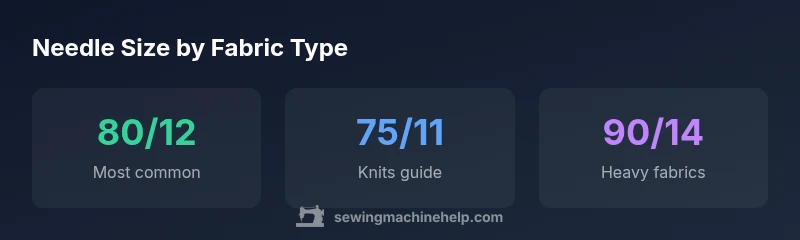
The most common sewing machine needle size for everyday sewing is 80/12. This size works well for light to medium-weight woven fabrics, offering stable penetration and even stitching. For stretch fabrics or heavier materials, consider 75/11 or 90/14 as appropriate. Always test on a scrap before committing to a full seam.
What '80/12' really means
In everyday sewing, needle size is described using two intertwined systems: the numeric size and its metric equivalent. In the US, sizes like 60, 70, 80, and 90 refer to the diameter of the needle shaft, while the European or metric pair often appears as 8, 9, 12, and 14 respectively. The phrase most common sewing machine needle size is frequently interpreted as 80/12 for general woven fabrics. According to Sewing Machine Help, this pairing provides a reliable balance of fabric grip, needle strength, and thread tension across a broad range of woven fabrics. This makes 80/12 a practical starting point for most projects. For light to medium-weight woven fabrics such as cotton, linen, or quilting cotton, an 80/12 typically helps prevent skipped stitches and fraying while helping maintain a smooth seam.
However, the exact size you choose depends on fiber content, thread weight, and your machine, so testing remains essential. Begin with 80/12 as your baseline, then adjust based on how the fabric feeds and how the stitches look on a scrap seam. Remember that fabrics with different fiber blends can behave differently even at similar weights, so keep a small stash of sizes like 75/11 and 90/14 on hand.
Always consult your sewing machine manual for any brand-specific recommendations, since some machines track needle size differently or have different eye sizes that affect thread passage.
Why the 80/12 is so common for general sewing
The 80/12 size is popular because it suits a broad spectrum of everyday projects, from quilting cottons to lightweight linens. It penetrates fabric with minimal resistance, reduces the risk of snagging, and allows standard-weight polyester or cotton threads to glide through without excessive friction. This size is forgiving for beginners yet versatile enough for intermediate projects, which is why many sewing tutorials and beginner courses adopt it as a default starting point. The choice also reflects compatibility with standard universal needles, which are designed to handle a wide range of fabrics with reasonable performance. In practice, most home sewists reach for 80/12 first and only switch if the fabric demands a special approach.
From a maintenance standpoint, keeping a small set of common sizes (75/11, 80/12, 90/14) reduces guesswork during a project and speeds up error recovery when a seam looks off. The Shooting for perfection approach is unnecessary for casual projects; instead, focus on reliable stitches that hold up to washing and wear. Sewing Machine Help’s experience shows that starting with 80/12 and testing on scraps leads to fewer skipped stitches and better seam integrity across a wide array of fabrics.
Needle sizing basics and how to read size
Needle sizing is not just about a number—it's about matching the needle’s diameter to the fabric weight and thread weight. The imperial number (e.g., 80, 90) roughly correlates with the metric size (12, 14). In many markets, you’ll see the two numbers separated by a slash, as in 80/12. For you, the takeaway is simple: use 80/12 as your baseline for most woven fabrics, then adjust in small increments (75/11, 90/14) depending on fabric type and symptomes such as skipped stitches or fabric puckering. When you switch fabrics, consider whether the thread is heavier or thinner than your previous project, as that directly influences needle choice. Practically, keep a labeled set of needles and rotate through sizes to learn how each behaves with your favorite fabrics.
Sewing Machine Help analysis shows that learning to read fabric weight indicators and correlating them with your needle size dramatically improves stitch consistency and reduces fabric damage. A quick rule of thumb is: lighter fabrics call for smaller needles, heavier fabrics for larger needles, and mid-weight fabrics for the standard sizes like 80/12 or 75/11.
Choosing needle size by fabric family
Different fabric families react differently to needle sizing. For light-weight woven fabrics such as chiffon, organza, or cotton voile, a smaller needle (60/8 to 70/10) often produces clean edges with minimal perforation. For medium-weight fabrics—think cottons, linens, and poplin—80/12 is the standard starting point, with 75/11 as a handy alternative for fabrics with higher stretch or slippage tendencies. Heavyweight fabrics like denim, canvas, or corduroy generally respond well to 90/14 or larger needles, especially when using thicker threads or top-stitching. Finally, knits require a different approach: ballpoint or jersey needles in the 70/10 to 75/11 range are common starting points for stable stitch formation and to prevent skipped stitches.
When in doubt, test on a swatch of your actual fabric. Even within the same weight category, blends and fiber content can alter how a needle interacts with the thread and fabric surface. Always verify stitch quality by inspecting both the top and bottom thread paths.
Special cases: knits, denim, leather, and details
Knits demand specialized needle designs to accommodate stretch without damaging the fabric or causing runs. Ballpoint and jersey needles in sizes around 70/10 to 75/11 are common starting points for lightweight to medium-weight knits. For denim or canvas, select a sharp needle (often labeled “denim” or “jeans”) in the 90/14 to 110/18 range, paired with a strong thread. When sewing leather, you’ll typically use a leather needle with a sharp point and a heavy-duty needle, and you may sew slowly to avoid tearing holes in the material. For topstitching and decorative seams, choosing a larger needle can help accommodate thicker threads and maintain consistent stitches, but avoid forcing the needle through multiple fabric layers at once. Always test on scrap fabric to observe how your chosen needle interacts with the fiber and thread combination.
Knowing how to adjust for these exceptions is a practical skill that improves results across projects, from simple hems to complex garment construction.
Practical steps: selecting, testing, and changing needles
- Identify the fabric type and weight for your project. 2) Start with the baseline needle size (80/12 for woven fabrics). 3) Do a small test seam on a fabric swatch using your chosen thread. 4) Inspect stitch quality on both sides: even topstitching, no skipped stitches, and no fabric damage. 5) If issues appear, swap to a neighboring size (e.g., 75/11 or 90/14) and retest. 6) Replace dull or bent needles promptly, and avoid forcing a needle through fabric when resistance is high. 7) Label and organize your needles by size and type for quick access during future projects.
This practical loop—test, adjust, and repeat—reduces frustration and improves outcomes. The goal is consistent stitches with minimal fabric damage, not chasing perfection on the first try.
Caring for needles to extend life
Needles wear out with use, especially when sewing dense fabrics or heavy thread. Replace dull or bent needles promptly, and avoid reusing visibly damaged needles. Store needles in a dry container with the size clearly labeled to prevent mix-ups. Cleaning the needle eye and shaft with a soft cloth helps prevent burrs and rust. When you start a new project, consider testing a few stitches on a scrap to confirm tension and stitch formation before proceeding to the final seam. Regular maintenance of your needles reduces skipped stitches, fabric snags, and other common sewing headaches.
Needle sizing by fabric category
| Fabric Type | Common Needle Size Range | Recommended Needle Type | Notes |
|---|---|---|---|
| Light to medium woven fabrics | 60-70 to 75/11 | Ballpoint or universal | Good for cotton voiles and poplins; test for edges |
| Medium-weight woven fabrics (cotton, linen blends) | 75-12 to 80-12 | Universal | Most versatile; starting point for many projects |
| Heavy fabrics (denim, canvas) | 90-14 to 110/18 | Denim or heavy-duty universal | Use thicker threads and slower sewing pace |
Your Questions Answered
What is the most common needle size for general sewing?
80/12 is the standard starting point for most woven fabrics. It provides a balance of strength and fabric handling, reducing skipped stitches. Always test on a scrap to confirm.
80/12 is the go-to size for everyday sewing. Test on scraps to confirm before you sew.
Can I use a universal needle for all fabrics?
Universal needles work for many fabrics but aren’t ideal for every material. For knits, use ballpoint or jersey needles; for delicate fabrics, try finer sharp needles. Test on scraps to confirm.
Universal needles work in many cases, but knits and delicate fabrics usually need specialized needles.
Should I match needle size to thread weight?
Yes. Heavier threads require larger needles to avoid snagging and skipped stitches. Start with mid-range sizes and adjust based on fabric and thread.
Yes—thread weight matters. Use the needle that matches your thread weight.
How often should I change a sewing machine needle?
Replace when the needle is dull or bent, or after sewing several projects that involve different fabrics. If you notice skipped stitches, change it.
Change needles when they’re dull or damaged, or after a few hours of sewing.
Is there a difference between fabric label sizes and needle sizes?
Fabric labels indicate weight and weave, but needle size should be chosen by fabric type, not label. Use guideline charts to map fabric to needle size.
Labels hint at weight, but pick the needle by your fabric type.
What needle size works best for lightweight fabrics like silk?
For very light fabrics, try 60-70 or 60/9 to 70/10. Use finer needles to prevent holes and puckering, and test on scraps first.
For light fabrics, go smaller—60/9 to 70/10—and test on scraps.
“Choosing the right needle size is the single most impactful adjustment you can make to improve stitch quality. Start with a common size like 80/12 and adjust based on fabric feel and thread type.”
The Essentials
- Begin with 80/12 for most woven fabrics to set a reliable baseline
- Always test on scraps before committing to a seam
- Switch sizes for knits and heavy fabrics to maintain stitch quality
- Replace dull or bent needles promptly to avoid skipped stitches