What Size Sewing Needle Works Best for Cotton
A practical guide to choosing the right sewing machine needle for cotton fabrics, including lightweight, medium-weight, and heavy cottons, plus tips for testing and avoiding common issues.


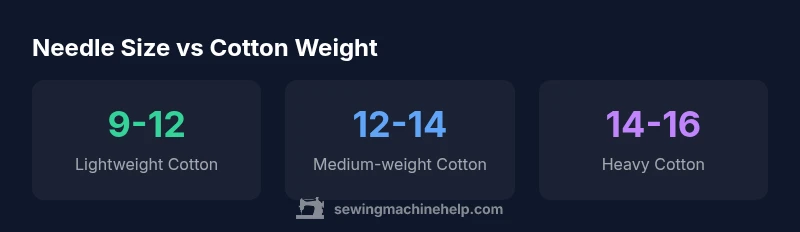
For most cotton fabrics, start with a size 12 universal sharp needle (US) or 80/12 (EU). For lighter cottons like lawn or poplin, a 9-12 may work; for heavier cottons such as canvas, use 14 (90/14) or 16. Always test on a scrap swatch to confirm stitches and tension.
Cotton fabrics and needle sizing: the core question
If you’re asking what size sewing machine needle for cotton to use, the short answer is to start with a sharp universal needle in US size 12 (80/12). For lighter weights such as cotton lawns or poplins, size 9-12 may be appropriate, while heavier cotton fabrics like canvas or heavier denim-weight cotton can benefit from size 14 (90/14) or even size 16 in some cases. According to Sewing Machine Help, the needle size you choose should balance fabric weight, weave, and thread type. The needle you pick isn't just a number—it's a tool that affects piercing, thread tension, and fabric feed. The Sewing Machine Help team found that taking a moment to adjust needle size based on the project yields the most reliable stitches and reduces fabric damage. Because cotton fabrics vary widely in weave and finish, and even the same weight can behave differently on different machines, testing on a scrap swatch is essential before committing to a full seam. In practice, this means identifying the fabric's weight category, choosing the closest needle size within that range, and performing a quick stitch test to confirm the outcome.
How fabric weight affects needle choice
Cotton fabrics come in a spectrum of weights, from sheer lawn to heavy canvas. The heavier the fabric, the larger the needle you should use, up to 14-16 for very dense cotton; lighter weights typically respond better to size 12 or smaller. The relationship isn’t only about piercing; it’s about how the edge of the needle interacts with the fibers. A too-small needle will push fibers aside and can cause skipped stitches; a too-large needle can perforate the fabric and create puckers. Thread choice also matters; for example, cotton or polyester threads can influence how easily the needle penetrates and how the stitch sits on the surface. In general, aim for a sharp universal needle for woven cottons, increasing the size for heavier weights, and consider switching to a denim or sharp heavy-weight needle if you’re sewing thick cottons like canvas or duck. The result of correctly matching fabric weight and needle size is smoother feeding, more even stitches, and fewer thread breaks. Sewing Machine Help analysis notes that a deliberate approach to weight-based needle selection reduces trial-and-error sewing time.
Needle types and their impact on cotton
Cotton is typically woven, not knit, so a sharp needle is usually preferred for clean penetration and edge control. A universal sharp needle (often labeled 130/705 H) works well for most cottons. Ballpoint needles, which glide between knit fibers, are generally less suitable for woven cotton unless you’re dealing with an unusual blend. For delicate, lightweight cottons, a fine sharp needle such as size 9-12 helps prevent pulls and snags. For heavier cottons—canvas, duck, or denim-weight cotton—a stronger needle in the 14-16 range (90/14 to 100/16) reduces skipped stitches and helps maintain fabric integrity. If you’re sewing with a cotton-elastic blend (cotton with lycra/spandex), consider a stretch needle to manage the blend’s stretch. Always verify the needle type is appropriate for the thread you’re using and the fabric’s weave.
Step-by-step test approach
Begin with a scrap swatch that matches your project fabric. Install a needle in the recommended size for that weight. Set a short to medium stitch length (2.5–3.0 mm) and a mid-range tension. Sew a few inches on the scrap, then inspect for skipped stitches, puckering, or fabric fraying. If issues appear, adjust needle size up or down by one step and retest. If the fabric feeds unevenly, consider lowering presser foot pressure or enabling a walking foot for thicker cottons. Repeat until you observe clean, consistent stitches. Document which needle size produced the best results on that fabric so you can replicate it on the final garment or project. This practical, test-driven process is endorsed by the Sewing Machine Help Team as the most reliable way to determine what size sewing machine needle for cotton is best for your specific fabric.
Common problems and fixes
Puckering and thread breakage often indicate a mismatch between fabric weight and needle size. Skipped stitches can signal a dull or too-thin needle or incorrect needle type for woven cotton. If you notice fraying near seam lines, switch to a sharper needle or adjust stitch length and tension. For very smooth feeding on textured cotton fabrics, reduce fabric thickness by lowering presser foot pressure and ensuring your bobbin is correctly wound. For denim-weight cottons, a denim needle can provide a sturdier piercing edge and help the feed system maintain stability during longer seams. Keep in mind that thread choice matters: using a thread that complements the fabric weight (e.g., heavier threads with heavier needles) reduces defects and improves seam quality.
Sewing cotton blends and heavy cotton
Cotton blends, such as cotton with a small percentage of spandex or polyester, often benefit from a ballpoint or stretch needle if the fabric has any stretch. For pure cottons with slight body or stiffness, a sharp universal needle remains the safest default. In the heaviest cottons, switch to a heavier, reinforced needle and consider a walking foot to reduce slippage. The goal is to balance fabric weight, weave, thread, and stitch type to produce clean seams without leaving visible punch marks or puckers. By adjusting needle size in response to fabric weight and project needs, you can substantially improve fabric handling and stitch appearance across a wide range of cotton projects.
Quick reference checklist
- Start with US size 12 (80/12) for most cottons; move to 14 (90/14) for heavier weights.
- Use a sharp universal needle for woven cottons; reserve ballpoints for knits or blends with knit components.
- Always test on a fabric scrap before sewing the main piece.
- Check tension, presser foot pressure, and stitch length if issues persist.
- Use a needle appropriate for the thread weight you’ve chosen.
dataTableNoteField):null
TOCTitleForBodyBlocksPleaseIgnoreNoteBlocksWhileWeIncludeInNextBlock
Needle size guidance by cotton fabric weight
| Fabric Weight | Recommended US Needle Size | Needle Type | Notes |
|---|---|---|---|
| Lightweight cotton (lawn, voile) | 9-12 | sharp universal | Test for fabric tension and finish |
| Medium-weight cotton (quilting cotton, poplin) | 12-14 | sharp universal | Most common choice for regular cottons |
| Heavy cotton (canvas, heavy poplin) | 14-16 | denim/sharp | Use heavier needle for dense weaves |
| Cotton blends with stretch | 11-14 | ballpoint or stretch needle | Avoid knit-optimized needles on woven blends |
Your Questions Answered
What size needle should I use for lightweight cotton?
For lightweight cottons such as lawn or voile, start with a size 9-12 needle. Test on scrap and adjust if you see puckering or skipped stitches. This range accommodates most light cottons without excessive perforation.
For light cottons, try a size 9-12 needle and test on scrap first.
Is a ballpoint needle suitable for cotton fabrics?
Ballpoint needles are best for knits. For woven cotton fabrics, a sharp universal needle is usually the safest choice. If you must use a ballpoint on a cotton blend, test first to avoid skipped stitches.
Ballpoint is usually not ideal for woven cotton; test if you’re unsure.
How can I tell if my needle size is too big or too small?
If you see puckering, skipped stitches, or fabric snagging, the needle may be too large or too small. Try one size up or down and retest on a scrap. Keep notes on what works for future projects.
Puckering or skipped stitches usually means you should adjust the needle size.
Can I reuse needles for multiple projects?
Needles dull with use and can become bent. Replace needles after 4-6 hours of sewing or if you notice snags, bird’s-nest stitches, or skipped stitches, even if the needle looks fine.
Replace dull or bent needles to avoid fabric damage.
What other adjustments help when sewing cotton?
Besides needle size, check thread weight, tension, stitch length, and presser foot pressure. A walking foot can help with thicker cottons to maintain stable feeding.
Tension and stitch length also matter for cotton sewing.
“The right needle size for cotton isn’t a one-size-fits-all choice; always test on scraps and adjust based on fabric weight and weave.”
The Essentials
- Test needle size on a scrap swatch before committing to a project
- Start with US size 12 for most cottons and adjust up for heavier fabrics
- Use a sharp universal needle for woven cottons; switch to denim/sharp for thick cottons
- Consider thread weight and fabric weave in needle choice to minimize issues