What Size Sewing Machine Needle for Jeans: Denim Needle Guide
Learn the right needle size for jeans, from light to heavyweight denim. Practical guidance, testing tips, and setup steps for durable, neat jeans sewing.


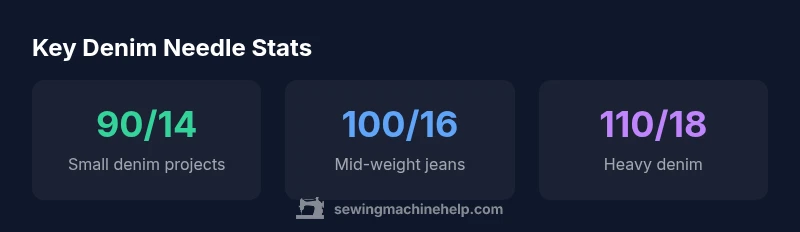
For jeans, start with a denim needle in sizes 90/14 to 110/18. Lighter denim responds to 90/14, while medium to heavy denim benefits from 100/16 or 110/18. Use a walking foot to feed multiple layers smoothly, and set a slightly longer stitch length (2.5–3.0 mm). Always test on scrap fabric before sewing your project.
What size sewing machine needle for jeans? A practical denim guide
If you’re asking what size sewing machine needle for jeans, you’ll want to start with the right needle. Denim needles are designed to pierce multiple fabric layers and prevent skipped stitches, especially when working with thick seams. For most jeans projects, start with sizes 90/14 to 100/16 for lighter to mid-weight denim, and move up to 110/18 for heavyweight denim. This range aligns with common practice among home sewists and is recommended by the Sewing Machine Help team. Always test on a scrap fabric sample first to verify that your machine feeds smoothly, the thread tension holds, and the stitch looks clean on multi-layer denim.
In practical terms, the exact size you choose depends on denim weight, thread type, and your machine’s presser foot. Lighter denims can tolerate a 90/14, but thicker denims benefit from 100/16 or 110/18. If you notice fraying or skipped stitches, upgrade the needle size or adjust stitching speed, and consider using a walking foot for extra stability during feeding. The goal is to balance needle strength with fabric flexibility, ensuring the seam holds without creating extra wear on the layers. According to Sewing Machine Help, using the right needle size for jeans dramatically reduces snagging and thread breakage during construction.
Denim needle sizes and denim weight explained
Denim comes in a range of weights, typically described in ounces (oz). This weight translates into fabric thickness and impact on needle choice. For light to mid-weight denim (roughly 6–12 oz), a 90/14 to 100/16 needle is usually sufficient. For heavier denim (13–16 oz and up), you’ll often be comfortable with 100/16 to 110/18. The goal is to have a needle that can pierce the fabric cleanly without deflecting, while allowing the thread to form a secure stitch. In many jeans projects, starting with a 90/14 for lighter panels and increasing to 110/18 for thick seams provides a practical workflow. This sizing guidance is reinforced by the Sewing Machine Help analysis, which emphasizes testing and adjusting to your exact denim weight and stitch type.
Understanding denim weight helps you map needle sizes more precisely. Light denim, such as a 6–8 oz, usually benefits from smaller needles, while medium to heavy denims consistently respond well to mid-range to larger needles. The key is effective fabric feeding, which is where a walking foot becomes valuable when sewing through two to four layers or when working with dense seams. By pairing the correct needle with the appropriate stitch length, you can maintain fabric integrity and achieve professional results.
How to test and adjust for jeans: stitch length, tension, and feeding
Testing is essential when you’re unsure of the best needle size for jeans. Begin by trimming a few scrap pieces of your denim to mimic your project thickness. Install the needle size you plan to use and set your machine to a conservative stitch length in the 2.5–3.0 mm range. Sew a few inches on scrap material, observing the feed and stitch formation. If the stitches skip or the fabric shifts, adjust the needle to a larger size within the recommended range and re-test. Tension should be balanced; if top stitches appear loose or bottom stitches look tight, adjust the bobbin tension or the thread path. A walking foot can help feed dense layers evenly, reducing puckering and dropped stitches. Finally, re-test with different thread types (polyester vs cotton vs cotton-wiber blends) to determine which yields the strongest, cleanest seams on denim.
Common mistakes and how to fix them
One of the most common mistakes when sewing jeans is choosing too small a needle for heavyweight denim, which can cause skipped stitches or needle deflection. Conversely, using too large a needle on lightweight denim can leave holes and weaken seams. If stitches appear uneven or fabric snarls, try using a denim needle in a larger size, enable a longer stitch length, and confirm your presser foot is correctly aligned. Another frequent issue is thread breakage; using a high-quality polyester thread or a cotton-wrapped polyester thread paired with a denim needle reduces snapping. For multi-layer jeans, enable a walking foot to maintain stable feeding and prevent fabric shifting. Finally, make sure your machine’s needle plate and bobbin case are clean, as dust and lint can contribute to poor stitch quality.
Needle and thread compatibility for jeans
Jeans call for durable thread and a compatible needle. Polyester thread is the most versatile and offers good abrasion resistance for jeans, while cotton-wrapped polyester provides a natural finish with strength. It’s important to pair thread thickness with needle size; for example, a 90/14 needle works well with standard-weight polyester or cotton-wrapped polyester threads, while heavier threads or thicker denims may require a 100/16 or 110/18 needle. Avoid very fine threads that can snap under load and lead to skipped stitches. Regularly check needle sharpness; dull needles increase fabric wear and produce rough seams. With the right combination of denim needle size and thread, you’ll have stronger seams and fewer breakages.
Setup steps for sewing jeans with a denim needle
- Select the denim needle size appropriate for your denim weight (e.g., 90/14 for light to mid-weight, up to 110/18 for heavyweight). 2) Install a walking foot for multiple layers and a smooth feed. 3) Load a durable thread such as polyester or cotton-wrapped poly. 4) Set stitch length to 2.5–3.0 mm for jeans seams, and test on scraps. 5) Check tension by observing both the top and bobbin stitches; adjust as needed. 6) Sew on a practice panel to ensure even feeding and consistent seam allowances before tackling your project. 7) When finished, re-test on scrap to confirm stability and avoid post-project adjustments.
Quick-start cheat sheet and decision tree
- If denim weight is light: start with 90/14. If you see skipped stitches, move to 100/16. If fabric puckers, adjust stitch length and/or use a walking foot.
- For mid-weight denim: use 100/16 as a baseline, test with scrap material, and switch to 110/18 for very thick seams.
- For heavyweight denim: 110/18 is often most reliable; use walking foot and ensure machine can needle through multiple layers without strain.
- Always test on scrap and adjust thread type and tension accordingly.
- Keep a habit of clean needle changes after heavy denim projects to avoid issues in future sewing.
Denim weight vs needle size guidance
| Denim Weight | Recommended Needle Size | Notes |
|---|---|---|
| Light denim (6–8 oz) | 90/14 | Balanced stitch; good for seams on lighter panels |
| Medium denim (9–12 oz) | 100/16 | Standard jeans weight; strong, durable seams |
| Heavy denim (13–16 oz) | 110/18 | Best for thick seams and multiple layers |
Your Questions Answered
Can I use a universal needle for jeans?
Universal needles can work on very light denim, but for most jeans, denim needles are recommended to handle multiple layers and prevent skipped stitches.
Universal needles might work on very light denim, but for jeans you should use a denim needle.
What needle size should I use for stretch denim?
For stretch denim, you can use a denim needle in a similar size range (90/14–110/18), but consider a stretch- or ballpoint-needle if fabric drape is defined; always test.
Stretch denim benefits from a denim needle designed for stretch fabrics.
Is it necessary to replace needles after every project?
Yes; using a fresh needle for jeans helps prevent skipped stitches and fabric snags, especially after heavy layers.
Always use a fresh denim needle for jeans.
Can I sew denim with a standard needle if I adjust stitch length?
A standard needle can work on very light denim, but for most jeans you should switch to a denim needle to avoid damage.
Try a denim needle for jeans instead of a standard needle.
What thread works best with jeans?
Polyester thread is durable for jeans; cotton-wrapped poly is common too. Match thread thickness to needle size.
Polyester thread is a reliable choice for jeans.
“A denim needle sharpens the path through dense fabric, reducing skipped stitches and snagging. Testing on scrap ensures the right balance of strength and flexibility.”
The Essentials
- Test on scrap fabric before starting any jeans project.
- Choose denim needle size within 90/14–110/18 range.
- Match needle size to denim weight for best results.
- Use a walking foot for multi-layer denim feeding.
- Check thread type and tension to prevent snags and breakage.