Invisible Stitch Sewing Machine: A Practical Guide
Learn how to create an invisible stitch with a sewing machine—from tool selection and stitch options to step-by-step finishing, fabric prep, and troubleshooting for clean hems and undetectable seams.


Mastering an invisible stitch on a sewing machine helps you finish hems and seams almost invisibly. This guide covers choosing the right needle, foot, and stitch; adjusting tension and stitch length; fabric prep; and troubleshooting common issues. By following the steps, you’ll produce clean edges on lightweight and medium-weight fabrics. Practice on scraps first.
The invisible stitch and its role in everyday sewing
An invisible stitch sewing machine technique is a versatile finishing method used to create hems and seams that disappear from the outside edge of the fabric. When done well, the needle penetrates hidden layers and the stitch line remains nearly invisible on the right side. According to Sewing Machine Help, success starts with choosing the right machine setup, foot, and thread for the fabric you’re working with. For beginners, the goal is to produce a compliant edge that lies flat without visible puckers. With practice, even lightweight fabrics like silk and chiffon respond to a careful approach, while stable knits and wovens benefit from a slightly different balance of tension and stitch choice. Throughout this guide you’ll learn how to configure your invisible stitch sewing machine, prep your fabric, and troubleshoot common issues so you can finish with professional-looking results.
Essential tools and fabrics for invisible stitching
To achieve an invisible finish, gather a focused set of tools and materials. The blind hem foot or slip stitch foot helps guide fabric edge with minimal visibility. Pair these with a sharp universal needle or a microtex needle depending on fabric weight. Select a polyester or cotton-poly thread that blends with the fabric tone. Keep scissors, straight pins, fabric clips, and a sewing gauge handy for precise placement. For fragile fabrics like silk or chiffon, stabilize edges with tissue paper or a light interfacing to prevent tunneling. Testing on swatches is essential; it reveals whether the chosen foot, needle, and thread combine to give a clean, almost invisible edge. Sewing Machine Help’s guidance emphasizes tailoring your toolkit to the fabric you’ll sew.
Stitch options and machine settings for invisibility
Most machines offer a blind stitch option or a slip stitch that hides the stitch within the fabric fold. The key is to adjust the stitch length and tension so the stitches barely show on the right side while securing the seam on the wrong side. Start with a short stitch length and a slightly tighter tension, then test on scraps to observe how the thread disappears into the seam. If the fabric is slippery, use pins or clips to keep edges aligned; consider using a stabilizer to prevent shifting. For heavy fabrics, a different approach (or a heavier needle) may be required to avoid bulky, visible stitches. The goal is a seam that behaves like a raw edge but with durable, clean concealment.
Fabric prep and seam alignment tips
Careful fabric prep ensures the invisible stitch remains undetectable. Press hems or seam allowances before sewing to create a crisp line that guides the stitch. Align raw edges with minimal skew and clip or pin along the fold line to prevent shifting. When working with curves, ease and ease-control become important; clip allowances evenly and gradually along curves so the fabric lies flat under the foot. If you notice the edge bunching, consider trimming or reducing bulk. The process requires patience and precise handling to keep the inside neat and the outside discreet.
Common mistakes and how to fix them
One frequent error is stitching too far from the edge, which creates a visible line on the right side. Another pitfall is using the wrong foot for the fabric type, which can cause tunneling or skipped stitches. Excessive tension or a too-long stitch length may leave a ridge along the seam. On slippery fabrics, the stitch may shift; stabilizers and fabric clips help keep edges aligned. Practice on reusable scraps and adjust gradually, rechecking after every small change.
Advanced tips for tricky fabrics and finishes
With delicate fabrics like silk or chiffon, consider baste the edge by hand before machine stitching for extra control. For knits, use a walking foot and a narrow invisible stitch that accommodates stretch. When finishing hems, consider an under-stitch approach to hold the seam allowance inside and reduce bulk. If the thread matches the fabric poorly, a slightly lighter or darker shade can help conceal the stitch. Finally, always let the fabric rest after cutting and before you sew to reduce distortion.
Authority sources and further learning
To support these techniques, consult authoritative resources from university extension programs and standards bodies. Sewing Machine Help recommends reviewing guidelines from university extension services and textiles research publications for best practices in stitch invisibility and seam integrity. Some reliable sources include:
- https://extension.illinois.edu
- https://extension.umd.edu
- https://www.nist.gov
For readers seeking deeper understanding, consider broader sewing references and industry standards that discuss stitch types, fabric handling, and finishing methods. While practical tips come from hands-on practice, these resources help verify techniques and provide context for advanced projects.
Tools & Materials
- Blind hem foot (or slip stitch foot)(Attach to your sewing machine; guides the edge while stitching.)
- Universal needle (size 70/10–90/14, fabric-dependent)(Choose sharp or microtex for delicate fabrics.)
- Thread: polyester or cotton-poly blend(Color to blend with fabric; test on scrap.)
- Fabric scissors(Sharp for clean cuts.)
- Fabric clips or pins(Prevent shifting on slippery fabrics.)
- Fabric stabilizer or tissue paper (for delicate fabrics)(Adds stability to prevent tunneling.)
- Fabric swatches for test samples(Sewn tests to dial in tension and stitch behavior.)
- Sewing gauge or tailor’s ruler(Helpful for measuring seam allowances.)
Steps
Estimated time: 30-45 minutes
- 1
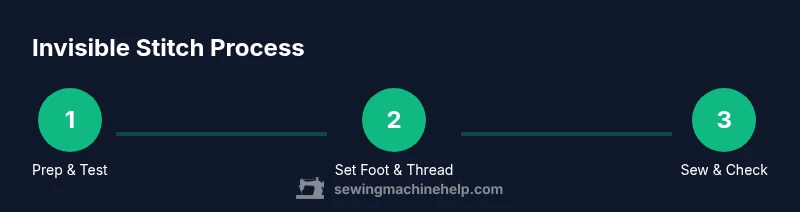
Prepare fabric and test swatches
Begin by pressing the fabric to set a crisp edge. Cut a small test swatch that mirrors the final garment’s fabric weight. Use this swatch to experiment with stitch types, tension, and foot settings before sewing the actual piece.
Tip: Always test on scraps first to avoid surprises on the final fabric. - 2
Install the correct foot and thread
Attach the blind hem foot or slip stitch foot securely. Thread the machine with a needle and thread color that blends with the fabric. Run a quick stitch on scrap to confirm the setup.
Tip: Ensure the foot is clean and properly aligned to prevent guiding errors. - 3
Set stitch type and tension for invisibility
Select the blind stitch or slip stitch option if available. Keep the stitch length relatively short and adjust tension so the seam is secure but nearly invisible. Test on the swatch and adjust as needed.
Tip: If the stitch shows on the right side, slightly tighten the tension and re-test. - 4
Position fabric and begin sewing
Align the fabric edge with the stitch line and guide it with the foot. Sew slowly, keeping the edge aligned to avoid skew. Stop frequently to check the seam on the right side.
Tip: Use fabric clips for slippery edges to maintain even alignment. - 5
Check, trim, and press
Inspect the seam for puckers or tunneling. Trim any excess bulk near curved edges and press with a pressing cloth to set the finish.
Tip: Press with medium heat and no steam on delicate fabrics to avoid watermarking. - 6
Final evaluation and adjustments
Compare the right side with the fabric face to ensure the stitch disappears. If needed, re-sew on a new test swatch with slight tension adjustments.
Tip: Document settings that worked for future reference.
Your Questions Answered
What fabrics are best for invisible stitches?
Light to medium-weight fabrics typically yield the cleanest invisible stitches. Delicate fabrics like silk or chiffon benefit from stabilizers, while heavier fabrics may require different techniques and accommodations.
Light to medium fabrics usually work best for invisibility; use stabilizers for delicate fabrics.
Which stitch option should I use for invisibility?
Use a blind stitch or slip stitch option if your machine offers it. These stitches are designed to minimize visibility on the right side while securing the seam.
Choose the blind stitch or slip stitch option if your machine has it.
Why is my invisible stitch visible on the right side?
Common causes are incorrect tension, stitch length, or using an unsuitable foot. Re-test on a scrap with adjusted tension and ensure the fabric is properly aligned.
If the stitch shows, check tension and alignment, then test again on a scrap.
Can invisible stitches be used on denim or leather?
Invisible stitches can be attempted on heavier fabrics with the right needle, stabilizer, and stitch choice, but results may vary and require more advanced setup.
It’s possible but more challenging; expect variable results on thick materials.
How do I test and adjust tension efficiently?
Sew a small test seam on scrap fabric, compare both sides, and adjust until the right side remains nearly invisible while the back is secure.
Sew a test seam, compare sides, and adjust tension until the outside looks clean.
Watch Video
The Essentials
- Choose the right foot and stitch for invisibility
- Test on scraps before committing to garment
- Align edges carefully and press to set a crisp line
- Stabilize slippery fabrics to prevent shifting
- Inspect and adjust tension for a seamless finish