How to Tell if Sewing Machine Tension is Right
Learn practical tests and adjustments to balance upper thread and bobbin tension for clean stitches on all fabrics. A step-by-step guide for beginners and hobbyists from Sewing Machine Help.


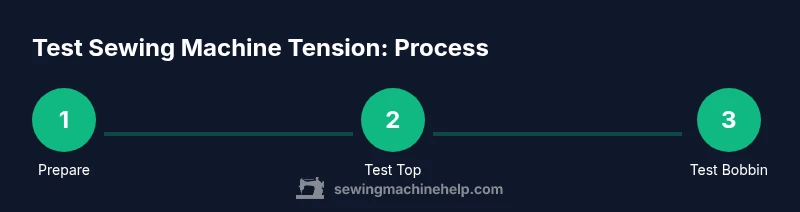
To tell if sewing machine tension is right, you will test both upper thread and bobbin on scrap fabric and adjust in small increments. Start with mid-range tension, thread the machine as you normally would, and sew straight and curved stitches on light and medium fabrics. Balance means stitches lay flat on both sides.
Understanding Sewing Machine Tension
Sewing machine tension is the balance between the upper thread (from the needle) and the bobbin thread (from under the fabric). When both threads pull equally, stitches sit neatly with little of either thread showing on the opposite side. For home sewists, proper tension means your seam looks consistent on both sides and the fabric feeds smoothly without snagging or looping. According to Sewing Machine Help, tension isn’t a single setting you dial once and forget; it’s a dynamic balance that can change with thread type, fabric weight, needle size, and even machine cleanliness. A well-balanced machine results in professional-looking seams, easier feeding, and reduced frustration during repairs or garment construction.
In practice, tension balance is achieved by a combination of the upper thread tension dial, the bobbin case tension, and correct threading. Before you adjust anything, confirm you are using compatible thread and a sharp needle for the fabric. If your needle is dull or bent, tension will feel off even if the tension discs are correctly balanced. Regular maintenance—cleaning lint from the tension area and ensuring the bobbin is wound evenly—helps keep this balance stable over time.
Common Symptoms of Incorrect Tension
Stitches that look uneven or unbalanced are often the first sign tension is off. On the fabric’s top side, you might see thread looping or large stitches, while the underside shows loops or a tangle. If the fabric puckers or feeds poorly, the tension could be too tight or too loose, depending on whether the upper thread or bobbin is primarily contributing to the problem. Color built-in contrast helps here: when both sides look similar and lie flat, tension is usually well balanced. If the upper thread is too tight, the top stitches tunnel through the fabric; if it's too loose, you’ll see gaps or long stitches on the top side. The bobbin can be the culprit when you see loops on the fabric’s top or uneven bottom stitching. Keep in mind that different fabrics can require subtle adjustments, so you’ll often need to re-test after changing fabric or thread type. For beginners, these checks are essential, and maintaining a clean tension area reduces uneven results. Sewing Machine Help analysis, 2026 emphasizes the incremental nature of this balancing act as you learn your machine’s quirks.
Testing Top Thread Tension (Needle Thread)
Top thread tension controls how tightly the needle thread pulls on the fabric. To test, thread the machine with your usual needle and fabric scrap. Sew a straight seam and then a small zigzag or decorative stitch, paying attention to how the thread lies on both sides of the fabric. If the top thread pulls through with little resistance and the underside shows vertical “sawtooth” or loose bobbin threads, the top tension is likely too loose. If the top thread is buried with barely-visible stitches and the underside shows heavy loops or long loops on the surface, the top tension is too tight. Start with a mid-range setting, then adjust in small increments (a quarter-turn at most) and re-test. A helpful tip is to sew at slow speed during adjustments so you can observe every change clearly. Remember to keep your fabric flat and don’t yank the fabric through the needle plate, which can distort tension feedback.
Testing Bobbin Tension
Bobbin tension is the counterpart to the upper tension and helps balance bottom stitches. Use the same fabric scrap and a new bobbin wound evenly. With the top thread set at a balanced level, test a short seam and then inspect the underside; you should see a clean, balanced bottom stitch with minimal thread loop on the top. If you see long loops on the bottom or the top thread dominates the appearance, the bobbin tension needs adjustment. Bobbin tension adjustments are usually subtle and often require loosening or tightening the bobbin screw or adjusting the bobbin case tension by a small amount. If you’re unsure, consult your machine’s manual for model-specific guidance, as bobbin mechanisms vary. Regularly recheck tension after any repair or cleaning.
Step-by-step: Adjusting Top Tension (Incremental Guide)
When top tension needs adjustment, work in small increments. Start with the midpoint on the tension dial and sew on a scrap. If the top thread is too loose, gently increase tension in small steps (e.g., 1/4 turn) and test again. If the top thread is too tight, decrease tension in small steps and re-test. Always test on the same weight of fabric you intend to sew. If the fabric puckers under the seam, the top tension may be too high; lower until the stitches lie balanced on both sides. A key tip is to document the dial setting that works best for a given fabric type so you can quickly return to it in future projects.
Step-by-step: Adjusting Bobbin Tension (Incremental Guide)
Bobbin tension adjustments should be made only after confirming top tension is balanced. Remove the bobbin and re-wind it if necessary to ensure it’s evenly wound. On most machines, you adjust the tension by turning the bobbin case screw slightly clockwise to increase tension or counterclockwise to decrease it. After each micro-adjustment, insert the bobbin, thread the machine, and sew a short seam on scrap fabric. Check the bottom stitches: if they appear too loose (bobbins showing on the top), tighten the bobbin tension slightly; if they appear too tight or cause the top thread to pull, loosen it slightly. This process requires patience, as bobbin tension can be more sensitive to minor changes than upper tension. Keep a small notebook of settings and fabrics since different projects may call for different balances.
Common Mistakes and Troubleshooting
Common missteps include chasing a single perfect setting without considering fabric weight, thread type, and needle size. Always test on similar fabric before concluding a setting is ideal. Another mistake is neglecting cleaning; lint can alter tension discs, causing inconsistent results. Ensure your needle is sharp and properly installed; a dull needle can mimic tension issues. If loops occur on the top or bottom, re-check threading path and re-thread from scratch to rule out skipped guides. Finally, never force stitches or sew through thick seams without lowering stitch length or increasing pressure foot lift for consistent feed—this can throw tension out of balance.
Re-check and Verify Across Fabrics
After achieving a balanced tension on one fabric, re-test with a second fabric of different weight, such as light cotton and medium-weight twill. If results remain balanced, you’ve established a robust tension balance. If not, you may need to adjust top or bobbin tension again to accommodate the new fabric’s behavior. Always re-test with your intended thread and needle combination, as the combination of thread type, needle size, and fabric weight largely determines what is considered “balanced” in practice. Keeping a simple log of successful fabrics and their corresponding tension settings helps you quickly replicate good results in future projects. Finally, perform a quick full-seam test with both straight and curved stitches to confirm the balance remains stable throughout typical sewing tasks.
Tools & Materials
- Spool of sewing thread(Use the same type and weight you plan to sew with)
- Matching bobbin and bobbin case(Ensure bobbin is wound evenly)
- Test fabric swatches (light and medium weight)(Cotton or muslin works well)
- Needle appropriate for fabric(Sharp, size appropriate for fabric weight)
- Small screwdriver for tension discs (model-specific)(Only if your model has adjustable discs)
- Seam ripper or snips(For quick corrections)
- Lint-free cloth or canned air(Clean tension area and guides)
Steps
Estimated time: 30-45 minutes
- 1
Power down and prep
Turn off and unplug the machine. Raise the needle to its highest position and remove the presser foot to access the needle area. Clear lint from the feed dogs and tension area, and ensure you have a clean area for testing. This prepares the machine for safe adjustments and helps you observe changes clearly.
Tip: Take a quick photo of the threading path before you adjust, so you can reference it later. - 2
Thread with test materials
Thread the machine as you normally would with the test thread and needle. Use scrap fabric that matches the weight of your intended project. Ensure the thread is correctly guided through all tension discs and guides relevant to your model. This ensures the test reflects real sewing conditions.
Tip: Sew a few inches to confirm the thread advances smoothly before starting actual测试. - 3
Test top thread tension
Sew a straight seam on test fabric at slow speed. Check if the top thread lies flat on the bottom and if the bottom thread lies flat on the top. If you see loops on the top or bottom, adjust the upper tension in small increments (1/4 to 1/2 turn) and re-test.
Tip: Make only one small adjustment at a time; test again before making additional changes. - 4
Evaluate bottom thread (bobbin) tension
With top tension balanced, check bottom stitches by sewing a short seam. If the bobbin thread shows on the top or the bottom stitches are incomplete, adjust the bobbin tension slightly. Re-test after each micro-adjustment.
Tip: If your machine requires, loosen the bobbin case screw slightly and retest; never force the screw past its range. - 5
Fine-tune both tensions
If there are still imbalances, tune top and bobbin tensions in small steps. Remember: fabric weight and thread type influence balance; a slight recalibration is often necessary when changing fabrics.
Tip: Document the settings that work best so you can reproduce them later. - 6
Test on multiple fabrics
Repeat the test on a light fabric and a heavier fabric to ensure settings hold across weights. Look for balanced stitches on both sides and a smooth feed without puckering.
Tip: If one fabric type requires a different balance, consider creating a quick reference chart for future projects. - 7
Finalize and document
Record the final top tension dial setting and bobbin tension adjustment that produced balanced stitches for your most common fabrics. Clean the machine and re-check that the stitch looks good across the seam, including corners and curves. A regular check keeps tension stable.
Tip: Keep a small notebook or digital note with fabric type, thread, needle size, and settings. - 8
Re-test and save your baseline
Perform a final test run on a sample seam to confirm stability. If it holds, you’ve established a reliable baseline for your machine. If not, revisit the previous steps with a fresh scrap and re-optimize.
Tip: Re-test after any major maintenance—cleaning or oiling can shift tension balance.
Your Questions Answered
What should I do if stitches still look off after adjusting tension?
If stitches remain unbalanced, double-check threading path, needle condition, and fabric weight. Re-test on scrap fabric after each adjustment and consider replacing the needle or thread with a different weight. If issues persist, re-evaluate both top and bobbin tensions and consult your manual for model-specific guidance.
If stitches still look off, re-check threading and the needle; try a new needle or different thread weight, then re-test on scrap fabric.
Can tension issues be caused by the needle or thread?
Yes. A dull or bent needle or thread that is too thick for the fabric can mimic tension issues. Always match needle size and thread type to fabric weight and re-test after changing either component.
Yes. A dull needle or wrong thread can cause tension issues; match weight and re-test.
Is it normal for tension to change with fabric type?
Absolutely. Different fabrics require different balances due to weave, stretch, and thickness. Always test with fabric samples and adjust accordingly for each project.
Yes, fabric type changes tension, so test with samples for each project.
How often should I check or adjust tension?
Check tension whenever you switch thread types, fabrics, or needles. Re-test after cleaning or major maintenance, and keep notes of settings that worked for future projects.
Check tension when you change thread or fabric, and after cleaning or maintenance.
What tools help with tension testing?
A spare bobbin, scrap fabric, and the appropriate needle are essential. A small screwdriver may be needed for model-specific bobbin tension adjustments. Keep tools organized to speed up testing.
Keep a spare bobbin, scrap fabric, and the right needle for testing tension.
Watch Video
The Essentials
- Test top and bobbin tensions on scrap fabric before sewing.
- Adjust tensions in small increments and re-test.
- Balance across multiple fabrics for reliability.
- Document successful settings for future projects.
- Maintain the tension area to prevent drift.