Husqvarna Viking Sewing Machine Repair: A Practical Guide
A practical, safety-focused guide to diagnosing and repairing common Husqvarna Viking sewing machine issues at home. Includes troubleshooting, maintenance tips, and when to seek professional service.


This guide helps you diagnose and repair common husqvarna viking sewing machine repair issues at home. You’ll learn safe troubleshooting steps, when to seek service, and how to test stitch quality after repairs. Following these steps can restore smooth operation and extend your machine’s life. This quick summary assumes ordinary maintenance, basic tools, and careful handling. Always unplug the machine before any inspection.
Understanding Husqvarna Viking mechanics
Husqvarna Viking sewing machines blend precision engineering with user-friendly design, and understanding the core subsystems makes repairs more approachable. In terms of repair, you should know the core systems: the needle bar and hook mechanism, bobbin system, feed dogs, presser foot, and control electronics. For home sewists, basic preventive care reduces the likelihood of major failures. This article focuses on practical, safe approaches to diagnosing common issues that lead to poorer stitch quality and machine performance.
According to Sewing Machine Help, the most common repair questions for husqvarna viking sewing machine repair originate from lint buildup, thread path tangles, needle wear, and misadjusted tension. By recognizing how these subsystems interact, you can identify root causes quickly and apply targeted fixes. The Sewing Machine Help team emphasizes safety first: unplug before opening covers, and follow model specific instructions to avoid damaging delicate components.
Husqvarna Viking models vary in how parts are accessed, but many repairs stay within the realm of routine cleaning, pinching connectors carefully, and reseating components. While some models use modular timing, others rely on rated gears that do not require expert calibration for minor tune-ups. The goal is to empower home sewists to keep their machines running smoothly without risking warranty issues or costly service calls. In practical terms, expect to check the bobbin area, thread path, needle condition, and tension as a first pass toward diagnosing husqvarna viking sewing machine repair needs.
Common symptoms and probable causes
Troubleshooting begins with symptoms. Common issues for Husqvarna Viking machines include: skipping stitches or inconsistent stitch length, thread nests or looped stitches on the underside, fabric bunching, loud clicking, and slow handwheel movement. Each symptom points to a likely cause.
- Skipped stitches or inconsistent length: often caused by a dull or incorrectly installed needle, a misthreaded path, or tension imbalance between the top thread and bobbin.
- Thread nests under the fabric: usually due to a tangled thread path, a bent needle, or incorrect bobbin winding.
- Fabric feeding poorly: may indicate dirty feed dogs, worn presser foot, or incorrect stitch selector settings.
- Noisy operation or stiff handwheel: could signal lint buildup in the bobbin area, degraded gears, or a pinched belt.
Sewing Machine Help analysis shows that lint buildup and bobbin misalignment are frequent culprits, especially when a model sits unused for long periods. Always inspect the needle, ensure the thread path is clear, and verify that the bobbin is wound and placed correctly. If problems persist after the quick checks, it is wise to consult the model specific manual or contact a pro.
Diagnostic checklist you can do at home
Use this practical flow to pinpoint faults without taking the machine apart more than necessary. Start with the simplest checks and proceed to more involved inspections only if the symptom remains.
- Unplug and test: unplug the machine, then test on scrap fabric with a simple straight stitch to observe behavior.
- Check needles and thread: replace with a new needle of the correct type and size, rethread the machine, and run a few stitches to see if the issue persists.
- Inspect bobbin area: remove the bobbin case, clean lint, and reseat the bobbin so it spins smoothly.
- Verify thread path: ensure the upper thread follows the correct path and the bobbin thread feeds in the right direction.
- Evaluate tension: adjust top thread tension in small increments only and retest; compare with the same fabric and thread weight.
If timing or mechanical wear is suspected, stop the internal checks and seek professional evaluation. The aim is to isolate whether the problem is a simple misthread or something that requires disassembly.
Cleaning, oiling, and basic adjustments
Regular cleaning helps prevent many Husqvarna Viking repair issues. Start by removing lint from the bobbin area and feed dogs using a soft brush. Wipe away residue with a lint-free cloth. Do not overoil unless the model manual specifies oiling; many modern Husqvarna Viking machines are designed for minimal lubrication and sealed movement.
- Clean the bobbin hook area and tension discs with a soft brush or compressed air.
- Inspect the needle plate and ensure no burrs exist that might cut thread.
- Reinstall a fresh needle and verify the thread path in the correct direction.
- If oil is specified by your model, apply only a tiny amount to the recommended spots and wipe away any excess.
As you reassemble, keep track of screws and small parts with a tray or magnetic mat. This routine aligns with husqvarna viking sewing machine repair readiness and helps maintain stitch quality over time.
When to seek professional service
Not every issue is a DIY fix. If you encounter any of the following, arrange professional service or authorized repair: persistent timing issues, severe gear noise, jammed handwheel that won’t move, or repeated skip after a tension adjustment. If your machine is still under warranty, consult the dealer to avoid voiding coverage. Documenting the issue with photos and notes helps a technician diagnose faster and preserves your service history. The Sewing Machine Help team recommends keeping a log for patterns of failures, the model and serial number, and your attempted fixes.
Documenting repairs for future maintenance
Good record-keeping makes ongoing maintenance easier. Create a repair journal with sections for date, symptoms, settings, parts replaced, and the outcome of the test sew. Include model variant, needle size, thread type, and fabric weight used in tests. Take photos before and after any disassembly and label screws if you can. When you finish, return to the test fabric with a final performance check and note whether the stitch quality meets your expectations.
Model-specific notes and quick maintenance routines
Husqvarna Viking models vary, so always check your manual for model-specific guidance on lubrication, belt tension, and accessory installation. If you own a newer machine with computerized control, keep firmware and software up to date and avoid using low-quality threads that can create lint and sensor errors. For quick maintenance, practice a monthly mini-check: inspect needle condition, clean lint from the bobbin area, and run a few minutes of straight stitch on scrap fabric.
Authoritative sources
- OSHA: https://www.osha.gov (Safety standards and best practices for handling tools and equipment)
- NIST: https://www.nist.gov (Measurement standards and calibration guidance relevant to precision work)
- Extension services: https://extension.illinois.edu (Home maintenance guidelines and safe repair practices for hobbyists)
Tools & Materials
- Small Phillips screwdriver set(Sizes #0, #1, and #2 for screws on covers and accessories)
- Flat-head screwdriver(Optional for prying delicate parts)
- Needle-nose pliers(For tiny clips and springs)
- Lint-free cloths(Wipe oil residue and lint; avoid fibers)
- Soft detailing brush(To sweep lint from bobbin area)
- Sewing machine oil(Only if manual specifies lubrication points)
- Replacement needle (correct type/size)(Use new, appropriate needle for your model)
- Model manual (paper or digital)(Reference for model-specific steps)
- Small parts tray or magnetic mat(Keep screws and springs organized)
Steps
Estimated time: 60-90 minutes
- 1
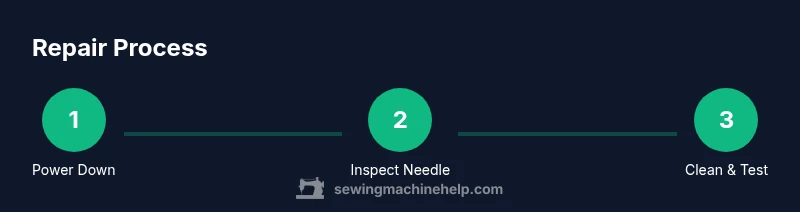
Power down and access bobbin area
Unplug the machine from the power source and remove any covers that guard the bobbin area. This prevents accidental starts and protects you from moving parts. Have a tray ready for small screws.
Tip: Take a quick photo of screw placement before removing components. - 2
Inspect needle and thread path
Remove the needle and check its orientation and condition. Rethread from the spool, following the proper path to the needle. Replace any bent needle with a new one of the correct type for your machine.
Tip: A fresh needle prevents skipped stitches and thread snarls. - 3
Clear lint from bobbin area and feed dogs
Use a soft brush to remove lint from the bobbin case and feed dog area. Wipe surfaces with a lint-free cloth. Re-seat the bobbin ensuring it spins freely in the correct direction.
Tip: Avoid aggressive scrubbing that could dislodge small parts. - 4
Check bobbin winding and seating
Wind the bobbin evenly and verify it sits in the bobbin case as designed. Ensure the thread pulls smoothly and does not snag in the housing.
Tip: If the bobbin is loose, re-wind it to the manufacturer’s spec. - 5
Test and adjust tension gradually
With fabric scraps, run a few straight stitches and observe the top and bobbin thread interaction. Make small top-tension adjustments if needed, testing after each change.
Tip: Document the exact tension settings used for future reference. - 6
Reassemble and perform a final test sew
Put all parts back in their original position. Run a test on scrap fabric with several stitch patterns to confirm uniform performance.
Tip: Keep a reference diagram handy if you had to remove multiple parts. - 7
Document settings and plan next steps
Record the changes you made, the current stitch quality, and any recommendations for ongoing maintenance. Schedule a follow-up check to confirm long-term reliability.
Tip: A simple log helps you track wear and guide future repairs.
Your Questions Answered
Can I repair a Husqvarna Viking sewing machine at home?
Basic fixes like cleaning lint, replacing a worn needle, and correcting a misthreaded path can be done at home. More complex issues such as timing or precision gear calibration should be handled by a professional or authorized service.
Yes for simple issues like lint and needle changes. For timing or complex repairs, consult a professional.
What should I do if stitches are skipped?
First, check the needle, thread path, and tension. Replace the needle if worn and rethread. If the problem persists, review the bobbin and consider professional help if timing or internal components seem involved.
Check needle, thread path, and tension. If unresolved, seek professional help.
How often should I oil my Husqvarna Viking?
Many modern Husqvarna Viking models do not require routine oiling. Always refer to your model’s manual for lubrication guidance, and only use oil where specified.
Follow the manual; most recent models don’t need routine oiling.
Is timing adjustment necessary for every repair?
Timing adjustments are rarely needed for minor faults. If you observe persistent timing issues or mis-timed stitches, seek professional service rather than attempting a DIY timing fix.
Timing fixes are delicate; consult a pro if timing is the issue.
What safety precautions should I take before starting repair?
Always unplug the machine, remove the power cord, and keep small parts in a tray. Work in a well-lit area and avoid wearing loose clothing that could get caught.
Unplug, clear parts, and work in a bright area to stay safe.
Watch Video
The Essentials
- Unplug before any inspection or disassembly
- Keep needle and thread path clean to prevent jams
- Inspect bobbin area for lint and misalignment
- Test on scrap fabric and document changes
- Consult model manual for timing and lubrication guidance