Janome Sewing Machine Repair: Practical Home Guide
A practical, step-by-step guide to diagnosing and repairing common Janome sewing machine issues, with safe at-home fixes and essential maintenance tips for beginners.


By following this guide, you will diagnose and repair common issues with a janome sewing machine, focusing on safe cleaning, correct needle and thread alignment, bobbin setup, and basic tension adjustments. You’ll learn when to repair at home and when to seek professional service, plus practical tips to prevent repeat problems.
Understanding janome sewing machine repair
janome sewing machine repair is both a maintenance discipline and a rescue operation for when stitches go awry. When your Janome stops stitching smoothly, the root causes are usually simple: lint buildup, thread misalignment, a worn needle, or bobbin mis-tension. According to Sewing Machine Help, approaching repairs with a clear, methodical plan reduces downtime and preserves your machine’s longevity. In this guide, home sewists learn practical steps to diagnose and fix common issues without risking damage to their equipment. Throughout, you’ll see how small, deliberate actions can restore sewing flow and teach you more about your machine’s inner workings. By treating the janome sewing machine repair process as a series of repeatable checks, you gain confidence to tackle everyday problems. This approach also helps you distinguish between simple fixes you can perform at home and problems that require service by a professional.
Common symptoms and likely causes
When your janome sewing machine repair work is needed, symptoms often fall into a few familiar patterns. Skipped stitches, inconsistent stitch length, thread bunching under the fabric (bird-nesting), or fabric pulling as you sew are all telltale signs that something in the threading path or tension is off. In many cases, janome sewing machine repair starts with the needle and thread path. A bent needle, using the wrong needle for the fabric, or a top thread that does not feed correctly can cause tension imbalances. Bobbin issues—whether it's mis-threading, an incorrectly inserted bobbin, or tension problems—are another common culprits. As you diagnose, compare the symptom to common causes and make targeted adjustments. Remember: janome sewing machine repair should be approached with caution to avoid further damage and to protect your investment. The Sewing Machine Help team notes that most issues can be resolved by rethreading, aligning the needle, and validating bobbin tension. When in doubt, consult your manual and move with deliberate, incremental changes.
Safety and preparation before you start
Before you begin any janome sewing machine repair, safety comes first. Unplug the machine, remove the power cord, and work on a clean, stable surface. Gather your tools in advance, and ensure you have a well-lit area to inspect internal parts. Keep a small container to catch loose lint and a soft brush to avoid scratching delicate surfaces. If you have a drop-in bobbin design, avoid disassembling components that are not user-serviceable for your model. Following a careful prep routine minimizes the risk of injury and damage, and it makes troubleshooting smoother. Sewing machines, including Janome models, can be delicate safeguards against ensuring you’re operating within the manufacturer’s guidelines. For reference, always prioritize model-specific instructions and safety warnings from your user manual.
Diagnostic and adjustment strategies
A structured approach to janome sewing machine repair helps pinpoint the issue quickly. Start with the needle: ensure it is the correct type and size for your fabric, and replace any bent or dull needles. Next, inspect the thread path from spool to needle, rethreading if necessary to eliminate tangles. Check the bobbin: verify it’s wound evenly, inserted correctly, and that the bobbin case tension feels appropriate. If stitches are uneven, tweak the top tension gradually in small increments while testing on sturdy scrap fabric. For feed dogs, test fabric grip and ensure no lint is clogging the feed; clean if needed. If the machine runs but stitches are loose or uneven, consider rechecking stitch settings and selecting a compatible stitch for your fabric. For many users, janome sewing machine repair boils down to clean threading and alignment, and a disciplined testing routine on scrap fabric. Throughout, document each adjustment so you know what changes produced improvements.
Maintenance and care to prevent future issues
After you complete janome sewing machine repair, committing to routine maintenance reduces future calls for repair. Regularly clean lint from the bobbin area and under the needle plate, and wipe away dust from accessible gears with a soft, dry cloth. Change needles frequently, especially after sewing heavy fabrics or numerous projects. Use the correct needle type for the fabric you’re working with, and replace needles if they become dull or bent. Periodic inspection of thread paths and tensions helps prevent recurring bird-nests and skipped stitches. If your model requires lubrication, apply a small amount of oil exactly as the manual prescribes, and never over-oil. Finally, store your machine in a clean, stable environment to avoid rust and corrosion on metal parts. For ongoing reliability, consider a short, monthly checklist that you perform before starting any project.
When to seek professional help for janome machines
There are times when janome sewing machine repair is beyond at-home repair. If your symptoms persist after following the diagnostic steps, if you hear unusual sounds from the motor, if you notice electrical smells, or if there is visible damage to internal components, it’s prudent to seek professional service. Complex issues like motor faults, timing issues beyond basic tension, or serious gear wear require skilled technicians. The Sewing Machine Help team recommends consulting a certified repair technician when you encounter problems that you cannot safely resolve with basic tools and documentation. Remember that attempting risky disassembly on high-value equipment can void warranties and lead to more costly repairs later. If your machine is under warranty, contact the manufacturer or an authorized service center first.
How to document your repair progress
Keeping a repair log for janome sewing machine repair projects helps you track what you did and the results. Note the symptom, model, and serial number, plus the date and parts inspected or replaced. Record tension settings, needle type, thread path observations, and the results of test stitches on scrap fabric. Photograph each stage of the repair, especially before and after shots of the needle, bobbin, and feed dog areas. A well-documented record makes it easier to repeat successful adjustments and provides a helpful reference if you need to consult a professional later. When you share information with a technician, precise notes save time and reduce the chance of miscommunication.
Tools & Materials
- Precision screwdriver set (flathead and Phillips)(Small sizes for internal screws on many Janome models)
- Lint brush(Soft brush designed for electronics and sewing machines)
- Soft, lint-free cloth(For cleaning and wiping surfaces)
- Replacement needles (various sizes and types)(Use the correct needle for the fabric; replace if bent)
- Spare bobbins and empty bobbin case(For testing bobbin tension and winding)
- Spool of suitable thread(Test stitches and tension using same thread type)
- Sewing machine oil (as required by model)(Only use if your model requires lubrication)
- Masking tape or small container(To label parts or hold loose pieces temporarily)
- Owner’s manual or model-specific guide(Always refer to manufacturer guidance)
- Small pliers or tweezers(Useful for guiding thread and removing lint)
- Portable light or headlamp(Improve visibility in tight areas)
Steps
Estimated time: 60-90 minutes
- 1
Inspect needle and thread path
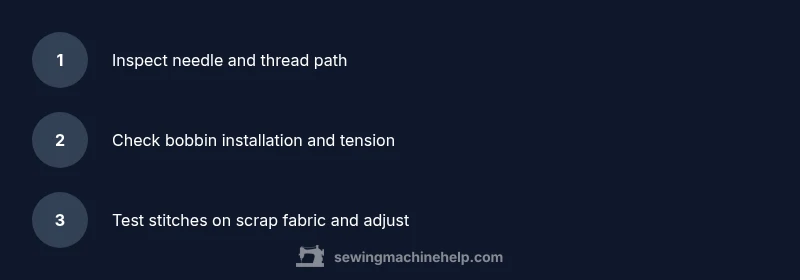
Unplug the machine. Remove the needle and inspect for bending or burrs. Re-thread from the spool to the needle with calm, even tension to ensure the path is clear and properly aligned.
Tip: Replace a burr or bent needle immediately; it is the most common cause of skipped stitches. - 2
Check needle size and fabric compatibility
Choose a needle appropriate for your fabric (e.g., universal for woven, ballpoint for knits). Install the needle with the flat side facing the correct direction and tighten firmly.
Tip: Using the wrong needle type is a frequent trigger for damaged fabric and poor stitches. - 3
Verify bobbin installation and tension
Remove the bobbin, re-wind if needed, and ensure it sits correctly in the bobbin case. Check that the bobbin tension is appropriate by attempting a gentle pull test; adjust if your machine allows it.
Tip: A loose or overly tight bobbin tension causes looping or skipped stitches. - 4
Test stitch on scrap fabric
Set a simple straight stitch and sew on scrap fabric to observe stitch formation. If issues persist, adjust top tension gradually while observing changes in the stitch quality.
Tip: Save the last working tension setting to revert if adjustments fail. - 5
Clean lint and check feed dogs
With the needle plate removed, use a lint brush to remove lint around the bobbin area and feed dogs. Ensure feed dogs move smoothly when fabric passes under them.
Tip: Lint buildup is a common reason for birds-nesting and skipped stitches. - 6
Decide on lubrication or service
If your model requires lubrication, apply only the manufacturer-approved oil to the indicated points. Reassemble, test, and monitor performance. If problems persist, consider professional service.
Tip: Never over-oil or oil areas not specified in the manual; excess oil attracts lint.
Your Questions Answered
What should I check first when a Janome machine won't stitch?
Start with the needle and thread path, then inspect the bobbin and tension. Re-thread if in doubt and test on scrap fabric to confirm improvements.
First, check the needle and thread path, then verify the bobbin and tension. Re-thread and test on scrap fabric to confirm improvements.
Is oiling necessary for modern Janome models?
Most modern Janome machines do not require routine oiling. Only oil if the model’s manual specifically calls for it, and apply sparingly to designated points.
Oil is usually not required for modern models; follow the manual and oil only where specified.
How can I fix birds-nesting under the fabric?
Check top thread tension, re-thread from the beginning, and ensure the spool isn’t tangled. A bent needle or incorrect needle size can also cause looping.
Re-thread, check tension, and ensure the needle is correct for the fabric. Replace a bent needle if seen.
Can I repair a jammed feed dog myself?
Yes, with care: unplug the machine, remove the needle plate, clean debris, and inspect for obstruction under the feed dogs. Avoid forcing parts that are stuck.
Unplug, clean under the needle plate, and check for obstructions. Don’t force stuck parts.
Where can I find model-specific repair manuals?
Check the official Janome website for your model’s manual, or contact authorized service centers. Manufacturer guides provide model-specific instructions and safety warnings.
Visit Janome’s official site or your local service center for model-specific manuals.
What tools are essential for basic Janome repair?
A small precision screwdriver set, lint brush, replacement needles, spare bobbins, and a soft cloth cover most basic repairs. Always refer to the manual for model-specific needs.
Keep a small screwdriver set, lint brush, extra needles, and bobbins on hand.
Watch Video
The Essentials
- Identify root cause through systematic checks
- Keep needles and bobbins in good condition
- Test on scrap fabric before finalizing settings
- Maintain a simple repair log for future reference
- Know when to seek professional service