Troubleshooting Loops and Threads on a Sewing Machine
Learn quick troubleshooting for loops and threads on sewing machines. This guide covers common symptoms, safe fixes, and prevention to keep stitches perfect in 2026.


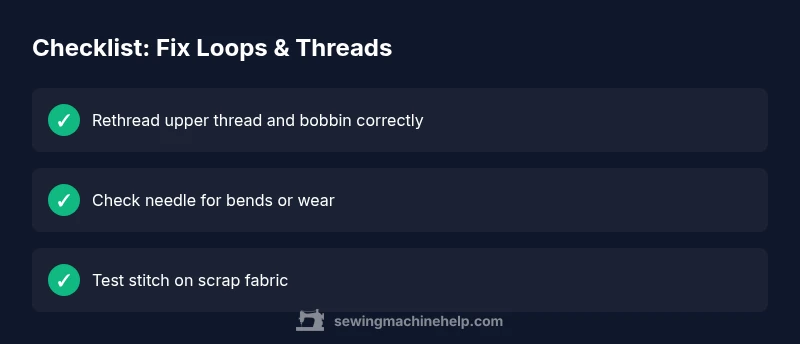
Most loops and thread issues come from threading or tension problems. Start by re-threading the upper thread and bobbin, then verify the needle and bobbin are seated correctly. Run a quick test stitch on scrap fabric, using mid-range tensions. If loops persist, follow the diagnostic flow and step-by-step guidance below to pinpoint the cause and fix safely.
Understanding loops and threads issues on a sewing machine
According to Sewing Machine Help, loops and thread problems are almost always caused by threading errors or tension misadjustments. When loops appear on the underside of your fabric, it’s a signal to inspect the upper thread path, bobbin tension, and needle quality. In many cases, simply re-threading with the correct path and using a fresh needle resolves the issue. Keep scrap fabric handy to test stitches as you adjust. You’ll often find that the simplest fixes—like reseating the needle or re-threading the bobbin—solve the majority of loops and bird-nest problems. Remember, the goal is to restore a balanced stitch that forms clean, uniform rows on both sides of the fabric.
This section lays the groundwork for diagnosing symptoms you’ll encounter and sets expectations for how quickly you can recover from typical thread issues on a home sewing setup.
Common symptoms you can recognize
Loops on the top side of fabric or tight loops on the underside are classic signals of threading or tension trouble. A bird-nest underneath the fabric indicates that the bobbin path or tension isn’t feeding thread evenly. Uneven or skipped stitches can also accompany looping, suggesting needle or thread size mismatches. If you notice frayed threads at the needle groove or frayed bobbin threads, stop sewing and reassess the threading path and needle integrity. By recognizing these patterns early, you prevent fabric damage and improve your chances of a quick fix.
Quick checks you should perform first
Before diving into deeper adjustments, perform these quick checks:
- Re-thread both upper thread and bobbin, following the correct path in your model’s manual.
- Inspect the needle: remove and replace if bent, dull, or the wrong type for your fabric.
- Winding and inserting the bobbin correctly is essential; ensure it spins clockwise (or as your manual dictates) and sits flat against the plate.
- Test on scrap fabric with mid-range tension settings; note whether loops appear on top or bottom and adjust accordingly.
- Make sure your presser foot is properly engaged and the feed dogs aren’t clogged with lint or fabric fibers.
If you still see looping after these checks, you’re ready to move to a more precise diagnostic flow.
Why tension and threading matter for loops
Tension and threading are the two levers you control when shaping stitch quality. The upper thread must travel smoothly through guides and discs without snagging, while the bobbin thread should feed evenly from the bobbin case. When either path is out of balance, you’ll see loops, uneven stitches, or bird-nests. Different fabrics demand different settings, so be prepared to adjust gradually and test after each change. Understanding the relationship between upper and lower thread tension helps you predict how a given adjustment will affect stitch formation.
Diagnostic flow overview: symptom → diagnosis → solution
This section maps common symptoms to plausible causes and practical fixes. Start with the simplest explanations—threading errors or bent needles—and then progress to tension adjustments and bobbin concerns if the symptoms persist. The diagnostic flow encourages you to verify each layer—thread path, needle condition, fabric compatibility, and tension balance—before moving to more invasive steps like adjusting the machine’s internal discs. Always test after each change to confirm your fix before continuing.
STEP-BY-STEP: Most common fix (re-threading and needle check)
- Power off and unplug the machine; remove the needle plate to access the needle and see the threading path clearly. 2) Remove the current needle and inspect for bends or burrs; replace with a freshly sized needle for the fabric you’re using. 3) Rethread the upper thread, ensuring it seats properly in the thread path and tension discs. 4) Rethread or replace the bobbin, making sure it’s seated correctly in the bobbin case and spins in the correct direction. 5) Reassemble, reinsert the needle, and set tension to mid-range. 6) Run a test stitch on scrap fabric; adjust tension if needed and repeat until stitches are balanced.
Tip: Work slowly and test frequently to avoid compounding the issue.
Safety and common mistakes to avoid
Never sew with a bent needle or a needle that’s not correctly installed. Do not force fabric through the machine when stitching; this can bend needles or damage the feed mechanism. Always unplug before maintenance and avoid oiling the bobbin area unless your model specifies it. If you hear grinding or see sparking, stop immediately and consult a professional.
Prevention and maintenance to avoid future loops
Develop a quick maintenance routine: clean lint from the bobbin area after every few projects, replace needles after every 8–12 hours of sewing or when switching fabric types, and store with thread spools correctly wound to prevent tension shifts. Use manufacturer-recommended thread weights and needles for each fabric. Keeping the machine clean and properly threaded reduces the likelihood of loops and thread issues across multiple projects.
When to seek professional help and a quick maintenance plan
If you’ve verified threading, needle condition, and basic tension, but loops persist across fabrics and different threads, it’s time to seek service. A professional can check for timing misalignment, worn gears, or a damaged hook that isn’t adjustable at home. In the meantime, keep your maintenance routine active: regularly clean the bobbin area, replace needles, and test stitches on scraps to detect early signs of wear.
Steps
Estimated time: 30-45 minutes
- 1
Power off and prep
Unplug the machine and remove the accessory foot to access threading areas. Gather fresh needle, thread, and a scrap fabric. Set up good lighting so you can see the threading path clearly.
Tip: Always unplug before any adjustment to avoid shocks or accidental starts. - 2
Inspect and replace needle
Remove the current needle and inspect for bending or burrs. Replace with a fresh needle of the correct type and size for your fabric. Install with the flat side facing the eye in most machines.
Tip: A bent needle is a frequent cause of loops; replace at the first sign of wear. - 3
Rethread upper thread
Follow the exact path for your model, ensuring the thread sits fully in each guide and the tension discs engage properly. Do not skip any threading entry points.
Tip: Slow, deliberate threading prevents mis-seated threads that cause tension issues. - 4
Rethread the bobbin
Wind a fresh bobbin if needed and load it into the bobbin case with the correct orientation. Ensure it spins smoothly in the indicated direction.
Tip: Bobbin tension can be a hidden culprit; a fresh, correctly loaded bobbin saves many headaches. - 5
Set mid-range tension and test
Return both upper and lower tensions to mid-range. Sew a short line on scrap fabric to observe stitch balance. Adjust gradually if loops persist.
Tip: Document your tension settings for future reference with similar fabrics. - 6
Evaluate fabric and repeat test
Try a similar sewing task on the actual fabric. If loops appear again, re-check needle size, fabric compatibility, and consider differential feed if available.
Tip: Sometimes a fabric pesters a specific setting; test other stitches to compare performance.
Diagnosis: Persistent loops or bird-nest stitches after threading and needle check
Possible Causes
- highIncorrect upper thread path or bobbin winding
- highNeedle size incompatible with fabric or bent needle
- mediumTension settings out of balance (upper or lower)
- lowThread being caught by presser foot or feed dogs
Fixes
- easyRethread upper thread, ensure thread sits in tension discs, and reinsert bobbin correctly
- easyReplace needle with correct size and type for fabric
- easyReset tension to mid-range and re-test; adjust for fabric type
- easyCheck presser foot and feed dogs for lint or snagging; clear debris
Your Questions Answered
What are the most common causes of loops in sewing machine stitches?
Most loops come from mis-threading or incorrect tension. Check the upper thread path, needle seating, and bobbin tension, then re-test on scrap fabric.
Loops usually come from mis-threading or tension issues. Re-thread, check the needle, and test on scrap fabric.
How do I fix loops caused by upper thread mis-threading?
Unthread completely, re-thread following the path exactly, and ensure the thread sits in the tension discs. Test on scrap fabric afterward.
Re-thread the upper thread along the exact path and test on scrap fabric.
Can a bent needle cause loops?
Yes. A bent or dull needle can create loops and skipped stitches. Replace with a fresh needle appropriate for your fabric type.
A bent needle can cause loops; replace it and test again.
Is tension adjustment always the fix?
Tension affects loops but isn’t always the root cause. Start with threading and needle checks, then adjust upper and lower tension gradually.
Tension helps, but start with threading and needles first.
Should I oil my machine for thread issues?
Oiling is model-specific; most modern machines don’t require oiling as a fix for loops. If you oil, use manufacturer-approved oil and follow timing guidelines.
Oil is not a universal fix; follow your manual and use approved oil if needed.
When should I replace the bobbin?
Replace the bobbin if it’s warped, poorly wound, or causing inconsistent feed. Ensure proper insertion direction and winding in the correct direction.
If the bobbin is warped or wound poorly, replace it and re-test.
Watch Video
The Essentials
- Re-thread upper and bobbin first.
- Check needle condition and size for fabric.
- Balance tension; test on scraps.
- Clean lint from bobbin area regularly.
- Prevent loops with proactive maintenance.