Repair Bernina Sewing Machine: A Practical How-To for Home Sewists
Learn practical, beginner-friendly steps to repair your Bernina sewing machine. From diagnostics to maintenance, this guide covers safety, common issues, and when to call a pro. It emphasizes hands-on techniques and routine upkeep tailored for home sewists.


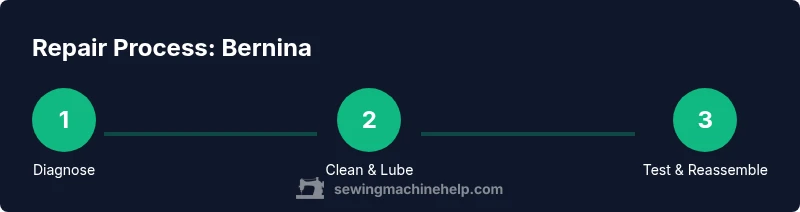
To repair a Bernina sewing machine, start with a safety check, unplug the power, and inspect common trouble spots such as the needle, bobbin, feed dog, and tension. Clean dust, oil moving parts per the manual, replace worn parts, and test stitch quality. If the issue persists, consult a service professional.
Why repair bernina sewing machine matters
According to Sewing Machine Help, a well-maintained Bernina sewing machine delivers consistent stitch quality and longer service life. Home sewists rely on Bernina’s precision and reliability, which makes timely maintenance essential. When you recognize early warning signs—unusual noises, skipped stitches, or thread jams—you can often address the problem before it escalates. Regular inspection of needle alignment, bobbin placement, and tension helps prevent fabric damage and reduces the risk of more costly repairs. This guide emphasizes practical, hands-on techniques that fit a home workshop, with steps you can follow safely, even if you’re just starting out. The goal is to empower you to make small, confident fixes and schedule professional service only when needed, preserving your machine’s performance for years.
Common Bernina issues and quick checks
Bernina machines are renowned for smooth stitching, but they aren’t immune to wear. Common symptoms include thread bunching, skipped stitches, or uneven tension. Quick checks can often pinpoint the culprit:
- Thread path obstructions: lint or stray fibers can disrupt the route. Inspect from spool to needle.
- Needle problems: bent or dull needles cause skipped stitches or shredded threads.
- Bobbin misalignment: improper bobbin winding or placement leads to inconsistent stitches.
- Tension mismatches: upper and lower thread tension out of sync produces loops on the fabric.
- Feed dog issues: if fabric feeds unevenly, inspect feed dogs and throat plate. If symptoms persist after these checks, consult the owner’s manual for model-specific guidance, and consider professional service for deeper problems.
Essential tools and safety for Bernina maintenance
Before you begin any repair task, gather the right tools and follow safety basics. You’ll typically need a small screwdriver set, a lint brush, a soft cloth, sewing machine oil, spare needles, and a clean workspace. Always unplug the machine and, if applicable, remove the foot pedal from the power strip to avoid accidental activation. Use the manufacturer’s manual to locate oiling points; avoid over-oiling and never oil the drive belt or motor. Keep small screws in a magnetic tray to prevent loss. If your model requires servicing beyond basic maintenance, prepare to contact a certified technician and schedule a service window when you won’t need the machine for a few days.
Diagnosis workflow: spotting the root cause
Effective repair starts with a clear diagnosis. Begin by reproducing the fault on a scrap fabric to observe when it occurs. Is the issue tied to a specific stitch, fabric type, or needle size? Check the thread path for tangles and ensure the needle is correctly installed. If jams occur, identify whether they originate in the needle area or the bobbin case. Document symptoms and steps you’ve taken so you can relay them to a technician if needed. This structured approach minimizes unnecessary part replacements and helps keep repairs economical and efficient.
Cleaning, oiling, and basic maintenance
Cleaning and light lubrication are the most common maintenance tasks you can perform safely at home. Start by removing lint from the bobbin area using a soft brush. Wipe surfaces with a lint-free cloth; avoid using solvents on plastic parts. Apply 1–2 drops of sewing machine oil to the recommended points, typically the moving joints and shuttle race area, as described in the manual. Allow a few minutes for any oil to distribute before testing. Do not over-oil, and never oil the belt, electrical components, or motor. After servicing, run a few stitches on scrap fabric to ensure smooth operation.
Troubleshooting common stitch problems
If stitches are uneven or loopy, recheck thread tension and ensure the correct thread type for your fabric. Re-thread the machine from start to finish to rule out a thread path issue. Ensure the needle is appropriate for the fabric and correctly installed with the flat side facing the back. If bobbin tension feels off, re-wind and reinsert the bobbin according to the manual. For persistent issues, test on multiple fabrics and adjust tension gradually, keeping a log of what you changed. Record the results to help identify the root cause more quickly in future maintenance.
When to replace parts vs. repair
Not every problem warrants a full part replacement. If wear is isolated to a single component (e.g., a bent needle bar or a frayed belt) and the part is still available, replacing it can restore performance without a full overhaul. For older machines or multiple recurring issues, the cost-benefit analysis may favor a professional rebuild or replacement of essential assemblies. Keep your model’s compatibility information handy and rely on trusted sources to confirm part availability. If you’re unsure, a certified technician can provide a written assessment and parts recommendation.
Preventive care and service schedule
Prevention beats repair, especially for Bernina machines that rely on precision components. Create a maintenance calendar: clean lint weekly for high-use machines, oil every 3–6 months depending on usage, and schedule professional servicing annually or if you notice performance declines. Store your machine in a dust-free environment and use a protective cover when not in use. Keeping a small log of maintenance activities helps you track wear and plan future service before problems escalate. This routine care supports smoother operation and longer machine life.
Tools & Materials
- Owner's manual(Model-specific guidance for oiling points and disassembly.)
- Sewing machine oil(Only use tiny amounts; apply to moving joints per manual.)
- Lint brush(Use in bobbin area and under needle plate.)
- Soft cloth(Lint-free for wiping surfaces.)
- Small screwdriver set(Phillips and flat-head for minor disassembly.)
- Spare needles(Choose size appropriate for fabric and Bernina model.)
- Magnetic parts tray(Keeps small screws organized.)
- Screwdriver/hex keys (model-specific)(Only if model requires specialized tools.)
Steps
Estimated time: 60-90 minutes
- 1
Power down and unplug
Ensure the machine is unplugged before any inspection. This prevents accidental activation and protects you from electric shock. If you must work near the plug, switch off the outlet first and keep the power cord away from your work surface.
Tip: Use a clear label to remind yourself to reconnect power only after inspection is complete. - 2
Open needle plate and remove bobbin case
Carefully remove the needle plate and take out the bobbin case to inspect for lint, thread pieces, or misalignment. Use a small screwdriver if needed; handle parts gently to avoid bending the shuttle or the case.
Tip: Place removed pieces in a tray to prevent loss during cleaning. - 3
Inspect needle and thread path
Check that the needle is straight, correctly inserted, and not bent. Re-thread the upper path from spool to needle to ensure there are no snags. Look for thread tails that may cause jams during sewing.
Tip: Change to a fresh needle if you detect any burrs or nicks. - 4
Clean lint from bobbin area and throat plate
Use a lint brush and a small vacuum or blown air (if your model allows) to remove accumulated lint. Ensure the shuttle race area is clear before reassembling.
Tip: Wipe with a lightly damp cloth if needed, then dry before oiling. - 5
Oil moving parts as specified
Apply 1–2 drops of sewing machine oil to the indicated points—typically joints and the shuttle race area—as described in your manual. Allow a minute for the oil to distribute.
Tip: Avoid over-oiling; excess oil can attract more lint. - 6
Test stitch on scrap fabric
Reassemble the bobbin and needle plate, thread with scrap fabric, and run a few stitches. Observe for smooth feeding, stable tension, and no unusual noise.
Tip: If the machine stalls or sounds rough, stop and recheck alignment. - 7
Reassemble fully and perform a project test
Reinstall all components, restore power, and test on a small project. Document any residual issues and adjust tension gradually as needed.
Tip: Record adjustments for future reference and warranty considerations. - 8
If problem persists, seek professional service
Some issues require a professional assessment, especially when timing, drive belts, or mechanical wear is involved. Schedule service with an authorized technician and provide symptom notes.
Tip: Always obtain a written estimate before major repairs.
Your Questions Answered
What is the most common Bernina sewing machine problem?
Thread tension issues, bobbin misalignment, and needle problems are the most frequent causes of stitching faults. Start with re-threading, checking the needle, and ensuring proper bobbin placement before pursuing deeper repairs.
Common Bernina problems are usually tension or bobbin-related. Start by re-threading and checking the needle and bobbin position.
Can I service a Bernina sewing machine myself?
Many routine maintenance tasks can be performed at home, including cleaning and lubrication following the owner's manual. More involved repairs, like timing or motor work, should be handled by a professional.
You can do basic cleaning and lubrication yourself, but complex repairs are best left to a professional.
Do Bernina machines require oiling?
Oil is required only at points specified in the manual. Not all Bernina models require routine oiling, so always follow model-specific guidance to avoid damage.
Oil only where the manual says, and only in the indicated spots.
How long does a Bernina repair typically take?
Repair duration varies with the issue and technician availability. A standard diagnostic and minor maintenance can take a few hours, while major repairs may require several days.
Timing depends on the problem and technician availability; expect a few hours to several days.
Where can I find authorized Bernina service?
Visit the Bernina official website to locate authorized service centers or an approved technician near you. They can assess timing, availability, and provide parts-specific guidance.
Check Bernina's official service locator for authorized technicians near you.
Should I replace parts or repair when wear is present?
If wear is extensive or multiple components show fatigue, replacement parts or a service rebuild may be more cost-effective than repeated small fixes. A professional assessment helps decide.
Consider replacement when multiple components show wear; a pro can guide you.
Watch Video
The Essentials
- Diagnose before replacing parts
- Follow the manual for oiling points
- Test on scrap fabric after any maintenance
- Keep a maintenance log for your Bernina
- Seek professional help for timing and major wear