What Causes Sewing Machine Needle to Bend? Urgent Troubleshooting Guide
A practical, urgent guide to diagnosing and fixing bent sewing machine needles. Learn common causes, quick fixes, and prevention tips to get back to sewing smoothly.


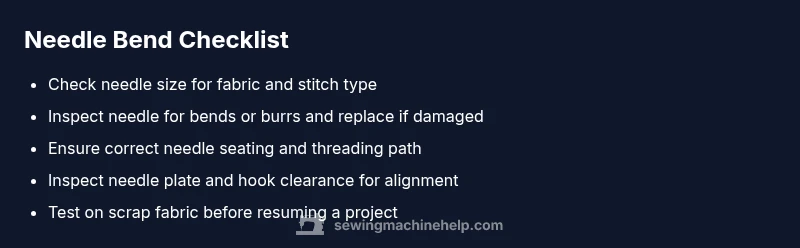
Most bent needles are caused by incorrect needle size for the fabric, a damaged needle, or the needle hitting a hard object such as a misaligned needle plate. To fix quickly: stop sewing, replace the needle with the correct type and size, rethread, and test on scrap fabric. If it bends again, check needle gap, presser foot, and bobbin area for alignment.
Common Causes of a Bent Sewing Machine Needle
A bent needle is a clear signal that something in your setup isn’t quite right. When a needle loses its straight profile, stitches can skip, fabric can snag, and the machine may emit unusual noises. According to Sewing Machine Help, the most frequent culprits are using the wrong needle size for the fabric, a dull or previously bent needle, or a collision with a hard object like a misaligned needle plate or a stray pin. Before diving into complex diagnostics, confirm the basics: replace the needle with a fresh one, ensure it is the correct type and size, rethread the machine, and run a test on scrap fabric. If the needle still bends, broaden your inspection to needle alignment, needle clamp seating, and hook clearance. This article unpacks the common causes, how to verify them, and the safest fixes you can perform at home. Regular maintenance and gentle handling will also go a long way toward preventing future bends. The Sewing Machine Help team has observed these issues across many home setups, and most fixes are straightforward when you approach them step by step.
As you search for an answer to "what causes sewing machine needle to bend," start with the obvious: is the needle the right one for your fabric? If you’re sewing denim or multiple fabric layers, a thicker needle is usually required, not a standard universal needle. Using a needle that’s too small will bend easily when it meets thickness or resistance. If you’ve recently switched fabrics and the needle worked fine before, recheck that the needle type matches the fabric’s fiber (cotton, synthetic, wool, knit). Small changes in fabric type or stitch length can also influence needle stress and bending.
Finally, do a quick hardware check. A bent needle can result from improper needle seating in the clamp or from a damaged faceplate. Inspect the needle groove for burrs and ensure the needle is facing the correct direction and fully inserted. When you can’t find the cause in the needle alone, inspect the needle plate for burrs or obstructions, and verify the hook has ample clearance to swing without contacting the needle. This careful, layered approach helps you rapidly identify the root cause and prevent further damage.
tip
Always unplug before inspecting or changing needles to avoid accidental starts.
Steps
Estimated time: 15-25 minutes
- 1
Power off and remove the needle
Unplug the machine and remove the presser foot. Take out the current needle and inspect it for any bends or burrs. If the needle is damaged, replace it with a fresh one of the correct type.
Tip: Always handle needles with care and avoid forcing them into the clamp. - 2
Check the needle type and size against fabric
Verify you selected the needle appropriate for your fabric. For thick denims or multiple layers, use a needle designed for heavy fabrics; for knits, choose a ballpoint or jersey needle. If unsure, consult the fabric guidelines or Sewing Machine Help reference.
Tip: When in doubt, err on the side of a slightly larger needle for stability. - 3
Re-insert and re-thread correctly
Insert the needle with the flat side facing the correct direction and snug the clamp. Rethread the machine from the top and bobbin, ensuring there are no thread catches or tangle points.
Tip: Double-check the thread path against the threading diagram in your manual. - 4
Test on scrap fabric
Run a short test stitch on scrap fabric to observe needle behavior. Listen for unusual sounds or skipping stitches. If bending recurs, move to checking the needle plate clearance.
Tip: Test at a slow speed to observe any misbehavior before sewing the project. - 5
Inspect the needle plate and hook clearance
Look for burrs or nicks on the needle plate and ensure the hook has enough clearance to pass without hitting the needle. If you see wear or misalignment, seek professional timing check.
Tip: Don’t force thick fabrics through if you notice contact between needle and plate. - 6
Consider professional timing check if necessary
If the needle continues to bend after all checks, the timing between the hook and needle may be off. A timing adjustment requires a service professional to avoid further damage.
Tip: Timely service can prevent bigger, costlier repairs.
Diagnosis: Needle bends during stitching on plain fabrics or medium weight fabrics
Possible Causes
- highUsing an incorrect needle size for the fabric type
- highNeedle is dull or bent from prior project
- mediumNeedle installed backwards or not fully seated in the needle clamp
- mediumThread tension too high or incorrectly threaded causing needle to flex and bend
- lowDecorative stitches or thick seams causing needle to strike the hook/plate
Fixes
- easyReplace with the correct diameter and type needle for the fabric
- easyInspect needle for curvature; discard if bent
- easyReseat needle fully and ensure it faces the correct direction
- easyRelieve tension and re-thread the machine, ensuring proper path
- hardCheck the needle plate, hook clearance, and timing; consult a pro if misaligned
Your Questions Answered
What is the most common reason a sewing machine needle bends?
The most common cause is using an inappropriate needle size or type for the fabric. A dull or bent needle can also bend under pressure. Always verify needle compatibility and inspect for damage before sewing.
Typically, a wrong needle for the fabric or a bent needle causes bending. Check compatibility and replace if damaged.
Can sewing on thick fabrics bend the needle?
Yes. Thick fabrics or multiple layers increase resistance, which can bend a needle if the needle isn’t rated for the fabric. Switch to a sturdier needle and slow the stitch rate.
Thick fabrics can bend a needle if the needle isn’t strong enough or the stitch is too aggressive.
Should I use metal or titanium needles for heavy fabrics?
For heavy fabrics, choose a needle designed for heavy work, typically steel with a strong point. Titanium needles exist but are not necessary for most home projects. Match the needle to the fabric and thread.
Use the right strength needle for the fabric; titanium isn’t always required.
Is it safe to sew with a bent needle?
No. Sewing with a bent needle can damage the fabric and needle plate and may cause more bending. Stop, replace the needle, and re-test before continuing.
It’s not safe to continue with a bent needle—replace it and test first.
How often should I replace a needle?
Replace a needle whenever it shows bending, dullness, or after sewing any difficult project. Regular checks are key to consistent stitching.
Replace the needle whenever you notice bending or dullness, and check it after tough projects.
Watch Video
The Essentials
- Replace with correct needle size/type
- Inspect needle and alignment before sewing
- Test on scrap fabric after changes
- Avoid forcing fabric through the machine
- Seek professional timing check if needed