How to Tell If Sewing Machine Needle Is Bent
Learn how to tell if sewing machine needle is bent with clear signs, visual checks, and a safe replacement process. This practical guide helps beginners avoid skipped stitches and fabric snags with step-by-step inspections and testing.


By the end of this guide you’ll know how to tell if sewing machine needle is bent and the safe steps to inspect and replace it. You’ll need a replacement needle, a small screwdriver, good lighting, and scrap fabric for testing. This process helps prevent skipped stitches and fabric snags.
Why needle bending happens and why it matters
A sewing machine needle can become bent from hitting a pin, snagging on a tough seam, or forcing the needle through fabric that’s thicker than the machine’s clearance. Even a slight bend can alter needle alignment, causing skipped stitches, bird-nesting, or fabric snags. For home sewists, understanding why a needle bends helps you prevent future damage and keeps projects moving smoothly. Regular checks, especially after sewing dense fabrics or stubborn seams, reduce downtime and extend the life of your machine. Remember: the goal is reliable stitches, not forcing the needle through resistance.
According to Sewing Machine Help, identifying a bent needle early saves fabric waste and costly repairs. Small visual cues on the shaft or the tip can reveal problems before you notice performance issues. This guide focuses on practical, repeatable steps that work for most household machines while avoiding unnecessary disassembly.
Signs that indicate a bent needle
Look for a combination of symptoms rather than a single clue. Common indicators include a visible bend at the needle tip or shaft, inconsistent stitch formation, fabric snagging, or abnormal needle wobble during operation. Skipped stitches on the top or bottom fabric layer, thread bunching, or a louder or erratic sewing sound can also point to a bent needle. If you notice any of these signs, stop sewing and inspect the needle before continuing. Early detection helps prevent fabric damage and machine wear.
How to visually inspect the needle safely
Begin with the machine powered off and unplugged. Remove the needle to inspect it up close using a bright light and, if possible, a magnifying glass. Check the tip for any flattening, burrs, or a bend, and inspect the shaft for any noticeable crookedness. Compare the needle with a new, undamaged needle to spot subtle bends. Even tiny deformations can affect stitch quality, especially when sewing with delicate fabrics. Be sure to handle the needle carefully to avoid accidental bending during inspection.
When to replace vs. bend suspicion
If you detect a bend, replace the needle immediately. If you’re unsure, install a fresh needle and run a short test on scrap fabric. If the test stitches consistently, the old needle may be the culprit; if issues persist, other factors such as thread tension or feed dogs could be involved. Replacing with a new needle also gives you a known baseline for tension and alignment, reducing further guesswork.
How needle bend affects different fabrics and stitches
Dense fabrics, thick seams, or non-stretch materials place more stress on the needle. A bent needle can cause skipped stitches or fabric damage more quickly with tougher fabrics. Conversely, delicate fabrics will show issues sooner due to smaller needle clearances. Understanding the fabric type helps you decide when to replace the needle and how carefully to test new settings.
Safe testing practices after inspection
Always test on scrap fabric before resuming a project. Install a fresh needle and set a slow stitch length to observe how stitches form. If tension seems off, adjust conservatively and re-test. Avoid sewing on the actual project until you confirm consistent stitch quality. Document any changes you make so future projects start from a known baseline.
Common mistakes to avoid during inspection
Don’t rush the inspection process or force the needle through hardened material to test resilience. Avoid using damaged or dull needles; they will worsen fabric damage and machine wear. Never run the machine with a bent needle in place, as this can cause the needle to break and harm the needle plate or hook system. Stick to proper lighting, gentle handling, and slow testing when in doubt.
Quick maintenance tips after inspection
After inspection or replacement, re-thread carefully and test on scrap fabric across different stitch types. Keep a small needle kit handy for quick replacements, and schedule regular checks, especially after long sewing sessions or switching fabric types. Maintaining proper needle hygiene and alignment reduces ongoing repairs and keeps projects running smoothly.
Tools & Materials
- Replacement sewing needle (same system)(Choose the correct needle type and size for the fabric. Never reuse a bent needle.)
- Small screwdriver or needle clamp driver(Used to loosen the needle clamp screw.)
- Good lighting(Bright, shadow-free light helps spot bends and burrs.)
- Scrap fabric for testing(Most tests should be performed on scrap before resuming a project.)
- Magnifying glass (optional)(Helpful for spotting small burrs or micro-bends.)
- Lint brush or soft cloth (optional)(Used to remove lint and dust around the needle area.)
Steps
Estimated time: 15-25 minutes
- 1
Power off and unplug
Turn off the machine and unplug it from the wall. Remove the presser foot and any plates if needed to access the needle clamp.
Tip: Work in a well-lit area and keep screws in a small dish to avoid loss. - 2
Remove the needle
Loosen the needle clamp screw and carefully pull the needle straight out. Do not twist or force it.
Tip: Handle the needle by the flat side to avoid contact with the tip. - 3
Inspect the needle visually
Hold the needle up to bright light and look for bends, burrs, or nicks on the tip and shaft.
Tip: If in doubt, compare with a new needle to highlight subtle bends. - 4
Check alignment in the clamp
Place a straight replacement needle in the clamp to confirm straightness and proper seating. Ensure the flat side faces the correct direction per your machine.
Tip: If the needle sits crooked, discard and use a new one. - 5
Test with scrap fabric
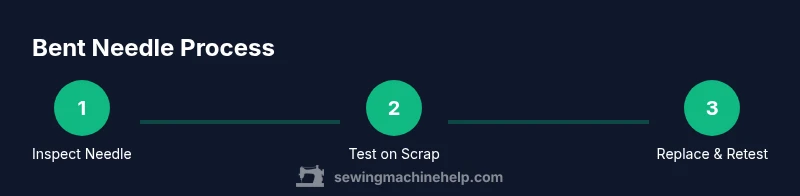
Install a fresh needle, re-thread, and sew a short sample on scrap fabric at a slow speed. Look for even stitches.
Tip: Watch for top and bottom stitch balance; discrepancies indicate tension or alignment issues. - 6
Re-test and finalize
If stitches are clean, reset your machine settings and begin the real project. If issues persist, review thread path and needle size.
Tip: Keep the old needle for comparison if needed and note any changes you made.
Your Questions Answered
What causes a sewing machine needle to bend?
Needles bend when they strike hard resistance, hit pins, or sew through fabric thicker than the machine’s clearance. Incorrect needle size or misalignment can also contribute.
Needles bend when they strike hard resistance or wrong-sized fabric; misalignment can also cause bending.
Can I sew with a bent needle?
No. A bent needle can damage fabric, thread, and the machine. Stop immediately and replace the needle.
Do not sew with a bent needle; replace it to protect your machine.
How do I tell if a needle is bent without removing it?
Visual inspection with good light can reveal obvious bends, but removing the needle gives the clearest view. Look for crooked shaft or tipped deformities.
A visual check with good light helps, but removing it gives the clearest view.
What should I do after replacing a bent needle?
Rethread, test on scrap fabric, and adjust tension if needed. If issues persist, reassess hooks, bobbin, and thread path.
Rethread, test on scrap, and check tension after replacing.
How often should I replace needles?
Replace when dull, bent, or after switching fabric types. Frequent projects or heavy use benefit from regular needle changes.
Replace when dull or bent, especially after heavy use.
Watch Video
The Essentials
- Inspect the needle tip for bends or burrs.
- Replace bent needles immediately to prevent damage.
- Test on scrap fabric before resuming real sewing.
- Use proper lighting and tools during inspection.