How to Fix a Sewing Machine Needle: A Practical Guide
Learn how to fix a sewing machine needle with clear, beginner-friendly steps. From identifying bent or dull needles to proper installation and testing, this guide helps home sewists ensure smooth, stitch-perfect results.


Learn how to fix a sewing machine needle quickly and safely. This guide explains how to identify bent, dull, or incompatible needles, choose the right type for your fabric, and install it correctly to prevent skipped stitches and jams. You’ll also learn testing steps and basic maintenance to keep sewing smooth.
Understanding Why Sewing Machine Needles Fail
Needles fail for a variety of reasons, from fabric type to wear and improper installation. When a needle is bent, dull, or the wrong size for the fabric, you’ll see skipped stitches, snags, or noisy sewing. The goal of this section is to help you diagnose the issue quickly and safely so you can fix the problem without damaging your machine. As you learn how to fix sewing machine needle problems, you’ll gain confidence in choosing the right needle, installing it correctly, and performing quick tests to confirm everything is working smoothly. According to Sewing Machine Help, many needle-related issues start with an incorrect needle type or an improperly seated needle, so careful checks pay off right away. This section sets the stage for practical steps you can take at home, using common tools and supplies you likely already own.
By the end of this portion, you should be able to spot telltale signs of needle trouble, such as fabric snags near the needle, uneven stitches, or thread fraying at the needle eye. If you’re a beginner, you’ll appreciate how small changes—like swapping to a ballpoint needle for knit fabrics or aligning the needle correctly—can dramatically improve results. Remember: safety first. Always unplug the machine when inspecting or changing a needle, and work in a well-lit area to avoid mistakes.
Choosing the Right Needle for Your Fabric
The needle you choose matters as much as the machine settings. A universal needle works for many woven fabrics, but knits typically require ballpoint or stretch needles to avoid snagging. For leather or heavy fabrics, a stronger, sharper needle is often necessary, while delicate silks deserve a finer needle to prevent skipped stitches. When deciding how to fix sewing machine needle issues, match size and type to the fabric weight and fiber. If in doubt, start with a medium size and adjust after a quick test.
Narrow needles are less invasive on fine fabrics, but they may break on thick seams. Broadly, look for a flat shank with the larger groove, and ensure the needle eye accommodates your thread. Always consult your machine’s manual for compatible needle types and sizes. The goal is to minimize fabric damage and thread breakage while achieving clean, even stitches. The Sewing Machine Help team emphasizes that compatibility and correct installation are the foundations of successful sewing projects.
Diagnosing Common Needle Problems
Diagnosing needle problems involves a few quick checks before you start swapping parts. First, inspect the needle visually for bends, burrs, or a dull tip. A bent needle can hit the needle plate and damage the machine or fabric; a dull needle can cause skipped stitches and pulled thread. Next, verify the needle is the correct type for your fabric and that the needle is fully seated in the clamp with the flat side oriented correctly (if your model requires it). If you notice fabric snags, thread breaks, or uneven stitches, it’s often a sign that the needle is past its prime or mismatched to the fabric. The quick fix is usually replacing the needle and rethreading.
Another common cause is incorrect threading. Re-thread both top thread and bobbin path, making sure there are no runs, loops, or tangles. If the needle is installed properly but you still have issues, check whether the bobbin is wound correctly and the bobbin case is clean. The goal is to isolate the needle as the problem source and then confirm with a test stitch on scrap fabric.
Step-by-Step: Replace and Install the Needle (Overview)
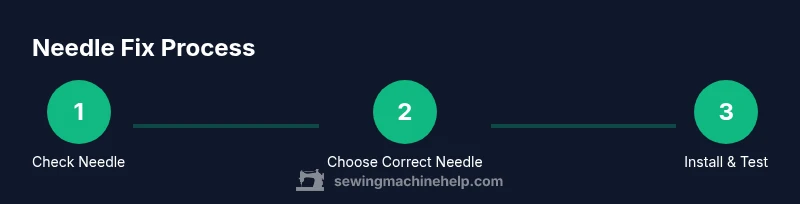
This section provides an overview of the replacement process. It covers how to choose the right needle, how to remove the old needle, how to insert the new needle with proper orientation, and how to rethread the machine for a test run. It’s designed to be read before you perform the steps so you understand the purpose behind each action. You’ll also find tips for testing and troubleshooting if stitches aren’t perfect on the first try. The actual step-by-step instructions are in the dedicated STEP-BY-STEP block, but this overview helps you know what to expect and why each action matters.
By understanding the rationale, you can avoid common mistakes, like forcing a needle or using an eye that’s too small for your thread. A careful approach reduces the risk of needle damage and improves stitch quality from the first test.
Testing and Troubleshooting After Replacement
After installing a new needle, it’s essential to test on scrap fabric and observe the results. Start with a straight stitch on a stable fabric to verify the needle doesn’t hit the plate and that the stitches form evenly on both the top and bottom. If you see skipped stitches, thread bunching, or irregular tension, recheck needle seating, threading path, and fabric compatibility. Small adjustments—like re-threading, small needle-size tweaks, or minor tension changes—can make a big difference. If issues persist, repeat the steps from visual inspection to re-threading, and consider trying a different needle type for the specific fabric you’re using.
This section also covers more advanced troubleshooting, such as inspecting the bobbin case for burrs or burrs inside the needle opening, and ensuring the needle’s orientation matches your machine’s design. The aim is to help you quickly identify the source of the problem and apply a safe, effective fix.
Maintenance Habits to Prevent Needle Issues
Preventing needle problems starts with routine care. Clean lint and dust from the bobbin area after sewing, store needles in a protective case, and replace needles regularly—especially after sewing thick or dense materials. Keep the needle clean and sharp by using light oil only if your manual allows it, and avoid using oil or lubricants not approved for your machine. Regularly check needle clamps and screws for tightness, and re-seat the needle every time you change fabric types or after heavy chores. A simple habit like changing needles at the start of a new project saves you time and frustration mid-sewing.
Finally, always refer to your model’s guide for any model-specific steps. Small differences in needle-ejection mechanisms or clamp designs mean a one-size-fits-all approach can lead to mistakes. By following a routine of inspection, correct needle choice, proper installation, and careful testing, you’ll keep your machine running smoothly and your projects moving forward.
Tools & Materials
- Replacement sewing machine needle (universal 130/705H, size appropriate for fabric)(Check manufacturer recommendations in the user manual)
- Lint-free cloth(Wipe needle plate area and lint from the bobbin area)
- Thread snips(Trim threads and prevent snagging during needle changes)
- Tweezers or small screwdriver (model-specific)(Only if recommended by your machine's manual)
- Needle extraction tool (optional)(Use only if your model requires it)
- Magnifying glass (optional)(Helpful for inspecting the needle tip for burrs)
Steps
Estimated time: 15-25 minutes
- 1
Power off and unplug
Power off the machine and unplug it from the wall outlet. This prevents accidental starts while you inspect or replace the needle. Take a moment to set up in bright light so you can clearly see the needle and needle clamp.
Tip: Always unplug before touching internal components to avoid electrical shock or injury. - 2
Raise needle to the highest position
Turn the handwheel toward you to raise the needle to its highest position. This makes removal easier and reduces the chance of bending the needle during extraction.
Tip: A raised needle gives you better leverage and reduces risk of slipping. - 3
Remove the old needle
Loosen the needle clamp screw or release the needle holder and gently pull the needle straight out. Do not twist or yank, as this can damage the needle or clamp.
Tip: Inspect the old needle for bends or burrs to confirm it was the source of the problem. - 4
Select the correct needle
Choose a needle type and size suitable for your fabric (e.g., universal for woven, ballpoint for knit). If unsure, start with a medium size and adjust after a test stitch.
Tip: Always align needle type with fabric to prevent skipped stitches or fabric damage. - 5
Insert the new needle
Insert the new needle with the flat side facing the back (or as your machine specifies) and push it up into the clamp until it seats firmly. Tighten the clamp screw securely.
Tip: Do not force the needle in; if it doesn’t go fully in, remove and reinsert with a fresh angle. - 6
Rethread the machine
Rethread the top thread path from the spool to the needle, ensuring there are no twists or burrs and the thread seats neatly through the tension discs and guides.
Tip: Re-threading helps prevent tension problems that mimic needle issues. - 7
Test on scrap fabric
Place a scrap fabric under the presser foot and sew a few inches of straight stitch to verify feeding and stitch formation. Look for even top and bottom stitches and listen for smooth operation.
Tip: If stitches look off, recheck needle seating and threading path before continuing. - 8
Fine-tune if needed
If you notice tension or stitch irregularities, adjust only small amounts in the tension settings and re-test. If problems persist, re-check needle compatibility or inspect the bobbin area for lint and burrs.
Tip: Make small adjustments and test again; large changes can worsen the issue.
Your Questions Answered
Why does my sewing machine needle keep bending?
Needles bend when they hit fabric too thick for the needle size, when the fabric pulls or the needle is not seated properly. It can also happen if the wrong needle type is used for the fabric. Replace with the correct needle and verify installation.
Needles bend mainly when the fabric is too thick or the needle isn't seated correctly. Use the right needle type and size, then reinstall carefully and test.
Can I use a different brand needle than my machine manufacturer recommends?
You can use third-party needles if they are compatible with your machine model and fabric. Always check the manual for compatible needle types and sizes, and ensure the needle is correctly installed.
Yes, you can use a compatible third-party needle. Check your manual and install it correctly.
How often should I change the needle?
Change the needle whenever it shows wear, after finishing a project, or when you notice skipped stitches or fabric snags. Regular replacement helps prevent tension issues and fabric damage.
Change the needle whenever it shows wear or after a project, especially if you notice stitches skipping.
What does it mean if stitches skip even after replacing the needle?
Stitches skipping after replacement can indicate threading issues, needle size mismatch, or a bobbin tension problem. Re-check the threading path and bobbin setup, then test again on scrap fabric.
If stitches skip after replacing the needle, recheck threading and bobbin setup, then test again.
Is it safe to sew with a bent needle?
No. A bent needle can cause further damage to the needle plate, bobbin area, or fabric. Stop sewing, replace the needle, and test again on scrap fabric.
No—stop and replace the bent needle, then test on scrap fabric.
Watch Video
The Essentials
- Identify cause: wrong needle type or size, bent needle, or misthreading.
- Install needle correctly and ensure seating in the clamp.
- Rethread and test on scrap fabric before resuming your project.
- Adopt a maintenance routine to prevent future needle issues.