Can You Replace Needle in Sewing Machine? A Practical Guide
Learn how to safely replace a sewing machine needle, choose the right needle for fabric, and troubleshoot common issues with this step-by-step guide from Sewing Machine Help.


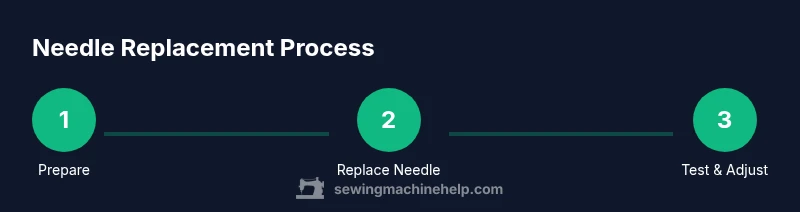
Yes. Replacing a sewing machine needle is a routine maintenance task you can do at home. Always unplug the machine, choose the correct needle for your fabric, insert it with the flat side facing the back, and test on scrap fabric before resuming your project. This simple task improves stitch quality and prolongs machine life.
Why Replacing the Needle Matters
According to Sewing Machine Help, replacing a sewing machine needle when it's dull, bent, or shows visible wear is essential for stitch quality and fabric safety. A worn needle can cause skipped stitches, snagging, or holes in the fabric. It can also damage fabric by feeding threads unevenly or creating burrs. Regular needle replacement is a quick maintenance habit that extends machine life and improves tension stability. By matching needle type to fabric (ballpoint for knits, sharp for wovens, heavy-duty for denim), you reduce fabric distortion and thread breakage. This section explains how to assess needle condition, common signs it's time to change, and how needle replacement fits into a broader maintenance routine. Inspect the needle shaft for bending, a dulled point, burrs along the eye, and a rough scarf behind the needle. If you see any of these signs or you notice missed stitches despite correct threading, replace the needle before blaming the machine. The process is inexpensive, fast, and reduces the risk of snags and dropped stitches.
Understanding Needle Types and Sizes
Needles come in several shapes and sizes, each designed for specific fabrics and machines. The most common choice for many home sewists is a universal needle, which covers a wide range of woven fabrics. For knits, ballpoint needles reduce runs and snags by splitting the fibers rather than piercing them. Heavier fabrics like denim or canvas benefit from jeans or heavy-duty needles, while leather needs specialty leather needles. Needle systems (the shank that fits into the clamp) are compatible with most household machines, but always check your manual for the correct system (e.g., 130/705H family versus newer quick-change designs). Size matters too: smaller sizes (e.g., 70/10 to 80/12) are great for lightweight fabrics, while larger sizes (90/14 and up) handle thicker materials. When in doubt, start with a mid-range size (80/12) and run test stitches on scrap fabric to confirm performance.
How to Inspect Your Needle Before Replacing
Before pulling out an old needle, inspect it closely for common signs of wear that indicate replacement is due. Look for a bent or curved shaft, a dull or chipped point, or burrs along the needle eye. A damaged needle can create skipped stitches, punched holes, or fabric pulls. Hold the needle up to light to check for straightness, and gently roll it between your fingers to feel for any rough spots. If you notice any irregularities, replace it even if the needle eye looks fine. Also verify the needle is the correct type and size for your upcoming project; mismatched needles can cause tension problems and poor stitch formation.
How to Choose the Right Needle for Fabric
Choosing the right needle depends on fabric type, thread, and machine compatibility. For most woven fabrics, a sharp universal needle works well. For knits, switch to a ballpoint or jersey needle to avoid snagging. Denim and heavy fabrics require a stronger needle with a thicker shaft. Always check the fabric weight and fiber content, then select a needle size that matches the fabric thickness—starting with a mid-range size like 80/12 and adjusting up or down based on test stitches. When using specialty fabrics (leather, suede, or leather-like vinyl), use the appropriate needle designed for that material and consider a longer stitch length to prevent tearing. Remember to replace needles after finishing a project that uses tricky fabrics or heavy stitching to maintain optimal performance.
Common Mistakes When Replacing Needles
New needles must be installed correctly to avoid issues. Common mistakes include forcing the needle into the clamp, using the wrong needle type for the fabric, and not seating the needle fully. Another frequent error is not aligning the flat side of the needle with the back of the needle slot, which can cause incorrect stitch formation. Never reuse an old, dull needle; it can bend during stitching and damage fabric. Finally, skip testing after replacement; always run a quick scrap stitch to confirm tension and stitch quality before resuming a project.
Maintenance Rhythm and Quick Checks
Set a simple maintenance rhythm to keep sewing performance high. Replace needles after every few projects or after about 8–12 hours of sewing, whichever comes first for your workload. Keep a small stock of fresh needles on hand and a dedicated place to store used, bent needles for recycling. After changing a needle, re-thread and test on a scrap piece of fabric to verify consistent stitch formation and tension. Regular inspection of the needle area—eye, clamp screw, and bobbin area—helps catch issues early and reduces the chance of fabric damage or machine downtime. Based on Sewing Machine Help research, regular needle maintenance saves time and resources by minimizing thread breaks and fabric snags.
Tools & Materials
- Sewing machine needle (universal, size 80/12 or appropriate for fabric)(Install with the flat side facing the back; choose size and style for your fabric.)
- Needle clamp screwdriver or small flat-head(Used to loosen/tighten the needle clamp screw on most machines.)
- Scrap fabric for testing stitches(Test stitch to verify tension and stitch quality after replacement.)
- Lint-free cloth or brush(Wipe lint from the needle area and plate before reinstalling.)
- Thread snips or small scissors(Trim thread ends cleanly during tests.)
- Good lighting(Bright lamp helps inspect needle tip and alignment.)
- Manual or guideline sheet(Keep handy to verify needle type/sizes for your model.)
Steps
Estimated time: 10-15 minutes
- 1
Unplug the machine and prepare workspace
Ensure the machine is unplugged. Move to a clean, well-lit surface. Remove any fabric or thread from the needle area to avoid tangling or accidental injuries.
Tip: Keep a scrap piece under your working hand to protect the needle and prevent pricks. - 2
Raise the needle and access the needle clamp
Turn the hand wheel toward you to raise the needle to the highest position. Remove the presser foot and, if needed, the needle plate cover to access the needle clamp screw.
Tip: If your model uses a screwdriver, use the correct size to avoid stripping the screw head. - 3
Remove the old needle
Loosen the needle clamp screw and gently pull the needle straight out from the needle bar. Note the orientation so you can mirror it with the new needle.
Tip: Do not bend the needle while removing it; handle by the shaft, not the eye. - 4
Inspect the new needle
Check the new needle for any factory burrs or defects. Confirm it is the correct type for your fabric and the right size for your project.
Tip: Only use a fresh needle from packaging; discard any damaged ones. - 5
Install the new needle properly
Insert the needle with the flat side facing the back (for most machines) and push it up into the needle clamp until it seats. Tighten the clamp screw securely without overtightening.
Tip: If the needle won’t go in, re-check orientation and ensure the clamp is fully open. - 6
Re-thread and test on fabric
Re-thread the upper thread and the bobbin, then test on a scrap fabric to confirm stitching is correct and there are no skipped stitches.
Tip: Trim thread tails after testing to prevent tangling; if issues persist, stop and re-check alignment.
Your Questions Answered
Can I replace the needle myself, or do I need a professional?
Yes, most home sewers can replace a needle themselves. It’s a simple maintenance task that doesn’t require special tools beyond a small screwdriver. Always unplug the machine and follow the manual.
You can replace it yourself. Just unplug first and follow the steps.
What needle types should I use for different fabrics?
Use a universal needle for most woven fabrics. Ballpoint needles work well for knits, and denim or heavy fabrics benefit from stronger, thicker needles. Always verify fabric recommendations and adjust size accordingly.
Universal for woven fabrics, ballpoint for knits, denim for heavy fabrics.
How often should I replace my sewing machine needle?
Replace a needle after about 8–12 hours of sewing or whenever you notice skipped stitches, thread breaks, or fabric snags.
About every 8 to 12 hours of sewing, or whenever stitching looks off.
Is it safe to replace the needle while the machine is plugged in?
Never replace a needle while the machine is plugged in. Unplug first, and ensure the machine is on a flat, stable surface before starting.
No—unplug first and work on a stable surface.
What if the needle won’t insert correctly?
Check alignment: ensure the flat side faces the back and the clamp is fully open before reinserting. If issues persist, consult the manual for your model.
Make sure orientation is correct and the clamp is open; if not, check the manual.
Can I reuse old needles?
Avoid reusing needles; replace with a fresh one when dull. Reusing can cause breakage and fabric damage.
Don’t reuse needles; use a new one when dull.
Watch Video
The Essentials
- Unplug before changing a needle.
- Choose the right needle for the fabric.
- Inspect the needle for damage before installing.
- Insert and seat the needle correctly to avoid issues.
- Test on scrap fabric after replacement to verify quality.