What to Do If Your Sewing Machine Needle Breaks: A Practical Guide
Learn how to safely handle a broken sewing machine needle, replace it with the right size, re-thread, and test on scrap fabric. This practical guide covers causes, fixes, and prevention for home sewists.


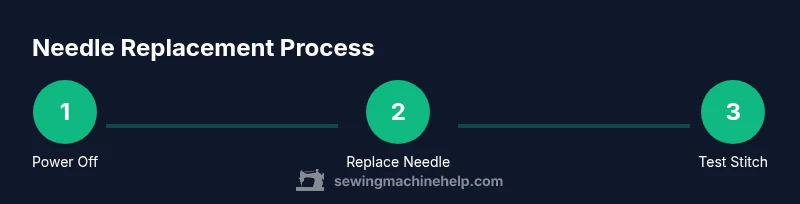
To fix a broken sewing machine needle, stop sewing, unplug the machine, and replace the needle with the correct type and size. Re-thread carefully and test on scrap fabric before continuing. Most breaks stem from using the wrong needle for the fabric, bending the needle, or improper installation.
Why needle breaks happen
According to Sewing Machine Help, needle breaks are more likely when the needle is not matched to the fabric, is bent, or is installed incorrectly. Many sewists report breaks after hitting pins, sewing through thick seams, or using an old, dull needle. The needle can also strike the throat plate when the needle is not aligned with the bobbin hook, or when there is an obstruction in the needle path. Understanding these failure modes helps you prevent future breaks and recover quickly when one occurs. In this section, we’ll explore common failure modes and practical prevention strategies for home sewists.
Other contributors include lint and thread fray that accumulate around the needle bar, which can create resistance; fabric types with heavy fibers (denim, leather) require stronger needles; using the wrong needle type for knit fabrics increases break risk; thread breakage combined with a dull needle can further stress the shaft. Improper needle installation can bend the needle or shear off the needle’s back side. By recognizing symptoms like skipped stitches, unusual noise, or a sudden snap, you can act quickly to minimize damage.
Immediate safety and preparation
Before you touch any moving parts, power down and unplug the machine. Remove the foot pedal from nearby surfaces and clear a clean workspace to avoid losing small parts. Have a bright light, a shallow tray, and a magnet or small container ready for the broken needle and any screws. If your needle is visibly bent or stuck in the needle clamp, do not yank it out; take a moment to secure the machine and plan the removal. After removing the needle, take a moment to inspect the needle clamp and throat plate area for burrs or damage, which can contribute to repeated breaks. When you’re ready to proceed, gather your replacement needle, appropriate screwdrivers, and scrap fabric for test stitching. Safety first means keeping fingers away from the needle bar while loosening or tightening screws. This preparation reduces surprises mid-repair and helps you maintain control of the repair process.
Common causes and fixes
The most frequent causes of needle breakage are fabric choice, needle type, improper installation, and needle dulling. If you’re sewing with denim or leather, select a heavier, sharper needle designed for dense fabrics. For lightweight silks or knits, use a finer universal needle and a compatible stitch setting. Always ensure the needle is fully seated in the clamp with the flat side facing the back (on most household machines). Check that the needle is not bent and that it’s the correct height; a needle that sits too high can strike the bobbin area. Threading errors—such as a jammed take-up lever or incorrect upper-thread path—can also cause the needle to break under tension. When you replace the needle, reinstall it straight and tight, then re-thread step by step, slowly advancing the fabric to confirm the path is clear. If problems persist after a proper needle change, inspect the bobbin area for burrs, ensure the needle and bobbin are compatible, and verify that the presser foot is appropriate for the fabric type.
Choosing the right replacement needle
A correct needle selection is the foundation of avoiding future breakages. For most home fabrics, a universal needle in the size range 70–90 is a safe starting point; for heavier fabrics like canvas or denim, move to a sturdier size in the 90–100 range, and for delicate fabrics like silk, a finer size in the 60–70 range may be preferable. If you sew knit fabrics, consider a ballpoint or stretch needle to prevent fabric snagging. Always match the needle type to the fabric and the machine’s capabilities; some low-shank machines require specific needle types. Confirm the needle brand and model compatibility with your specific machine, and keep a small set of sizes on hand to adapt quickly to different projects. After selecting a needle, inspect it for any burrs or manufacturing flaws before installation. A good practice is to replace needles after finishing a project with dense seams or if you notice skipped stitches.
Needle installation and alignment tips
Install the needle with the flat side toward the back (where applicable) and push it up into the needle clamp until it seats firmly. Tighten the needle clamp screw securely, but avoid overtightening. Re-check that the needle is centered in the needle hole and that there is no play when you gently wiggle it. Re-thread the machine following the prescribed path from the top thread guide through the take-up lever and down to the needle eye. If your machine uses a removable needle plate or has a thread path through the bobbin area, ensure no lint, threads, or fabric fibers block movement. Before stitching on a real fabric, perform a test on scrap material to verify even feed, proper tension, and stitch formation. This step minimizes surprises during a live project and protects your fabric from unintended damage.
Maintenance to prevent future breaks
Prevention starts with regular maintenance. Clean lint and dust from the feed dogs and bobbin area after every few sewings, and oil only where the manufacturer recommends. Check needle-holding mechanisms for looseness or wear, especially after long sessions or projects involving dense fabrics. Use fresh, appropriate needle types and sizes for each project, and avoid forcing the needle through thick seams or multiple layers. Keep your machine covered when not in use to reduce dust intrusion, and store spare needles in a dry, organized container. Finally, adopt a quick pre-sewing checklist: fabric type, needle type and size, proper threading, and a test stitch on scrap. Following these steps will extend needle life and reduce the chances of breakage during routine use.
Testing and troubleshooting after replacement
After replacing the needle, run a short test on scrap fabric with the same stitch and tension settings you’ll use on the final project. Watch for skipped stitches, bird-nesting, or misalignment, and listen for unusual grinding noises. If the problem persists, re-check needle installation, ensure the take-up lever moves freely, and inspect the bobbin path for lint or fabric fragments. If you continue to experience issues after these checks, consult the machine’s manual for any specific troubleshooting steps or service recommendations. Note that continuing to sew with an unresolved needle issue can worsen damage to the bobbin hook, throat plate, or drive belt, so address problems promptly.
Tools & Materials
- Sewing machine needle(Select the correct size and style (e.g., universal needle 80/12 or 90/14) for your fabric.)
- Needle clamp screwdriver(Small flat-head screwdriver or Allen key depending on machine model.)
- Thread snips(Good quality scissors or snips for quick cuts.)
- Cleaning brush(Optional for removing lint and fabric debris.)
- Scrap fabric(For test stitching after replacing needle.)
Steps
Estimated time: 15-25 minutes
- 1
Power off and unplug
Always unplug the machine before any needle work to prevent accidental starts and injuries.
Tip: Hold the plug; never pull by the cord. - 2
Remove the broken needle
Loosen the needle clamp screw and gently pull the broken needle out. Do not force it if it is stuck, or you may bend the clamp.
Tip: Use a needle-nose plier if the needle is partially lodged. - 3
Inspect the needle seat and clamp
Check for burrs, bending, or damage in the needle clamp and seat. A damaged clamp can cause future breaks even with a new needle.
Tip: If the clamp is damaged, replace the part or consult the manual. - 4
Choose and prepare the replacement needle
Select the correct needle type and size for your fabric, then inspect for any visible flaws before insertion.
Tip: Keep a small chart of fabrics and corresponding needle types handy. - 5
Insert the new needle correctly
Insert the needle fully into the clamp with the flat side facing the correct direction and tighten the screw securely.
Tip: Ensure there is no lateral movement once tightened. - 6
Rethread and test
Rethread the machine from the top and thread the needle, then run a test stitch on scrap fabric.
Tip: Watch for proper tension and stitch formation before sewing final project. - 7
Assess results
If stitches look good and the needle sits cleanly, resume your project; otherwise re-check alignment and path.
Tip: When in doubt, restart the process from the needle replacement step.
Your Questions Answered
What should I do first if the needle breaks while sewing?
Stop sewing, unplug the machine, and remove the broken needle. Inspect the needle clamp for damage before replacing the needle.
Stop, unplug, remove the broken needle, and check the clamp for damage before replacing.
Can I continue sewing with a bent needle?
No. A bent needle can cause more damage to the fabric and the machine. Replace it and test on scrap fabric first.
No, replace it and test on scrap fabric first.
How do I know which needle to buy?
Choose a needle type and size appropriate for your fabric (e.g., lighter fabrics use smaller sizes; denser fabrics require sturdier needles).
Choose a needle type and size based on the fabric you’re using.
Will a broken needle damage my machine?
It can cause misalignment or debris in moving parts if ignored. Replace promptly and inspect parts for damage.
Yes, it can damage the machine if not addressed promptly.
Is it safe to re-thread after replacing the needle?
Yes. Make sure the machine is unplugged, re-thread the upper path correctly, and ensure smooth movement of the take-up lever.
Yes—unplug, re-thread carefully, and test on scrap.
How often should I replace needles?
Replace needles after completing dense projects or if you notice skipped stitches or rough feeding.
Replace needles after dense projects or if you notice stitch issues.
Watch Video
The Essentials
- Always use the correct needle type and size for the fabric.
- Unplug before any needle work to ensure safety.
- Test on scrap fabric after replacing the needle.
- Inspect the needle clamp and path for obstruction or damage.
- Maintain routine cleaning to prevent future issues.