Best Way to Hem Jeans Without a Sewing Machine
Learn a durable, no-sewing-machine method to hem jeans with hand-stitching, measurements, and finishing tips for beginners and hobbyists. Two proven approaches help you tailor denim by hand with a clean, professional finish.


By hand, you can hem jeans securely without a sewing machine. This guide shows two reliable methods—rolled hem and a near-invisible blind hem—with precise measurements, thread choice, and finishing steps. You’ll learn how to prep denim, mark correctly, stitch evenly, and press for a durable, professional-looking finish.
Why Hem Jeans Without a Sewing Machine
Hemming jeans by hand is a practical option when you don’t have access to a sewing machine or you want to avoid extra tools. Denim is sturdy, but it can be stubborn to work with, so preparation matters: choose a strong thread that matches the denim color, pick a sharp hand-sewing needle, and plan your hem length before you start. According to Sewing Machine Help, hemming jeans by hand remains reliable when you apply a few proven techniques: select the right hem type for your jeans’ weight, use proper tacking or pinning, and finish with secure stitches and a crisp press. This section outlines why manual hems work and what you should expect as you begin. You’ll see two common paths—rolled hems for a neat, low-profile edge and blind hand-hems that hide the stitching on the inside—so you can choose the approach that suits your style.
Denim hems can look professional if you respect fiber behavior and grain direction. Avoid rushing the process, especially on thicker denim, and keep your stitches even and tight. The result is a durable hem that survives repeated washings and daily wear. The guidance here balances simplicity with quality, so beginners and hobbyists can achieve a confident finish without a machine.
Essential Tools and Materials
Before you start, gather a few reliable tools and materials so you can work efficiently and get a neat result. The list below covers essentials (required) and a few helpful additions (optional) that improve accuracy and finish:
- Jeans (with the current length you want or a bit more for adjustments) — required
- Chalk or erasable fabric marker — required for precise marking
- Measuring tape or ruler — required
- Pins or fabric clips — required for temporary hold
- Scissors or thread snips — required
- Heavy-duty polyester or cotton thread matching the jean color — required
- Hand sewing needles in a range of sizes (size 9–12 commonly used with denim) — required
- Needle threader (optional) — optional but helpful
- Thimble or leather thimble (to push through thick denim) — optional
- Iron and ironing board or a small iron can be helpful to crisp folds — optional but recommended
- Seam ripper (in case you need to adjust) — optional
Having these tools ready keeps the workflow smooth and reduces the chance of errors mid-hem. If you’re new to hand sewing, consider starting with a lighter denim weight to practice before tackling a heavy pair of jeans.
Understanding Hem Options for Denim
Denim’s weight and stretch influence which hand-hem method you should use. Here are the two most reliable options for home hemming without a machine:
- Rolled Hem (low-profile edge): This method creates a tiny, contained edge that minimizes bulk and is less noticeable from the outside. It’s ideal for mid-weight denim or jeans you want to preserve a clean silhouette. It requires small, tight stitches and precise folding, but it’s quicker than more complex techniques.
- Blind Hand Hem (invisible inner stitch): This approach keeps the stitches on the inside, so the outside hem looks smooth and seamless. It’s great for longer-lasting hems that won’t show stitch lines on the outer fabric. It demands careful spacing and well-timed lifting of the fabric to ensure the stitches stay hidden.
Other options include a traditional folded hem with visible stitching for a vintage look, or a double-fold hem for extra durability on heavy denim. The choice depends on fabric weight, jeans style, and your comfort level with hand stitching. When in doubt, start with a rolled hem and switch to a blind stitch if you want a more discreet finish.
Tip: Always test your chosen method on a fabric scrap or an inside leg seam before committing to the full hem. This helps you refine your fold width, stitch length, and overall look.
Step-by-Step Overview
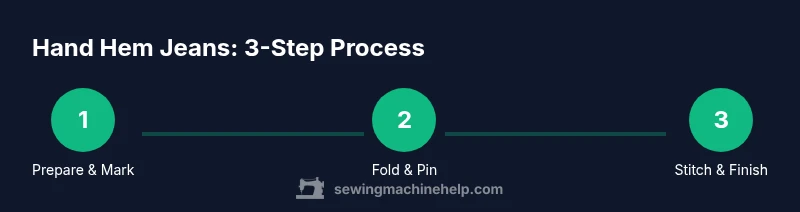
Here’s a concise, task-focused roadmap you’ll follow in the detailed steps below. Each action is designed to be performed in a single, clear motion, with a rationale to help you stay on track:
- Decide the hem length by trying on the jeans and marking the desired line, allowing for shrinkage and ease. This ensures your jeans don’t end up too short after washing.
- Prepare the hem by cleaning up any fraying edges and pressing a crisp crease where the fold will occur. A crisp fold helps the hem stay even and neat during stitching.
- Fold the fabric to the chosen hem width and secure with pins or clips. A well-formed fold minimizes bulk and guides your stitches.
- Stitch with your chosen method—rolled hem or blind hem—using a steady rhythm and even spacing. Use short stitches and avoid pulling the fabric taut to prevent puckering.
- Press the finished hem to set the stitches and remove any pins. A good press will make the hem lay flat and look professional.
- Inspect the hem, trim any excess thread, and perform a quick test wash to ensure durability. If you notice looseness or uneven edges, go back and reinforce.
These steps emphasize careful measurement, controlled folding, and sturdy hand-stitching. The result should be a durable hem that holds up through many wears and wash cycles without the need for a sewing machine.
Method A: Rolled Hem for Light to Medium Denim
The rolled hem is a popular, quick option that produces a clean edge with a small footprint on heavier denim. Begin by marking the hem length carefully and removing any excess fabric above the line. Fold the edge under once to create a small seam allowance, then fold again to form a tight, narrow roll. Pin or clip at regular intervals to keep the roll aligned. Start stitching near a pin and work your way around the leg, taking small, even stitches close to the inner fold. Keep tension gentle so the exterior edge remains smooth and the roll doesn’t just flip outward. Finish with a small locking stitch at the end, then press with a hot iron to set the folds and flatten the stitches.
Pro tip: Use a fine hand-sewing needle and a strong, color-matching thread. Roll the hem inside to avoid visible topstitching on the outside. If the fabric is very thick, consider a back-and-forth stitch in short segments to secure the roll without bunching.
Method B: Blind Hand Hem for Heavy Denim
The blind hand hem hides the stitches on the inside, giving a polished, nearly invisible finish on the outside. Start by marking the desired length and pressing a neat fold. Secure the folded edge with tiny, evenly spaced pin tacks along the hem line. Use a tiny ladder stitch (invisible stitches on the outside) for the interior side of the hem. This technique requires careful work to keep the stitches tiny and evenly spaced; the tension should be comfortable enough to hold but not so tight that the hem puckers. Work the stitches from inside the fold to keep the thread anchored in a way that’s not visible from the exterior. Finish with a quick knot and trim any excess thread, then press again to seal the crease.
Pro tip: If you’re new to ladder stitches, practice on a scrap denim first. A small magnifier or good lighting helps you see the stitch line for precise application, especially on darker denim where threads can disappear into the fabric.
Finishing, Care, and Troubleshooting
A durable hand-hem requires proper finishing and care. After stitching, trim any loose threads close to the knot and give the hem a final press with a steam iron to set the crease. For best results, wash the jeans inside out in cold water and avoid high-heat drying, which can shrink denim and loosen threads over time. If you notice puckering or loose stitches after washing, re-stitch small sections with shorter stitches and reinforce high-stress points along the seam. For extra durability, you can hand-sew a light running stitch over the folded edge as a secondary reinforcement, especially for heavy denim that endures frequent movement.
Quality checks: verify the hem is even around the entire circumference, confirm thread color matches the denim, and watch for any loose fibers that could snag on hardware. These small checks prevent uneven hems and extend the life of the garment.
Common Mistakes and How to Fix Them
Hemming without a machine often comes with common errors. A frequent issue is uneven hems caused by inconsistent folds. Fix this by re-ironing and re-marking the hem line, then re-folding in the same plane. Another mistake is stitches that are too long or too tight, which can cause puckering or thread breakage. Remedy this by using shorter stitches and a more relaxed tension, especially on thick denim. If the edge frays after pressing or washing, secure the edge with a narrow zigzag or add a thin top-stitch as a decorative, yet functional, reinforcement.
When to Use a Sewing Machine or a Professional Tailor
While a hand-hem can produce excellent results, there are occasions to switch to a machine or a pro. If you’re dealing with delicate or stretch denim, or you’re aiming for a perfectly uniform hem on multiple pairs, a sewing machine can save time and provide consistent results. If you’re unsure about the hem length or want a professional finish with topstitching, a tailor can tailor the hem to your exact specifications. The decision often comes down to the fabric weight, the garment’s purpose, and how frequently you’ll hem jeans in the future.
Tools & Materials
- Jeans (desired length)(Measure while wearing to account for shoes)
- Chalk or fabric marker(For precise hem line)
- Measuring tape or ruler(To ensure even length)
- Pins or fabric clips(To hold folds securely)
- Scissors or thread snips(For trimming threads)
- Strong thread in jean color(Polyester or cotton-poly blends work well)
- Hand sewing needles (size 9–12)(For denim; maintain sharp point)
- Thimble (optional)(Protects finger on thick denim)
- Iron and ironing board(For crisp folds and setting stitches)
- Seam ripper (optional)(In case you need to adjust)
Steps
Estimated time: 60-90 minutes
- 1
Prepare the jeans
Put the jeans on or lay them flat and decide the final length. Mark the line using your chalk and a ruler. Check both legs for equal lengths and adjust as needed.
Tip: Mark with a color that contrasts against the denim for visibility. - 2
Mark the hem length
With the jeans flat, measure from the bottom edge to your marked hem line on both legs. Aim for symmetry, then transfer the measurement to the other side or leg to ensure even length.
Tip: Double-check the distance from knee to hem to avoid an uneven look. - 3
Fold and pin the hem
Fold the fabric inside to create a clean finished edge. For a rolled hem, make a tight roll; for a blind join, keep the fold flush with the leg edge. Pin at regular intervals.
Tip: Keep folds crisp by lightly pressing before pinning. - 4
Stitch the hem by hand
Choose your method (rolled or blind) and start stitching with small, even stitches. Run a few securing stitches at the start and end to prevent unraveling.
Tip: Use a back-stitch at the start and end for durability. - 5
Press and set the hem
Carefully press the hem with a hot iron. Let the fabric cool before moving to avoid shifting, then re-check symmetry.
Tip: Use a pressing cloth to protect the denim surface. - 6
Final check and care test
Inspect for evenness and secure stitches. Wash the jeans on a gentle cycle inside-out to test durability and evenness.
Tip: If needed, reinforce high-stress points with an extra short stitch.
Your Questions Answered
Can I hem jeans without turning the cuffs up?
Yes. A rolled hem or blind hem can be performed with the cuff remaining unchanged, creating a sleek look. You’ll control the final length with careful measuring and folding.
Yes, you can hem jeans without cuffing by using rolled or blind stitches for a clean look.
Will hand-stitched hems last through washing and wear?
With proper thread, needle size, and technique, hand hems can last for many washes. Avoid excessive tension and use secure knots. Turning the jeans inside out before washing also reduces stress on the stitches.
Yes, with proper technique and care, hand hems last well through washing.
What needle size is best for denim when hand sewing?
A sharp needle in the 9–12 range works well for denim. If the fabric is very thick, consider using a larger needle or a specialty denim needle to reduce skipped stitches.
Use a sharp denim needle in the 9 to 12 range for best results.
Should I press after every stitch?
Yes. Light pressing after folding and again after stitching helps keep the hem flat and even, reducing puckers and misalignment.
Yes, light pressing after folds and stitches helps a lot.
Can I hem jeans with a curved or uneven hemline?
A curved or uneven hem is doable but more challenging. Use careful measuring and a guide to keep the edge consistent around curves. For very curved hems, consider reducing the hem width slightly to avoid buckling.
Yes, but it’s trickier. Measure carefully and test first.
When should I switch to a sewing machine?
If you plan frequent hemming or demand uniform topstitching, a sewing machine saves time and provides consistency. For occasional hems, a strong hand-hem is perfectly adequate.
If you hem often or want consistent topstitching, consider using a machine.
Watch Video
The Essentials
- Plan length and test on scraps before stitching.
- Choose the hem method based on denim weight.
- Keep stitches small and evenly spaced for durability.
- Press after any fold to set the finish.
- Inspect and test wash to confirm longevity.