Sew Jeans with a Sewing Machine: Step-by-Step Hem Guide
Learn how to hem jeans using a sewing machine with a sturdy needle, proper stitches, and finishing touches. This guide covers how to use a sewing machine to hem jeans, including prep, settings, and finishing for professional-looking hems.


Learn how to hem jeans using a sewing machine with a straight stitch, the right needle and thread, and appropriate settings. This guide covers prep, stitching techniques, and finishing touches so your jeans fit perfectly, resist fraying, and look professional. It is suitable for beginner sewists and hobbyists as well as experienced sewers seeking a quick project.
Preparing Your Jeans
Before you pick up the needle, lay out your jeans on a flat surface. Decide the final hem length by trying on the jeans with the footwear you plan to wear most often and use a vinyl tape measure or tailor's chalk to mark a straight line around the inside of the leg. For a clean, professional finish, mark only the interior side of the fabric; this keeps your stitches invisible from the outside. If the hemline is uneven, take a moment to flatten and even it out with careful snip-and-trim. According to Sewing Machine Help, the goal is a crisp, even line that translates into a flawless hem once stitched. Marking subtly on the inside helps avoid visual marks on denim after washing.
In planning your hem, consider the jean style and fabric weight. Heavier denim may require a slightly longer stitch length and a stronger needle, while lighter weight denim allows for a neater, almost invisible finish. Take a moment to confirm the exact length you want the hem to be, especially if you are pairing with sneakers, boots, or heels. A common starting point for casual hems is a half-inch to three-quarter inch depending on current fashion and personal preference.
Choosing the Right Needle and Thread
Denim threads and a denim needle are your best friends when hemming jeans with a machine. Select a sharp denim needle in size 90/14 or 100/16 to penetrate thick fabric cleanly without skipping stitches. Match the thread to your fabric: a strong, mid-weight polyester or a robust cotton-poly blend works well with denim and resists wear after washing. Thread tension should be balanced so the top stitch sits neatly on the outside and the bobbin pulls evenly on the inside. Use a color that blends with the jeans or a contrasting shade for a decorative effect if desired. If your hem will be visible on the outside, a slightly heavier thread can add a subtle top-stitch profile that mimics factory hems. Sewing Machine Help emphasizes testing your stitch on scrap denim before committing to the final hem, ensuring even tension and a clean finish.
Setting Up Your Sewing Machine for Denim
Configure your machine for denim by selecting a longer stitch length, typically around 2.5–3.5 mm, to allow denim fibers to lay flat and prevent perforation. Attach a walking foot or a non-stick foot if you have one to feed the fabric evenly and reduce shifting. Thread the machine with a strong polyester thread and wind a fresh bobbin with the same material. If your machine offers a denim setting or an adjustable tension, start with the factory default and adjust gradually while stitching scrap denim. Press a warm seam along the hem line to set the crease before sewing; this helps align the hem more accurately and reduces future distortion. Practical hemming on denim benefits from a steady pace and a deliberate, even feed, especially around thick seams or pocket edges.
Hemming Methods: Flat-Felled, Single-Fold, and Blind Hem
There are several hemming approaches for jeans, each with its own look and level of durability. For a sturdy finish, a single-fold hem requires less fabric manipulation and is quick to complete, but a flat-felled hem provides a reinforced edge that resists fraying and wears well over time. A blind-hem stitch can create a nearly invisible exterior line, but it can be trickier on thick denim and may require a special stitch or foot. When choosing a method, consider how the jeans will be worn and how much you value a clean, barely-visible hem versus maximal durability. The most versatile approach for home hemming is the single-fold hem, followed by a robust flat-felled option for workwear or heavily used jeans. Remember: accuracy in marking and pressing will influence the final finish more than the stitching method alone.
Step-By-Step Quick Reference
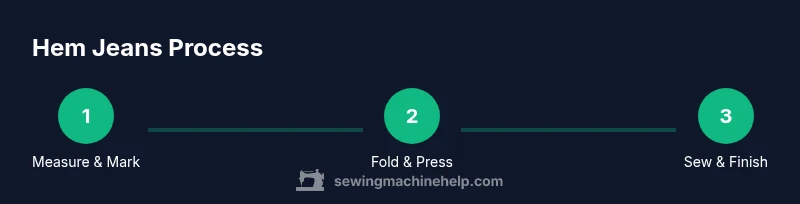
- Measure the final hem length and mark a straight line on the inside of each leg. Avoid long, visible chalk marks; use only necessary guides.
- Fold the hem to the marked line and press with a hot iron to set the crease. If you are using a single-fold hem, fold once and press; for a double-fold hem, fold twice and press each crease firmly.
- Thread the needle, install the correct foot, and set the stitch length for denim. Run a short test seam on scrap denim to confirm tension and stitch appearance on both sides.
- Sew the hem slowly, guiding the fabric evenly. Stitch close to the folded edge to minimize visibility. Stop occasionally to check alignment and to adjust as needed.
- Finish the seam by trimming excess fabric, then press again to lock the fold and create a crisp edge. Try on the jeans to confirm length and make small adjustments if necessary.
Finishing Touches and Pressing for a Clean Look
A clean finish depends on thorough pressing. After stitching, press the hem from the outside with a smooth, heat-safe iron to set the seam and flatten any puckers. If you used a single-fold hem, press along the edge and topstitch close to the edge for durability. For a double-fold hem, ensure the outer edge sits neatly along the fabric edge; using a tailor's ham or curved edge helps maintain a smooth line along the curve of the leg. Let the jeans rest flat for at least a few minutes after pressing to prevent the hem from creeping. A final pass with the iron on a low steam setting will help you achieve a professional look that lasts wash after wash.
Troubleshooting Common Denim Hem Issues
Common problems include skipped stitches, thread loops on the underside, and hems that pull away from the fabric edge. To avoid these, ensure the needle and thread match the fabric type and thickness, use a walking foot when available, and sew with even, deliberate pressure. If the hem still shows tearing or fraying at the edge, consider finishing with a tiny zigzag stitch on the inside or using a narrow serger for a cleaner inside finish. Always test adjustments on scrap denim before applying them to your actual hem. A careful approach, combined with the right tools, will yield durable hems that look factory-finished.
Tools & Materials
- Pair of jeans to hem(Include the exact length you want to achieve)
- Measuring tape(60 inches (150 cm) or longer recommended)
- Fabric marker or tailor's chalk(For interior mark lines)
- Pins(To secure the hem while sewing)
- Scissors(Fabric scissors for trimming and snips)
- Seam ripper(Optional if you need to adjust)
- Sewing machine(Modern machine configured for denim)
- Denim needle (size 90/14 or 100/16)(Sharp needle designed for thick fabrics)
- All-purpose polyester thread(Color to match jeans)
- Walking foot or non-stick foot(Helpful on thick denim)
- Iron and ironing board(For pressing creases and hems)
- Pressing cloth(Optional for delicate details)
- Extra bobbins(Have spare bobbins wound with matching thread)
- Seam gauge(Fine measurements for precise hems)
Steps
Estimated time: 45-75 minutes
- 1
Measure and mark the hem
Carefully measure from the desired hem line on both legs. Use a interior chalk line to mark a straight reference line around each leg. This ensures a consistent hem length and helps keep the sewing accurate.
Tip: Mark only the inside; exterior lines can mar the denim finish. - 2
Fold the hem and press
Fold the fabric along the marked line and press firmly with a hot iron. For a single-fold hem, press once; for a double-fold hem, press twice to create a clean, enclosed edge.
Tip: Use a tailor’s press or a clapper to set stiff creases for a crisper finish. - 3
Install needle and adjust settings
Install a denim needle and thread. Set a longer stitch length (around 2.5–3.5 mm) and select a straight stitch. If available, engage the walking foot to help feed the fabric evenly.
Tip: Test on scrap denim first to fine-tune tension and stitch appearance. - 4
Sew the hem
Align the folded edge with the presser foot and sew along the inner fold close to the edge. Use even speed and keep the fabric flat to avoid puckering or shifting.
Tip: Backstitch slightly at the start and end to secure the seam. - 5
Finish the seam and press again
Trim any excess threads, press the seam again to set the fold, and check that the hem sits evenly around the leg. If needed, topstitch close to the edge for extra durability.
Tip: A final light press with steam will help the hem settle neatly. - 6
Try on and adjust
Try on the jeans and verify the hem length. If adjustments are needed, re-mark and re-press before resewing. A well-finished hem should look consistent from all angles.
Tip: Ask a friend for help at fitting to ensure even length on both legs.
Your Questions Answered
What needle is best for denim hemming?
A sharp denim needle in size 90/14 or 100/16 is ideal for thick denim. It penetrates the fabric cleanly and reduces skipped stitches.
Use a denim needle, about size 90/14 or 100/16, for clean penetration and fewer skipped stitches.
Can I use a twin-needle for hems on jeans?
Yes, a twin-needle can create a neat decorative or professional hem, but it may require extra tension adjustment and a compatible foot and needle.
Yes, twin-needles work but you may need to adjust tension and use an appropriate foot.
What stitch length should I use for denim hems?
Start with a longer stitch length around 2.5–3.5 mm to allow denim fibers to lie flat; adjust if you notice gathering or skipped stitches.
Begin with a 2.5 to 3.5 mm stitch length and adjust as needed.
Is a walking foot required to hem denim?
A walking foot is highly beneficial on denim to prevent fabric slipping, especially on thicker hems, but it is not strictly required.
A walking foot is very helpful but not strictly required.
How can I prevent fraying on denim hems?
Finish the edge with a short zigzag or overcast stitch, or use a narrow hem to enclose fabric edges and reduce fraying.
Finish the edge with a zigzag or use a narrow hem to prevent fraying.
What if my hem looks uneven after sewing?
Re-mark the hem, re-press, and resew on scrap denim first to refine stitch placement before redoing the actual jeans.
Re-mark, re-press, and retry on scrap denim before redoing the jeans.
Watch Video
The Essentials
- Measure accurately and mark the interior line.
- Choose denim-appropriate needle and thread.
- Set stitch length for denim and test on scraps.
- Press hems firmly before and after sewing.
- Check fit and adjust if necessary.