How to Hem with a Sewing Machine: A Practical Step-by-Step Guide
Learn to hem with a sewing machine using the right needle, stitch, and technique. This practical guide covers measurements, finishes, and troubleshooting for woven and knit fabrics.


By the end of this guide, you will be able to hem with a sewing machine cleanly on woven and knit fabrics. You’ll select the right needle and stitch, measure accurately, and finish with a professional-looking edge. This step-by-step approach suits beginners and hobbyists seeking durable hems and a tidy appearance.
Why hemming with a sewing machine matters
Hemming is a fundamental finishing step that boosts the look and wearability of almost any garment. When you hem with a sewing machine, hems become durable, even, and less noticeable than many hand-sewn alternatives. The Sewing Machine Help team has found that machine hems save time on larger projects and produce consistent results across pieces. For fabrics that fray easily, a proper hem keeps edges neat and reduces unraveling. In this section we’ll explore how hemming habits differ between woven and knit fabrics, and why a machine hem frequently delivers a more professional finish.
Fabric choices and hem allowances
Before you reach for your needle, consider the fabric you’re working with and how that affects the hem. Wovens typically require a straightforward fold and stitch, while knits may benefit from slightly stretchier stitches or a twin-needle finish for flexibility. Measure from the actual garment length you want to maintain, add your desired hem allowance, and mark with a clear fabric marker. Always test your planned hem on a scrap piece of the same fabric to confirm how it behaves when folded and stitched. Keeping the hem allowance consistent helps you avoid accidental shortening or lengthening as you sew.
Tools, thread, and stitch options for hems
Choosing the right tools makes hemming smoother. You’ll want a sharp fabric scissors, a clean bobbin, and a good pair of pins or clips to hold the fold. For threads, polyester thread offers strength and elasticity suitable for many fabrics. When selecting a needle, use a standard universal needle for woven fabrics and a ballpoint needle for knits to prevent skipped stitches and snagging. Stitch options include a basic straight stitch for most hems, a zigzag for elastic fabrics, or a double-needle finish for a professional outer look. If you’re working with delicate fabrics, a walking foot can help feed the fabric evenly as you sew.
Preparing the fabric: measuring, marking, and pressing
Accurate preparation sets the stage for a neat hem. Begin by ironing the wrong side of the fabric to smooth out creases, then mark the hem allowance with chalk or a washable fabric pen. Fold the edge up to meet your desired hem length and press firmly with a hot iron. Create a crease that runs parallel to the edge to guide your stitching. Pin or clip the fold in place, ensuring the fabric layers don’t shift. A well-marked and sharply pressed hem is the foundation of a consistent machine sew.
Step‑by‑step hemming techniques: straight, blind, and rolled hems
There are several machine hemming approaches you can choose depending on fabric and visibility. For most woven hems, a straight stitch sewn close to the folded edge yields a clean, nearly invisible seam. For soft or lightweight fabrics, a narrow double-fold hem helps suppress bulk. Blind hems can be achieved on a sewing machine with a stitch that locks anchor stitches into the fabric surface, keeping the final edge hidden. Rolled hems are ideal for lightweight fabrics like chiffon or silk; they require a serger or careful hand-following with a narrow hem—if you don’t have a serger, a tiny rolled hem on a regular machine can work with patience and a fine needle.
Finishing, pressing, and checking your work
Finish by pressing the hem from the right side to flatten stitches and remove any remaining fold lines. A press cloth helps prevent shine on delicate fabrics. If a seam allowance remains, trim it evenly and re-press for a crisp edge. Inspect the hem for even height around the garment and adjust as needed. A well-pressed hem not only looks finished but also behaves better during wear and washing.
Common hemming mistakes and how to avoid them
Puckering can plague hems on lightweight fabrics if the stitch length is too long or the fabric pulls while feeding through the machine. Stretching stretch fabrics while sewing can create wavy hems; let the machine feed the fabric instead. Uneven hems often come from inconsistent folds—marking lines and using clips helps keep the edge aligned. If your machine skips stitches or threads shred, rethread carefully and verify the needle is inserted all the way, the bobbin is wound correctly, and the correct needle type is in use.
Tips for knits vs wovens and specialty fabrics
Knits require more give; a walking foot and stretch stitch or twin-needle approach can preserve elasticity. Heavier wovens may benefit from a narrower hem or a slight understitch to prevent curling. Slippery fabrics such as satin or silk unfold more easily when pinned with small clips and hand-guided feeding. Always test a small sample before committing to the final hem on your garment.
Tools & Materials
- fabric scissors(Sharp blades; separate from general-purpose scissors)
- pins or clips(For securing folds during stitching)
- measuring tape or ruler(Accurate hem length measurement)
- iron and ironing board(Press hem folds and crisp edges)
- fabric marker or chalk(Mark hem allowances clearly)
- sharp universal needle(Size 11-14 for woven fabrics)
- ballpoint needle (for knits)(Use for stretchy fabrics only if sewing knits)
- polyester sewing thread(Matching color to fabric)
- sewing machine with standard straight stitch(Primary tool for machine hemming)
- walking foot (optional)(Helpful on slippery or thick fabrics)
- twin needle (optional)(For visible machine hems on knits)
Steps
Estimated time: 45-60 minutes
- 1
Prepare fabric and hem allowance
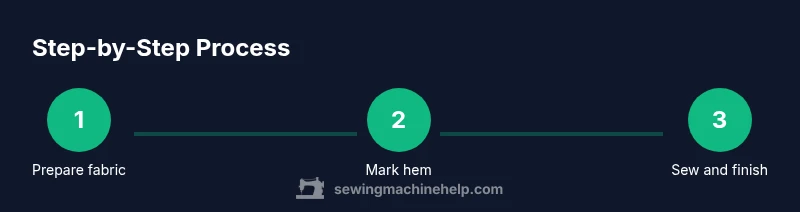
Iron the fabric to remove wrinkles and mark the desired hem length with a marker. Fold the fabric to form the hem, aligning the raw edge with the marked line. Pin or clip to secure the fold, creating a clear guide for stitching.
Tip: Test the marking on scrap fabric to ensure it washes out and stays visible long enough to guide your stitching. - 2
Set up the machine and needle
Install the appropriate needle for your fabric and wind the bobbin correctly. Thread the machine and test a short stitch on scrap fabric to confirm tension and stitch quality before you sew the hem.
Tip: Use a shorter stitch length (around 2.0–2.5 mm) for most hems to minimize bulk. - 3
Sew the hem along the fold line
Position the folded edge against the seam guide and sew close to the fold, removing pins as you go. Keep the edge even and guide the fabric with your hand to prevent bunching.
Tip: Sew slowly at the start and end of the hem; backstitch to secure the seam but avoid bulky knots. - 4
Finish the hinge and press
Trim excess seam allowance if needed and press the hem flat from the inside, then re-press from the outside for a crisp finish. If you used a zigzag or overcast stitch, ensure the stitch lies flat on the fabric surface.
Tip: Always press with a cloth between iron and fabric to prevent shine on delicate fabrics. - 5
Optional: apply a blind or twin-needle hem
For an invisible finish, use a blind-hem technique with a very narrow stitch, or switch to a twin needle for a clean outer appearance on knit fabrics.
Tip: A walking foot helps maintain even feed on slippery knits when using a twin needle. - 6
Check and adjust for even length
Measure the hem around the garment to confirm uniform length. If needed, re-press and touch up any short threads or lint that may affect the appearance.
Tip: Mark a reference point around the garment and compare lengths as you go to ensure uniformity. - 7
Finish and document your results
Record the type of hem you used, fabric, needle size, and stitch settings for future projects. This helps you replicate a successful hem later.
Tip: Take a photo of the finished hem and the settings for quick reference.
Your Questions Answered
What is the best stitch for hems on woven fabrics?
For woven fabrics, a straight stitch with a slight backstitch is usually sufficient. It provides a clean, durable edge that lies flat when pressed.
For woven fabrics, use a straight stitch with backstitching for a clean, durable hem.
How do I hem without visible stitches (blind hem)?
A blind hem uses a near-invisible stitch that catches only a tiny fold of the fabric on the outside. It’s best for dress hems and garments where you want the stitching hidden.
Use a blind hem if you want the stitches hidden on the outside.
Can I hem knit fabrics with a sewing machine?
Yes, but use a ballpoint needle or a serger/overlock setting when possible. A twin needle can also give a neat appearance on knit hems while preserving stretch.
Yes, with the right needle and sometimes a twin needle, you can hem knits nicely.
What should I do if my hem pucks or curls?
Puckering usually means tension issues or too-long stitches for the fabric. Recheck needle, thread, and tension, and test on scrap fabric before redoing the hem.
If the hem puckers, check tension and test on scrap fabric before redoing.
Do I need a walking foot for hemming?
A walking foot helps with slippery or bulky fabrics by feeding both layers evenly. It’s optional but highly beneficial for certain hems.
A walking foot helps with slippery fabrics; it’s optional but useful.
Watch Video
The Essentials
- Measure accurately before folding
- Choose stitches and needles by fabric type
- Press the hem for a crisp finish
- Test on scrap fabric first
- Avoid stretching fabric while sewing