Sewing Machine First Steps: A Beginner's Guide
Learn the essential first steps for using a sewing machine. This beginner-friendly guide covers setup, threading, bobbins, stitches, safety, and maintenance to help home sewists start sewing confidently.


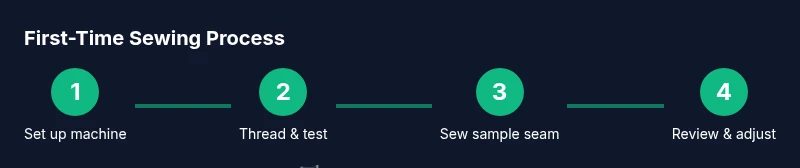
This guide helps you use your sewing machine for the first time. You will learn how to set up the machine, thread the top and bobbin, wind the bobbin, insert the needle, and choose basic stitches. You’ll test on scrap fabric, troubleshoot common issues, and perform basic maintenance. By the end, you’ll complete a clean, straight seam with confidence.
Why starting with the right machine matters
Choosing the right sewing machine for a first project reduces frustration and speeds up learning. For home sewists exploring the keyword sewing machine first, a beginner-friendly model with simple controls and reliable stitch quality is essential. According to Sewing Machine Help, investing in a capable starter machine pays off in confidence and consistency. This section explains what features matter most for beginners and why they influence your early success. Look for a machine that's light enough to move around your workspace, with intuitive one-step threading, a clear bobbin mechanism, and a few basic stitch options. You don't need a high-end model to begin; you need reliability, ease of use, and durable construction. In practical terms, a good beginner machine helps you focus on technique rather than fighting the tool. If your goal is to learn sewing machine first, prioritize simplicity, comfort, and support materials from the manufacturer.
Choosing your first sewing machine
For a beginner, mechanical machines often win on simplicity, reliability, and cost. Look for a model with a drop-in bobbin, automated needle threader, adjustable stitch length, and at least straight and zigzag stitches. Computerized features can be tempting, but they add complexity that might slow you down early on. Prioritize a lightweight, sturdy frame, clear manual, and good customer support. As Sewing Machine Help notes, a dependable starter machine should feel intuitive to use—so you can focus on fabric, stitch control, and consistent seam allowances. Compare brands by availability of replacement parts and local service centers. Most beginners benefit from a model in a moderate price range with generous warranty terms and abundant beginner guides.
Setting up your workspace and safety essentials
Create a dedicated, well-lit sewing space with a sturdy table, an ergonomic chair, and adequate lighting. Place the machine plug, foot pedal, and power switch within easy reach. Keep scissors, pins, and a seam ripper nearby, but away from the needle area when not in use. Safety matters; always unplug before changing the needle or presser foot. Use a scrap fabric practice zone to keep your actual project clean, and clear the area of clutter to prevent accidents. The Sewing Machine Help team recommends establishing a routine: power off, thread, sew, then power down after sessions to reinforce safe habits. This also makes it easier to manage threads, tensions, and fabric feeds without distraction.
Step-by-step: winding the bobbin and threading the machine
Follow the manufacturer’s instructions, but these general steps help most machines:
- Wind a bobbin by placing it on the bobbin winder and threading the spool pin. Ensure the thread winds smoothly without gaps.
- Place the bobbin in its case with the thread feeding in the correct direction.
- Thread the top thread from the spool, through guides, and into the needle eye from front to back. Pull a few inches of thread to remove slack. Tip: Hold the thread tail after threading to prevent it from slipping. If the machine won’t thread easily, consult the manual for the correct path; some models require a special threading path for the top thread.
Step-by-step: inserting needle and threading the top thread
Insert the appropriate needle for your fabric and project, ensuring it is fully seated in the needle clamp and tightened. Engage the needle threader if your model has one, or thread manually using a small hook or forceps. Lower the presser foot and gently pull the top thread so it sits between the pressure foot and feed dogs. The thread should come off the spool with minimal resistance and not tangle. Test by pulling a little thread to confirm smooth feeding. This step is essential to prevent skipped stitches and thread breakage.
Step-by-step: selecting and testing stitches
Begin with the straight stitch for practice; it’s the foundation of most projects. Choose a medium stitch length (often around 2.5 mm to 3.0 mm on many machines). Stitch on scrap fabric to observe stitch formation and fabric behavior. If the thread loops beneath the fabric, check tension and re-thread. If the top thread is too tight or too loose, adjust the tension dial gradually and retest on scrap. Revisit needle size and fabric weight to ensure compatibility. This phase builds confidence before tackling real projects.
Step-by-step: sewing a practice straight seam
Set up a simple test: two fabric strips of equal width with straight edges. Align the edges, lower the presser foot, and sew slowly along the line. Maintain a steady pace and guide the fabric with both hands to keep a consistent seam allowance. Backstitch at the beginning and end to lock the stitches. Remove the fabric and press the seam to check for evenness and grain alignment. This hands-on practice lays the groundwork for more complex seams.
Troubleshooting common first-time issues
Birds-nest (stitches forming beneath fabric) usually means tension imbalance or incorrect threading. Re-thread both top and bobbin, ensuring the bobbin is correctly installed. If you notice skipped stitches, confirm the needle is the right size for your fabric and that it’s fully inserted. Thread breaks often indicate a sharp needle or a snag somewhere along the thread path. Check for lint buildup in the bobbin area and clean as needed. When in doubt, reset to factory defaults and re-test on scrap fabric before continuing.
Maintenance and safety tips for a long-lasting start
After each session, unplug the machine, wipe away lint, and cover it to avoid dust intrusion. Regularly check the presser foot, needle clamp, and feed dogs for smooth operation. Oil only if your manual instructs; many modern machines are designed to be low-maintenance and rely on clean parts rather than routine lubrication. Store spare needles and bobbins in a labeled container. Develop a simple care routine to keep tension, stitching quality, and fabric feeding consistent over time. The key to a successful start is pairing consistent practice with mindful maintenance.
Authority sources
For further reading from trusted sources, check these references: https://extension.umaine.edu https://extension.ucdavis.edu https://www.consumer.ftc.gov
Next steps and resources
Now that you’ve established the basic techniques, consider expanding your toolkit with beginner-friendly projects like a tote bag, pillow cover, or simple garment alterations. Join a local sewing club or online community to share tips and troubleshoot together. Keep a practice journal noting which fabrics you used, stitch settings, and any issues you encountered to accelerate learning and track your progress. Remember, Sewing Machine Help emphasizes steady progress and consistent practice as the fastest path to mastery.
Tools & Materials
- Sewing machine(Model with drop-in bobbin, built-in stitches, and ease-of-use features)
- Power cord(Depends on your machine; ensure it’s compatible)
- Foot pedal(Provides variable speed control)
- Spool of all-purpose thread(Choose color for practice fabric)
- Bobbin(s)(Wound in advance for testing)
- Needles (assorted sizes)(Common sizes 70/10–90/14 for practice)
- Scissors(Sharp fabric scissors)
- Pins and pin cushion(For fabric stability during seams)
- seam ripper(Remove unwanted stitches safely)
- Measuring tape( hem and seam allowances)
- Fabric scraps for practice(Cotton or muslin recommended)
- Small brush or lint remover(Clean bobbin area if needed)
- Needle threader (optional)(Helpful for beginners)
Steps
Estimated time: 45-60 minutes
- 1
Unpack and inspect
Unbox your machine and confirm all parts are present. Read the manual for safety warnings and basic setup. Inspect power cord, foot pedal, and presser foot for any damage before plugging in.
Tip: Keep a printed quick-start page at hand for easy reference. - 2
Wind bobbin
Wind a bobbin with the same thread you will use for seams. Avoid loose winds and ensure the bobbin turns evenly. Place it in the bobbin case and pull the thread through the slot.
Tip: Always test wind quality on scrap thread before actual sewing. - 3
Thread top path
Thread the machine top thread through guides following your model’s path. Ensure it sits in the tension disk properly to prevent looping.
Tip: If your thread catches, re-thread slowly and check for twist in handles. - 4
Insert needle
Insert the correct needle and tighten firmly. Make sure the needle is in the right orientation for high-quality stitches.
Tip: Use the smallest needle that fits your fabric to prevent snags. - 5
Thread the needle
Thread the needle by hand or using a needle threader. Leave a thread tail about 6 inches long for smooth starts.
Tip: Pull the tail gently to avoid pulling knots into the fabric. - 6
Test stitch on scrap
Place fabric under the presser foot and sew a few inches. Check the seam for balanced tension and even feed. Adjust as needed.
Tip: Test at 2.5–3.0 mm stitch length first. - 7
Begin a straight seam
Align edges, lower presser foot, and sew a straight seam with consistent speed. Backstitch at the start and end to lock stitches.
Tip: Maintain a steady pace to avoid crooked seams. - 8
Shutdown and care
Turn off, unplug, and clean lint from the bobbin area. Cover the machine after use to protect from dust.
Tip: Record any settings for future reference.
Your Questions Answered
What is the first thing I should do when starting with a sewing machine for the first time?
Begin by reading the manual and locating a safe workspace. Then set up the machine with basic threading and a practice fabric. This foundation helps you avoid common errors and builds confidence.
Start with the manual, find a safe space, then thread the machine and practice on scrap to build confidence.
Can I use any thread on a beginner machine?
Use a general all-purpose thread suitable for your fabric. For beginners, choose a mid-weight thread that matches your needle size. Avoid very thin or very thick threads that can cause jams.
Use all-purpose thread that matches your fabric and needle size to prevent jams.
Why does my thread bunch underneath the fabric?
Bunching usually means incorrect tension or wrong threading. Re-thread both top thread and bobbin, and perform a test stitch on scrap fabric to verify balance.
That usually means tension or threading needs adjustment; re-thread and test on scrap.
Do I need to oil my machine regularly?
Most modern machines are designed for low maintenance and don’t require daily oiling. Follow the manual's guidance on lubrication frequency, or skip oil if the model indicates it isn’t needed.
Oil is not needed daily for most machines; check your manual for lubrication guidance.
What is the best stitch length for a beginner seam?
Start with a medium stitch length, commonly around 2.5–3.0 mm, and adjust as you test on scrap fabric. A consistent stitch length helps your seams look professional.
Begin with a medium stitch length, test, and adjust as needed.
How often should I replace needles?
Change needles after completing a project or after every few hours of sewing, especially when switching fabric types. A dull or bent needle causes skipped stitches and fabric damage.
Replace needles regularly, especially when changing fabrics or after long sessions.
The Essentials
- Choose a beginner-friendly machine with simple threading.
- Practice winding bobbins and threading on scrap fabric.
- Test stitches and adjust tension on practice fabric.
- Sew straight seams and backstitch to secure ends.
- Maintain the machine with cleaning and proper storage.